Jaishankar at FIPIC: India invites Pacific islands to set their own aid priorities
Synopsis
At the UN General Assembly, EAM Jaishankar turned the usual aid dynamic on its head — asking Pacific island nations to tell India what they need, not the other way around. With $150 million in the India-UN fund and a loans-free model, India is quietly staking out the Pacific as a key theatre for its Global South diplomacy.
Key Takeaways
Jaishankar addressed 14 FIPIC member nations at the United Nations on 24 September 2026 , inviting them to set their own aid priorities for India.
India offered to customise capacity-building modules in sectors chosen by Pacific island nations, with participants visiting India for focused training.
Jaishankar called for proposals on Quick Impact Projects — India-funded, locally executed initiatives with short turnaround times.
India's aid model is loans-free and demand-driven, with priorities set by recipient nations rather than New Delhi.
India has committed $150 million to the India-UN Development Partnership Fund ; additional aid flows through the IBSA Fund with Brazil and South Africa.
Existing programmes cover solar power , housing, women's engineering training , space technology , sea ambulances , and hospital construction .
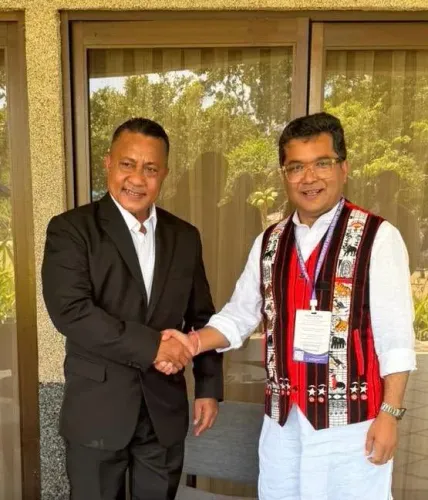
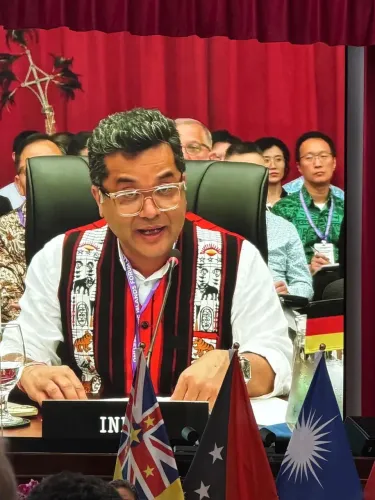
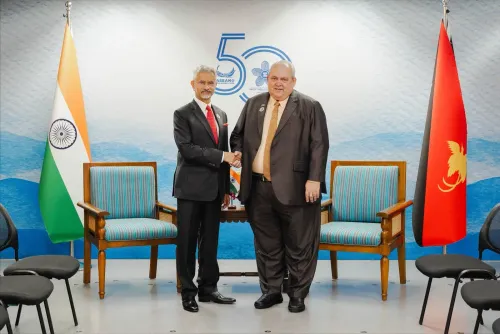
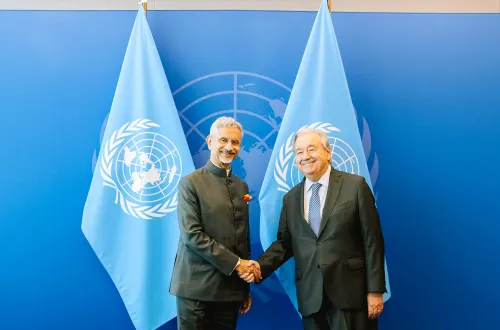
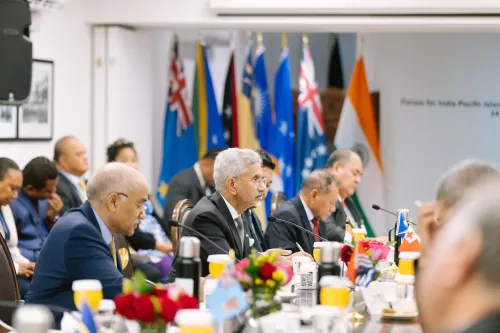
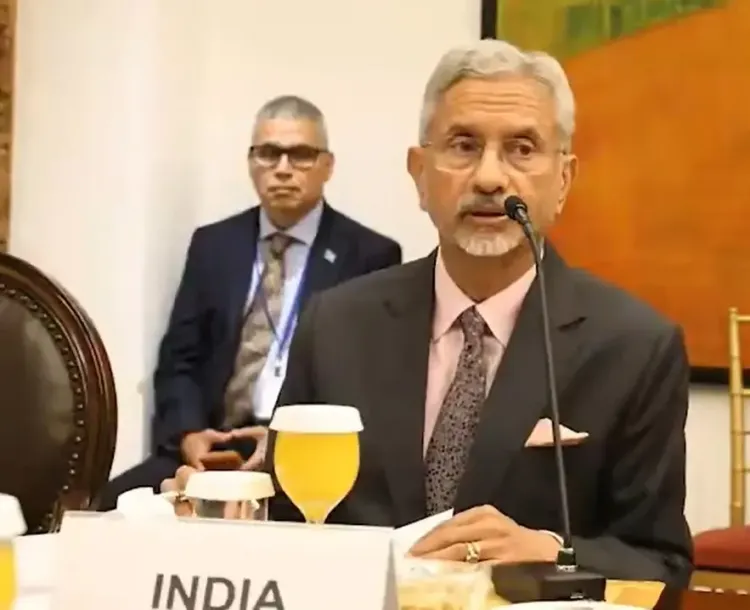
External Affairs Minister S. Jaishankar on Wednesday invited Pacific island nations to define their own priority areas where India can direct assistance, marking a recipient-led shift in how New Delhi structures its development partnerships in the region. The proposal came at a meeting of the Forum for India–Pacific Islands Cooperation (FIPIC) held on the sidelines of the United Nations General Assembly in New York.
India's Offer: Customised Capacity-Building
Jaishankar told ministers from the 14 FIPIC member nations that India could tailor training programmes around subjects that Pacific communities themselves identify as most urgent. 'If we can get from you your priority, a particular area where you feel that it would be useful to have people ... their professionalism or their capacity strengthened,' he said, India could customise programmes accordingly.
'We could actually customise a module in a particular domain only for the Pacific Islands,' he added, describing a model where participants travel to India for focused training on a topic of their choosing, for a defined period.
Quick Impact Projects on the Table
Beyond capacity-building, Jaishankar also called on the 14 FIPIC countries to submit proposals for Quick Impact Projects — short-turnaround initiatives funded by India but executed using local resources. Such projects, he explained, 'impact a community where this is set up,' and India's global experience shows that communities respond immediately to them because the output can be something of a local product that is better processed.
The Quick Impact Project model is designed to ensure visible, on-the-ground results within a compressed timeframe, avoiding the long disbursement cycles that have frustrated development aid elsewhere.
What Sets India's Aid Model Apart
A distinguishing feature of India's development assistance, officials underlined, is that it is demand-driven — priorities are set by the recipient country, not by India as the donor. Crucially, the aid does not come attached to loans, sidestepping the debt-burden criticism levelled at some rival aid frameworks operating in the Pacific.
Much of the assistance is channelled through multilateral mechanisms including the India-UN Development Partnership Fund, to which India has committed $150 million, and the IBSA Fund — established jointly with Brazil and South Africa — which reinforces the independence of the programmes from bilateral strings.
Current Programmes: Solar, Health, Space
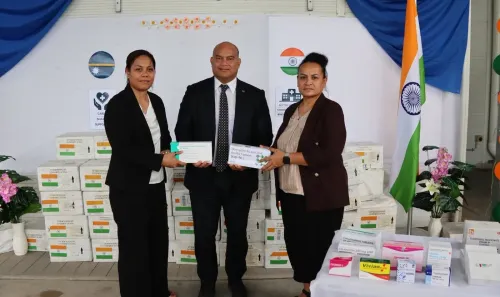
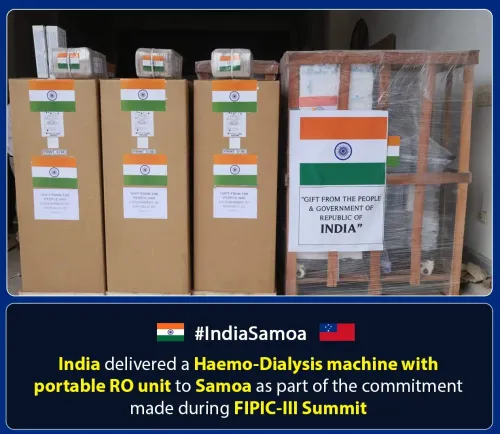
Jaishankar reviewed the progress of existing India-funded initiatives across the Pacific island states with assembled ministers. Active programmes span a broad spectrum: provision of solar power infrastructure and housing, training of women engineers in renewable energy technology, deployment of space technology applications, supply of sea ambulances, and construction of hospitals.
The breadth of sectors reflects India's pitch that it can serve as a capable, non-prescriptive development partner for small island states that are disproportionately exposed to climate change and infrastructure gaps.
Strategic Context
The FIPIC forum, which brings together India and 14 Pacific island nations under the Global South umbrella, has gained renewed salience as larger powers compete for influence in the Pacific. India's emphasis on loans-free, recipient-defined cooperation is widely seen as a counter-positioning to debt-heavy aid models that have drawn scrutiny in the region. Wednesday's meeting signals that New Delhi intends to deepen that engagement — on the Pacific's own terms.
Point of View
But its real test lies in follow-through speed — small Pacific nations have heard similar promises from larger partners and grown wary of long delays between commitment and delivery. The $150 million UN fund pledge is credible, but Quick Impact Projects are only impactful if approvals are decentralised and disbursements are genuinely rapid. More importantly, India's no-loans framing is a direct counter-narrative to debt-trap diplomacy critiques circulating in the Pacific — but sustaining that advantage requires India to scale up, not just articulate, its presence. The willingness to let recipients set the agenda is a strategic differentiator; the question is whether India's bureaucratic machinery can keep pace with that promise.
NationPress
24 Sept 2026
Frequently Asked Questions
What did EAM Jaishankar propose to Pacific island nations at FIPIC?
Jaishankar invited the 14 FIPIC member countries to propose their own priority sectors where India can provide assistance, including customised training programmes and Quick Impact Projects funded by India but executed using local resources. The meeting took place at the United Nations on 24 September 2026.
What are Quick Impact Projects and how will they work?
Quick Impact Projects are short-turnaround development initiatives funded by India but implemented using local resources and workforce in the recipient country. They are designed to deliver visible community-level results quickly, and Pacific island nations were invited to submit proposals for such projects.
How much has India committed to the India-UN Development Partnership Fund?
India has committed $150 million to the India-UN Development Partnership Fund. Additional aid is channelled through the IBSA Fund, established jointly with Brazil and South Africa, to ensure programme independence from bilateral conditions.
How is India's aid model different from other donors operating in the Pacific?
India's development assistance is demand-driven — priorities are set by recipient nations, not by India — and it does not come with loans attached, distinguishing it from debt-heavy aid frameworks that have drawn criticism in the Pacific region.
What existing India-funded programmes are already running in Pacific island countries?
Active India-supported programmes in the Pacific cover solar power infrastructure, housing construction, training of women engineers in renewable energy technology, space technology applications, supply of sea ambulances, and hospital construction.