US visa curbs target birth tourism networks, new fraud portal launched
Synopsis
Washington has moved to choke off commercial birth tourism with sweeping visa restrictions, targeting entire networks — operators, intermediaries, even family members — not just individual applicants. Paired with a new public tip portal, the Trump administration is crowdsourcing immigration enforcement in a move that reopens a long-running constitutional debate over the 14th Amendment's birthright citizenship clause.
Key Takeaways
The US State Department announced visa restrictions on 24 September 2026 targeting birth tourism participants and commercial networks.
Secretary of State Marco Rubio invoked Section 212(a)(3)(C) of the Immigration and Nationality Act to impose the curbs.
Targets include network owners, operators, intermediaries, foreign medical providers, and those who fraudulently use Medicaid ; certain family members may also be covered.
A new public portal at travel.state.gov/reportvisafraud will accept tips on suspected visa fraud, including sham marriages and fabricated job offers.
Enforcement measures can include visa revocations and referrals for law enforcement investigation.
The policy intersects with the 14th Amendment 's birthright citizenship clause, ratified in 1868 , which remains in force.
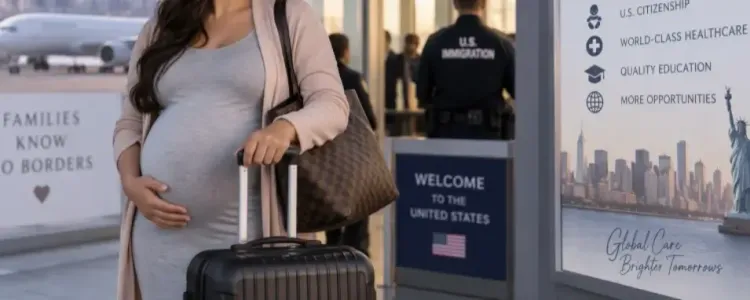
The United States on 24 September 2026 announced sweeping visa restrictions targeting individuals and commercial networks that knowingly engage in or facilitate birth tourism — travel undertaken to give birth on American soil solely to secure US citizenship for the child. The State Department also unveiled a new public online portal to report suspected visa fraud, including fabricated job offers and sham marriages.
What the New Restrictions Cover
Secretary of State Marco Rubio said the policy would apply to owners, operators, managers, and intermediaries of commercial birth tourism networks, as well as foreign medical providers who knowingly facilitate such travel. The restrictions are being introduced under Section 212(a)(3)(C) of the Immigration and Nationality Act.
'Foreign commercial birth tourism networks have exploited the US immigration system to sell US citizenship for profit,' Rubio said in a statement. He accused such networks of coaching foreign nationals to lie on visa applications and charging tens of thousands of dollars to arrange births on American soil.
The policy also covers fraudulent use of Medicaid and extends to 'certain family members,' though the State Department did not specify which relatives would be covered or the precise circumstances triggering that provision.
The New Visa Fraud Reporting Portal
Separately, the State Department announced an online portal — accessible at travel.state.gov/reportvisafraud — through which members of the public can submit tips about suspected visa fraud and misuse. The Bureau of Consular Affairs said it would use the portal for fraud detection and prevention activities.
The department listed falsified documents and travel plans, brokers arranging sham marriages, shell companies, fabricated job offers, and participation in birth tourism among the schemes it aims to detect. Possible enforcement measures include visa revocations and referrals for further law enforcement investigation.
The department said many of the tens of thousands of individuals identified and held accountable for visa fraud during President Donald Trump's second term were discovered through public tips, though it did not provide a case-by-case breakdown.
The Constitutional Backdrop
The US debate over birth tourism is rooted in the country's longstanding tradition of birthright citizenship. The citizenship clause of the 14th Amendment, ratified in 1868, grants citizenship to all persons born or naturalised in the United States and subject to its jurisdiction. Commercial operators have for years marketed packages combining travel, accommodation, and childbirth arrangements, making the practice a recurring flashpoint in US immigration policy debates.
Rubio framed the new restrictions as necessary to protect citizenship, public benefits, taxpayers, and national security — a formulation consistent with the Trump administration's broader immigration posture.
Scope and What Comes Next
The announcement does not detail individual cases or specify the scale of enforcement operations already under way. Critics of such measures have previously argued that targeting birth tourism risks creating a chilling effect on legitimate travel by pregnant women, and that adjudicating intent at the visa application stage poses significant evidentiary challenges.
Enforcement timelines and the precise mechanism for identifying covered family members are expected to be clarified through subsequent departmental guidance. The portal is now live and accepting public submissions.
Point of View
But applying it systematically to commercial birth networks is a meaningful escalation. The harder challenge is evidentiary: proving that a visa applicant 'knowingly' intended to use childbirth for citizenship acquisition at the point of application is notoriously difficult, and the vague 'certain family members' provision invites legal challenge. For Indian nationals — who figure prominently among birth tourism clients according to industry reports — this adds another layer of scrutiny to an already tightening US visa environment. The bigger constitutional question, whether birthright citizenship itself can be narrowed, remains unresolved and is unlikely to be settled by a visa policy alone.
NationPress
24 Sept 2026
Frequently Asked Questions
What is the US birth tourism visa restriction announced in September 2026?
The US State Department announced visa restrictions targeting individuals and commercial networks that knowingly participate in or facilitate birth tourism — travel to the US for the purpose of obtaining American citizenship through childbirth. The policy, introduced under Section 212(a)(3)(C) of the Immigration and Nationality Act, applies to network operators, intermediaries, foreign medical providers, and potentially certain family members.
What is the new US visa fraud reporting portal?
The State Department launched a public online portal at travel.state.gov/reportvisafraud where anyone can submit tips about suspected visa fraud and misuse. Schemes it targets include sham marriages, fabricated job offers, shell companies, falsified travel documents, and participation in birth tourism. Possible consequences include visa revocations and law enforcement referrals.
Why is birth tourism controversial in the United States?
Birth tourism is controversial because it is seen as exploiting the 14th Amendment's birthright citizenship clause, which grants US citizenship to anyone born on American soil. Critics argue commercial networks charge tens of thousands of dollars to arrange births in the US purely to obtain citizenship, while defenders note the constitutional clause makes such births lawful.
Who could be affected by the new birth tourism visa restrictions?
The restrictions target owners, operators, managers, and intermediaries of commercial birth tourism networks, as well as foreign medical providers who facilitate such travel and those who fraudulently use Medicaid. Certain family members of those directly involved may also face restrictions, though the State Department has not specified which relatives or the precise triggering circumstances.
What legal authority does the US government cite for these restrictions?
Secretary of State Marco Rubio cited Section 212(a)(3)(C) of the Immigration and Nationality Act as the legal basis for the new birth tourism visa restrictions. This provision allows the US to deny visas to individuals whose entry would have potentially serious adverse foreign policy consequences.