Trump signs 2 new birthright citizenship orders after Supreme Court rebuff
Synopsis
Rebuffed by a 6-3 Supreme Court ruling, Trump is not retreating — he is pivoting. Two new, narrowly drafted orders take aim at birth tourism and terrorism-linked foreigners, invoking statutory rather than constitutional authority. The legal fight over the 14th Amendment is far from over; it has just moved to a new battlefield.
Key Takeaways
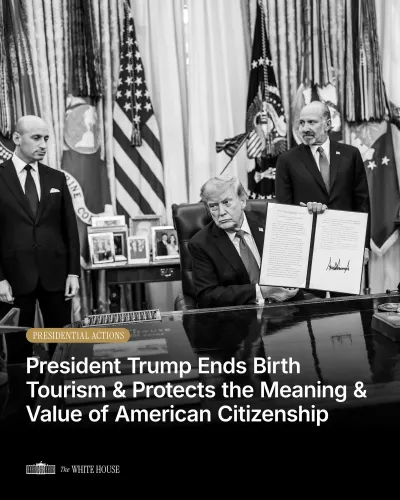
President Trump signed two new executive orders on 7 August targeting birthright citizenship after the Supreme Court struck down his earlier directive.
The first order denies citizenship to children born to women who enter the US on tourist visas for the purpose of giving birth.
The second bars citizenship for children of foreigners with terrorism links , diplomats, foreign government employees, and staff of international organisations.
The Supreme Court voted 6-3 in June to invalidate Trump's original order, with two of his own appointees — Justice Barrett and Justice Kavanaugh — joining the majority.
A 2020 Long Island case saw operators charged with arranging births for 119 Turkish women and fraudulently billing Medicaid $2.1 million .
The new orders are expected to face immediate legal challenges over the scope of the 14th Amendment .
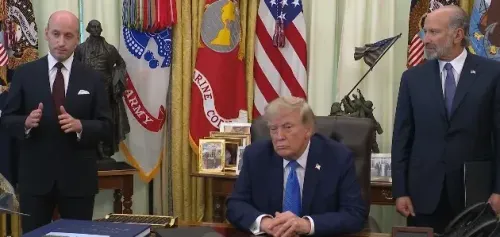
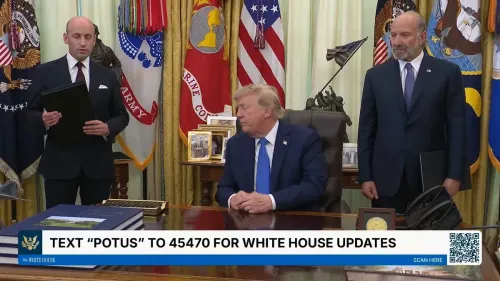
President Donald Trump on Thursday, 7 August signed two new executive orders targeting birthright citizenship, moving to circumvent a 6-3 Supreme Court ruling from June that struck down his earlier, broader directive. The new orders are narrower in scope and invoke presidential authority under the Immigration and Naturalisation Act, rather than a blanket constitutional reinterpretation.
What the Two New Orders Do
The first order targets 'birth tourism' — denying citizenship to children born in the US to women who travel on tourist visas specifically to give birth, so that their babies automatically acquire American citizenship. The Trump administration argues such women are committing fraud by misrepresenting their purpose to consular officers.
The second order bars citizenship for children born in the US to foreigners with links to terrorism, to diplomats or employees of foreign governments, and to staff of international organisations. Deputy Chief of Staff Stephen Miller, widely regarded as the driving force behind the administration's immigration agenda, said the order would also apply to children of those who 'lobby and act on behalf of foreign governments.'
Trump's Reading of the 14th Amendment
Trump reiterated his long-held position that the 14th Amendment — which guarantees citizenship to anyone born on US soil — was enacted 'right after the Civil War' solely to secure citizenship 'for the babies of slaves' and should not be applied universally today. He called the Supreme Court's earlier ruling 'a very, very unfortunate decision', adding: 'Our country suffers because of it. And we're ending it (in) a different way.'
He warned that a 'big crackdown' on birth tourism was imminent, and that his administration could now act in a 'forceful manner.' Trump also claimed, without citing a source, that some men were registering citizenship claims for as many as '56' and '90' children.
The Supreme Court Backstory
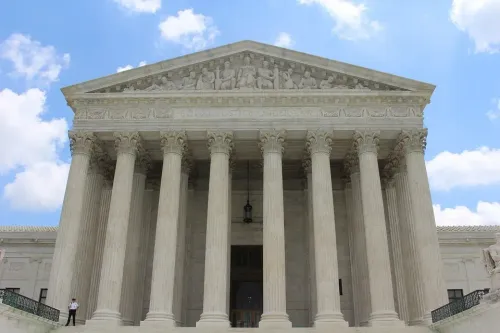
In its June 2025 ruling, the Supreme Court voted 6-3 to invalidate Trump's original birthright citizenship order, holding that it violated the 14th Amendment. Notably, two of Trump's own appointees — Justice Amy Coney Barrett and Justice Brett Kavanaugh — joined conservative Chief Justice John Roberts and the three liberal justices in the majority. Trump had made history by personally attending the oral arguments, becoming the first sitting president to attend a Supreme Court session — a move that ultimately failed to sway the outcome.
Birth Tourism: The Background
Birth tourism has surfaced periodically in US news. In a prominent 2020 case on Long Island, New York, prosecutors alleged that operators of a so-called 'birth house' arranged the delivery of 119 babies to Turkish women who paid between $7,500 and $10,000 per birth. Prosecutors further alleged the operators fraudulently billed the New York Medicaid programme — a government insurance scheme for low-income residents — $2.1 million.
Miller framed the broader issue in stark terms: children born under such arrangements gain access, in his words, to 'welfare benefits, ultimately to the voting booth, and all the other rights and privileges that belong solely to Americans.'
Legal Challenges Ahead
Legal experts widely expect the new orders to face immediate court challenges, likely revisiting the scope and meaning of the 14th Amendment. Miller argued the orders are legally distinguishable from the earlier directive because they rely on the president's statutory authority under the Immigration and Naturalisation Act rather than a constitutional rewrite. However, critics argue the orders still conflict with the amendment's plain text. Notably, the order targeting diplomats' children is legally puzzling to some observers — diplomats were already excluded from birthright citizenship under the amendment's existing 'subject to the jurisdiction' clause, raising questions about the order's practical effect.
Point of View
The administration sidesteps the amendment-reinterpretation argument that lost 6-3 — but courts will still have to determine whether Congress can statutorily restrict what the 14th Amendment grants by text. The diplomat-children order is the weakest link: that exclusion already exists in constitutional jurisprudence, making the order largely redundant and potentially a signal that the administration is padding the legal record rather than breaking new ground. The real confrontation — over birth tourism — will test whether executive fraud-prevention authority can carve exceptions into a constitutional guarantee.
NationPress
21 Sept 2026
Frequently Asked Questions
What are Trump's two new birthright citizenship orders?
President Trump signed two executive orders on 7 August targeting birthright citizenship. The first denies citizenship to children born in the US to women who enter on tourist visas specifically to give birth; the second bars citizenship for children of foreigners with terrorism links, diplomats, foreign government staff, and employees of international organisations.
Why did the Supreme Court strike down Trump's earlier birthright order?
The Supreme Court voted 6-3 in June to invalidate Trump's original order, ruling it violated the 14th Amendment, which guarantees citizenship to anyone born on US soil without limitation. Two of Trump's own appointees — Justice Amy Coney Barrett and Justice Brett Kavanaugh — joined Chief Justice John Roberts and the three liberal justices in the majority.
How are the new orders legally different from the earlier one?
The administration argues the new orders are grounded in the president's authority under the Immigration and Naturalisation Act, rather than a direct reinterpretation of the 14th Amendment. Deputy Chief of Staff Stephen Miller contends this statutory basis distinguishes them from the order the Supreme Court struck down.
What is 'birth tourism' and why is it controversial?
Birth tourism refers to the practice of pregnant women travelling to the US on tourist visas specifically to give birth, so their children automatically acquire American citizenship. A 2020 Long Island case illustrated the scale: prosecutors alleged operators arranged births for 119 Turkish women, charging $7,500–$10,000 per birth, while fraudulently billing New York's Medicaid programme $2.1 million.
Will the new orders also face legal challenges?
Legal experts widely anticipate immediate court challenges to both orders, which are expected to revisit the scope and meaning of the 14th Amendment's citizenship guarantee. The birth tourism order, in particular, will test whether executive fraud-prevention authority can carve exceptions into a constitutional right.