Trump Administration Highlights Birth Tourism Issues in Citizenship Debate

Synopsis
The Trump administration raises critical concerns over 'birth tourism' from China, urging the Supreme Court to review current citizenship laws. This pivotal case could reshape the future of birthright citizenship in the United States.
Key Takeaways
Birth tourism is a growing concern for the US government.
The Trump administration is advocating for a review of automatic citizenship laws.
The 14th Amendment currently guarantees citizenship to most children born in the US.
The Supreme Court's decision could reshape citizenship norms.
Opponents caution against overturning established legal precedents.
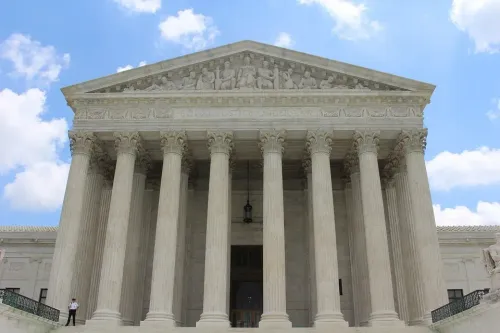
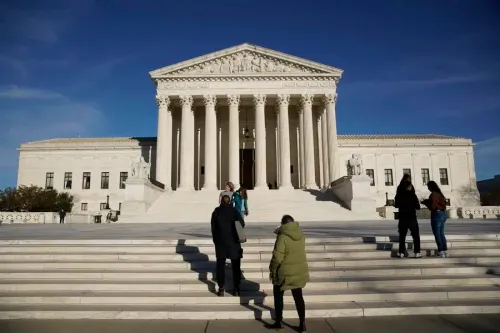
Washington, April 2 (NationPress) The US administration has raised alarms regarding “birth tourism,” specifically from China, as it advocates for the Supreme Court to limit automatic citizenship for infants born in the United States.
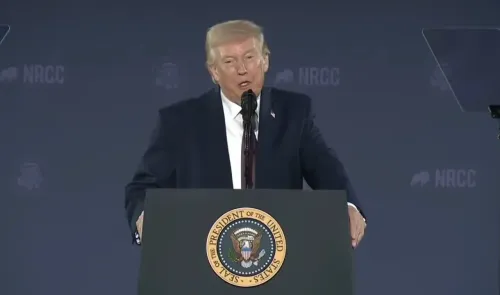
Solicitor General John Sauer, representing the Trump administration, informed the court on Wednesday (local time) that an increasing number of foreign individuals are coming to the US to give birth, forming what he described as a significant industry.
He referenced reports estimating between 1 to 1.5 million births associated with Chinese nationals, highlighting the existence of hundreds of firms in China that facilitate such travel.
Sauer argued that the existing system renders the United States an “outlier among modern nations”, presenting it as an attractive option for immigration.
He pointed out that “every country in Europe has varying regulations,” with most nations linking citizenship to parentage rather than place of birth.
This argument introduced an international perspective to the constitutional debate surrounding whether the 14th Amendment provides citizenship to nearly all children born in the US.
Several justices questioned the relevance of global comparisons in constitutional interpretation.
Justice Brett Kavanaugh noted that while international practices might inform policy discussions, they should not dictate the interpretation of US law.
Critics of the administration's stance echoed this sentiment, asserting that the Constitution embodies a distinctly American notion rooted in its historical context.
They contended that the 14th Amendment was crafted to establish a clear principle: birth on US soil grants citizenship, with only limited exceptions.
The court also considered the broader ramifications of altering this principle.
Justice Samuel Alito raised concerns about how limitations on birthright citizenship could impact families, particularly those with deep-rooted connections to the nation.
Sauer proposed that nations with stricter citizenship laws do not encounter a “huge humanitarian crisis,” implying that the US might follow suit.
He also mentioned changes in the international landscape, stating that “eight billion individuals are just a plane ride away” from the United States.
Opponents cautioned that such reasoning risks overturning established legal precedents.
They referenced the Supreme Court’s 1898 decision in United States v. Wong Kim Ark, which confirmed that most children born in the US are citizens, irrespective of their parents’ status.
The 14th Amendment, ratified in 1868, nullified the Dred Scott ruling and set forth a national definition of citizenship.
For over a century, the US has adhered to a broad birthright citizenship principle.
The court’s forthcoming decision could determine the future of this approach—whether it continues as is or aligns more closely with practices seen in other regions globally.
Point of View
Social, and geopolitical considerations. As the Supreme Court deliberates, it is essential to weigh historical context against contemporary immigration challenges. The outcome could redefine citizenship norms in the United States.
NationPress
15 Oct 2026
Frequently Asked Questions
What is birth tourism?
Birth tourism refers to the practice where foreign nationals travel to a country, often the United States, to give birth with the intention of securing citizenship for their child.
Why is the Trump administration concerned about birth tourism?
The Trump administration argues that birth tourism creates a significant industry and positions the US as an outlier in citizenship laws compared to other nations.
What does the 14th Amendment state about citizenship?
The 14th Amendment guarantees citizenship to nearly all individuals born on US soil, with few exceptions. It was ratified in 1868 to establish a national definition of citizenship.
How might changing birthright citizenship affect families?
Limiting birthright citizenship could have profound effects on families, particularly those with longstanding ties to the US, potentially rendering their children ineligible for citizenship.
What precedent does the Supreme Court's decision in Wong Kim Ark set?
The 1898 ruling in United States v. Wong Kim Ark affirms that most children born in the US are citizens, regardless of their parents' immigration status.