Trump Makes Historic Appearance at Supreme Court for Birthright Citizenship Hearing
Synopsis
US President Donald Trump creates history by being the first sitting president to attend a Supreme Court hearing on birthright citizenship. As the court evaluates his executive order limiting automatic citizenship, legal experts and activists voice their opinions amid a charged atmosphere.
Key Takeaways
Donald Trump is the first sitting president to attend a Supreme Court hearing.
The case challenges an executive order limiting birthright citizenship .
The 14th Amendment guarantees citizenship to those born in the US.
A ruling is expected by late June or early July.
This case could redefine citizenship criteria in the US.
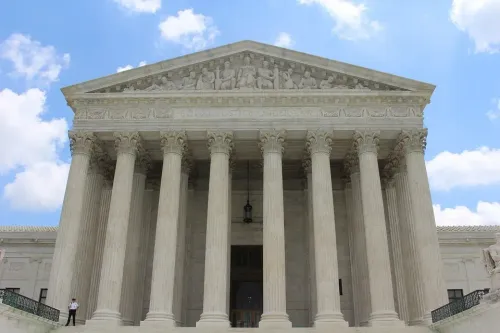
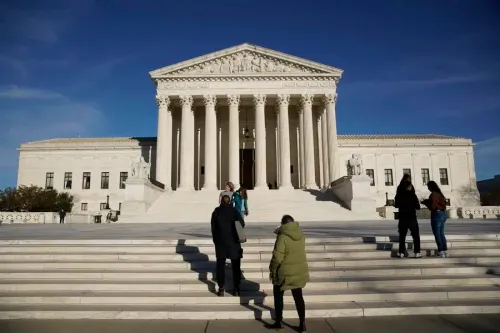
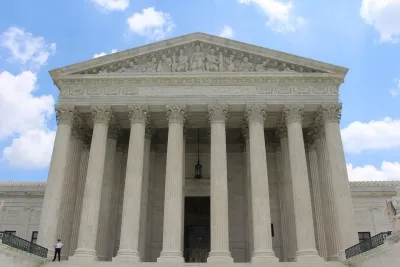
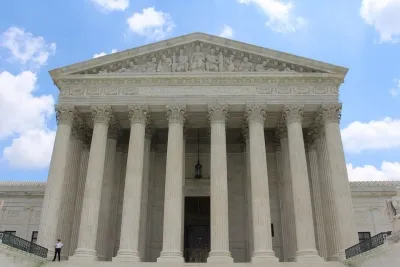
Washington, April 1 (NationPress) - On Wednesday, US President Donald Trump made history by attending oral arguments at the Supreme Court regarding birthright citizenship, marking him as the first sitting president to be physically present for such proceedings at the nation’s highest judicial body. The justices deliberated over a challenge to his executive order aimed at limiting automatic citizenship.
Trump's motorcade arrived just before the arguments commenced, and he departed shortly after Solicitor General D. John Sauer presented the government's case. Notably, cameras are prohibited within the courtroom.
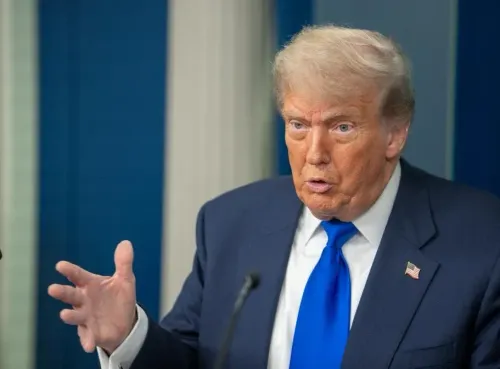
“I’m going,” Trump declared to reporters the day prior while in the Oval Office.
The case revolves around Trump’s order, which seeks to restrict birthright citizenship to children with at least one parent who is a US citizen or a legal permanent resident. Lower courts have previously blocked this policy, leading to the current appeal by the administration.
The 14th Amendment asserts that all individuals born or naturalized in the United States, and subject to its jurisdiction, are citizens—a principle traditionally understood to confer citizenship to nearly everyone born on US soil.
During the arguments, justices critically examined the administration's interpretation. Chief Justice John Roberts expressed concerns about the legality of the order in restricting citizenship for large groups. Justice Elena Kagan also questioned the government's interpretation of the Constitution, especially regarding the jurisdiction over noncitizens.
Justice Neil Gorsuch and Justice Ketanji Brown Jackson scrutinized the administration's reliance on “domicile”—the legal residence of parents—as a basis for citizenship determination, questioning its alignment with established precedent.
Sauer contended that the amendment was designed to grant citizenship to formerly enslaved individuals and their descendants, not to those without permanent legal status. He stated that the administration's criteria depend on whether individuals demonstrate a lasting allegiance to the United States.
In opposition, American Civil Liberties Union (ACLU) attorney Cecilia Wang asserted that birthright citizenship is a settled constitutional guarantee. “Ask any American what our citizenship rule is, and they’ll tell you: Everyone born here is a citizen alike,” she argued, emphasizing that this principle is beyond the reach of any government official.
Outside the courtroom, demonstrators rallied in favor of birthright citizenship, holding signs and banners that denounced the administration's actions.
In recent weeks, Trump has openly criticized the Supreme Court, including rulings against some of his policies. “I love a few of them, I don’t like some others,” he remarked when asked which justices he would monitor closely.
His courtroom presence attracted significant attention, with critics suggesting it could be interpreted as an attempt to sway the proceedings. ACLU Executive Director Anthony D. Romero argued that the court must remain focused on the Constitution, notwithstanding the “glare of a sitting president a couple of dozen feet away.”
Later on Wednesday, the White House announced that Trump is scheduled to address the nation regarding updates on the Iran conflict.
This case has the potential to significantly impact immigration policy and constitutional law. A ruling favoring the administration may redefine the criteria for citizenship at birth in the United States.
Birthright citizenship has been a fundamental aspect of US law since the 14th Amendment was ratified in 1868, following the Civil War. The Supreme Court reaffirmed this principle in the landmark 1898 case United States v. Wong Kim Ark, which established that children born in the US to noncitizen parents are citizens.
A decision in the current case is anticipated by late June or early July, which could reshape the legal landscape for millions of families across the nation.
Point of View
As President Trump's attendance at the Supreme Court hearing on birthright citizenship draws attention to a contentious issue that could redefine citizenship in America. The implications of the court's decision will resonate across the nation and affect countless families.
NationPress
22 Sept 2026
Frequently Asked Questions
What is the significance of Trump's attendance at the Supreme Court?
Trump's attendance is historic as he becomes the first sitting president to appear in person for Supreme Court proceedings, highlighting the importance of the birthright citizenship debate.
What is the main issue being debated in the Supreme Court?
The court is evaluating Trump's executive order that seeks to limit birthright citizenship to children with at least one parent who is a US citizen or legal permanent resident.
What does the 14th Amendment state about citizenship?
The 14th Amendment states that all persons born or naturalized in the United States, and subject to its jurisdiction, are citizens.
When can we expect a ruling on this case?
A ruling is anticipated by late June or early July, which could significantly impact citizenship policies in the US.
What are the potential consequences of the court's decision?
If the court sides with the administration, it could redefine the criteria for citizenship at birth in the United States, affecting millions of families.