Trump Calls Birthright Citizenship Unsustainable, Demands End
Synopsis
The White House on June 11, 2026, quoted President Trump declaring birthright citizenship 'unsustainable' and calling for its end. The statement renews a long-running challenge to the 14th Amendment's Citizenship Clause, a cornerstone of US immigration law since 1868, with major implications for children of non-citizens.
Key Takeaways
The White House on June 11, 2026 , quoted President Trump calling birthright citizenship economically and otherwise 'unsustainable.' Birthright citizenship in the United States is guaranteed by the 14th Amendment , ratified in 1868 .
Trump first threatened to end birthright citizenship by executive order in October 2018 .
The legal doctrine at issue is jus soli — citizenship by place of birth — which the US shares with Canada and most of Latin America .
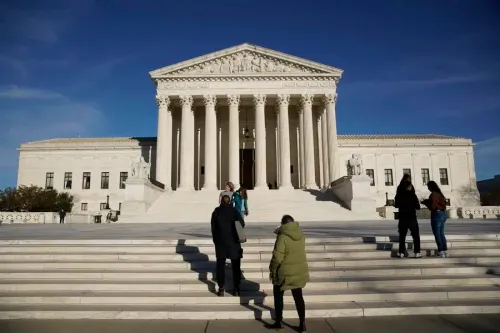
Any policy change would face immediate legal challenges likely reaching the Supreme Court , which has never directly ruled on birthright citizenship for children of undocumented immigrants.
Congressional hearings and related litigation are the next key arenas in the debate.
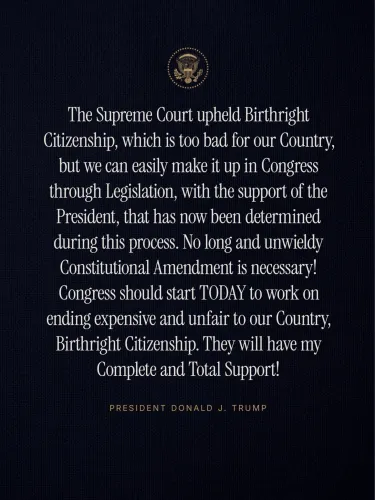
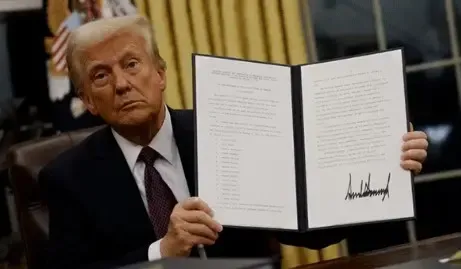
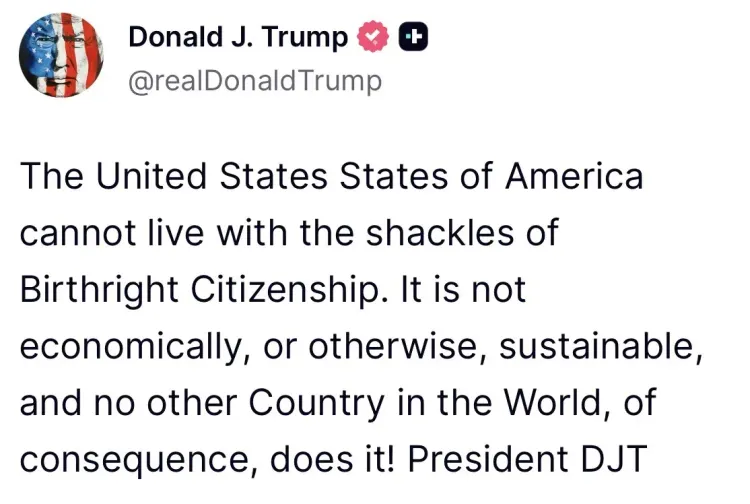
The White House on Thursday, June 11, 2026, quoted President Donald J. Trump directly attacking the principle of birthright citizenship in the United States, calling it economically unviable and arguing that no other significant nation maintains such a policy.
Context
In the post, President Trump stated: 'The United States of America cannot live with the shackles of Birthright Citizenship. It is not economically, or otherwise, sustainable, and no other Country in the World, of consequence, does it!' The statement represents a continuation of one of his most consistent immigration policy positions, stretching back to at least 2018 when he first threatened executive action on the issue.
Birthright citizenship in the United States is grounded in the 14th Amendment, ratified in 1868, whose Citizenship Clause grants citizenship to all persons born on American soil regardless of the immigration status of their parents. The legal doctrine is known as jus soli (right of the soil), as distinct from jus sanguinis (right of blood), which ties citizenship to parental nationality.
Policy Backdrop
Trump first raised the prospect of ending birthright citizenship by executive order in October 2018, arguing that children born to undocumented immigrants should not automatically receive citizenship. Legal scholars and constitutional experts have long debated whether the executive branch has the authority to reinterpret the 14th Amendment without a constitutional amendment or Supreme Court ruling.
The Citizenship Clause of the 14th Amendment reads that all persons 'born or naturalized in the United States, and subject to the jurisdiction thereof, are citizens.' The phrase 'subject to the jurisdiction thereof' has been the focal point of legal arguments by those who contend the clause does not extend to children of undocumented or temporary residents. Courts have historically interpreted the clause broadly.
Trump's framing — that the United States is an outlier among 'countries of consequence' — reflects a narrower reading of global practice. While the jus soli principle is less common among European and Asian nations, it remains standard across much of the Western Hemisphere, including Canada and most of Latin America.
Stakeholders and Impact
The primary stakeholders in any policy change would be children born in the United States to non-citizen parents — including those on temporary visas, those with pending immigration cases, and undocumented immigrants. Immigration policy advocates on both sides have long viewed birthright citizenship as a defining fault line in the broader debate over American immigration law.
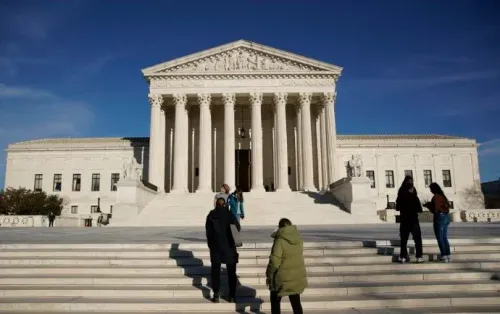
Any executive or legislative attempt to restrict birthright citizenship would almost certainly face immediate legal challenges, likely reaching the Supreme Court. The court has never directly ruled on whether the 14th Amendment mandates citizenship for children of undocumented immigrants, making any future litigation potentially landmark in scope.
What's Next
Congressional hearings on proposed citizenship legislation and related litigation are the most immediate arenas to watch. The statement from the White House signals that the Trump administration intends to keep pressure on the issue, whether through executive guidance, legislative proposals, or continued public advocacy.
The debate over birthright citizenship is ultimately a question about the meaning of the 14th Amendment — a constitutional text whose interpretation has shaped American identity for over 150 years. How the courts, Congress, and the public respond to renewed pressure from the executive branch will define a critical chapter in that ongoing argument.
Point of View
Rather than a constitutional guarantee, is a deliberate attempt to shift the terms of the debate from rights to costs. For the courts, however, the question remains a constitutional one, not a fiscal one, and any executive action will face the same steep legal wall it has faced for decades. The statement fits a broader pattern of using executive communication to pressure Congress and prime public opinion ahead of potential legislative or judicial action.
NationPress
29 Jul 2026
Frequently Asked Questions
What is birthright citizenship in the United States?
Birthright citizenship means that any person born on US soil is automatically a citizen, regardless of the immigration status of their parents. This right is established by the Citizenship Clause of the 14th Amendment , ratified in 1868 .
Can Trump end birthright citizenship by executive order?
Most constitutional scholars argue that ending birthright citizenship would require either a constitutional amendment or a Supreme Court ruling reinterpreting the 14th Amendment . An executive order alone is widely considered insufficient and would face immediate legal challenges.
Has Trump tried to end birthright citizenship before?
Yes. In October 2018 , during his first term, President Trump stated he would issue an executive order to end birthright citizenship for children of undocumented immigrants, though no such order was ultimately enacted in that form.
Is the United States the only country with birthright citizenship?
No. While the jus soli principle is less common in Europe and Asia, it is standard practice across much of the Western Hemisphere, including Canada and most of Latin America . Trump's claim refers to major developed economies, where the policy is indeed less common.
What happens next in the birthright citizenship debate?
Congressional hearings on proposed citizenship legislation and potential litigation reaching the Supreme Court are the most likely next steps. The court has never directly ruled on whether the 14th Amendment requires citizenship for children of undocumented immigrants.