Trump Signs Two Executive Orders to End Birth Tourism
Synopsis
President Trump signed two Executive Orders on August 7, 2026, to end birth tourism and restrict birthright citizenship, acting on the Supreme Court's ruling in Trump v. Barbara. The move reignites a decades-long constitutional debate over the 14th Amendment and sets up fresh legal battles in federal courts.
Key Takeaways
Trump signed two Executive Orders on August 7, 2026 targeting birth tourism and birthright citizenship.
The orders follow the Supreme Court's decision in Trump v.
Barbara , which the White House says provides the legal basis for the action.
The 14th Amendment , ratified in 1868 , has long been the constitutional anchor for automatic birthright citizenship in the United States.
Trump first signalled intent to restrict birthright citizenship via executive action in 2018 ; the Supreme Court ruling now appears to have unlocked that path.
Federal court challenges from immigrant communities and civil liberties groups are widely anticipated.
Congressional responses and funding measures tied to the orders will shape how quickly the new rules are enforced.
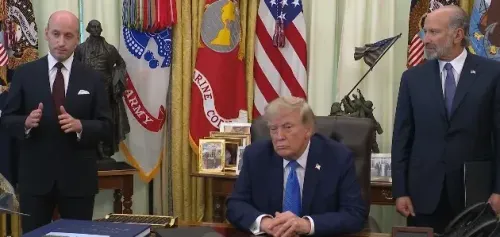
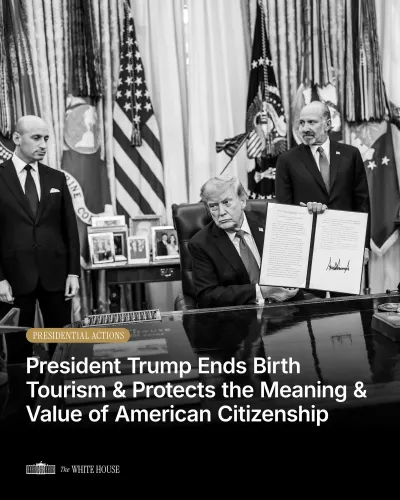
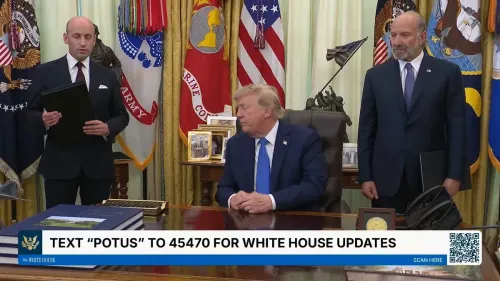
Following a Supreme Court ruling, President Donald J. Trump on Thursday, August 7, 2026, signed two Executive Orders aimed at curtailing birth tourism and tightening the legal definition of American citizenship — the most direct executive action on birthright citizenship in modern U.S. history.
What the Supreme Court case Trump v. Barbara changed
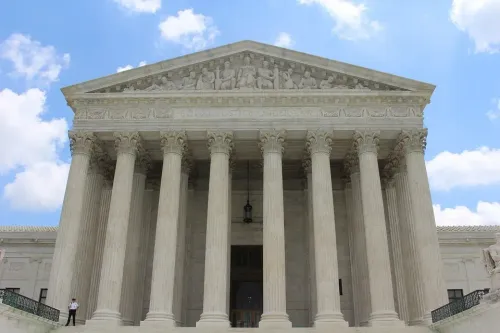
The White House announced the orders in the wake of Trump v. Barbara, a Supreme Court ruling that appears to have provided the legal foundation for restricting automatic birthright citizenship. The administration's official fact-sheet frames the executive orders as a direct follow-through on that ruling, stating the orders 'protect the meaning and value of American citizenship.' The precise scope of the court's decision — and how far it permits executive action — is expected to be tested in federal courts.
A policy battle decades in the making
The debate over birthright citizenship under the 14th Amendment has been one of the most contested fault lines in American immigration law. The amendment, ratified in 1868, grants citizenship to 'all persons born or naturalized in the United States.' Critics of automatic birthright citizenship have long argued that the clause was never intended to cover children born to foreign nationals temporarily on U.S. soil — a practice commonly called 'birth tourism.'
Trump first signalled intent to challenge birthright citizenship via executive action as far back as 2018, but the effort stalled amid constitutional uncertainty. The new Supreme Court ruling appears to have shifted that calculus decisively in the administration's favour.
What 'ending birth tourism' means in practice
Birth tourism — the practice of travelling to the United States specifically to give birth and secure citizenship for a child — has been the subject of congressional hearings and State Department visa policy adjustments for years. The executive orders, according to the White House, now operationalise restrictions that previous administrations only approached through visa enforcement. Immigrant communities and civil liberties advocates are expected to mount immediate legal challenges, making federal courts the next arena for this fight.
Congressional responses — including potential funding measures tied to the orders' implementation — will determine how quickly and broadly the new rules take effect. Whether the orders survive judicial scrutiny will hinge on how narrowly or broadly the Supreme Court's ruling in Trump v. Barbara is read by lower courts.
Point of View
The Trump administration has attempted to pre-empt the constitutional objections that stalled earlier efforts — a legally and politically significant manoeuvre. For Indian-origin immigrants and non-resident Indians with U.S.-born children, the orders carry direct personal stakes, making this a story with unusual resonance for an Indian readership. The durability of the orders will ultimately depend on how lower federal courts interpret the scope of Trump v. Barbara, turning the judiciary into the decisive battleground for American citizenship law.
NationPress
21 Sept 2026
Frequently Asked Questions
What is birth tourism and why is Trump targeting it?
Birth tourism refers to the practice of travelling to the United States specifically to give birth, so the child automatically receives U.S. citizenship under the 14th Amendment. President Trump signed two executive orders on August 7, 2026, to end this practice, arguing it undermines the meaning of American citizenship.
What is Trump v. Barbara and why does it matter?
Trump v. Barbara is a Supreme Court case whose ruling the White House says provides the legal foundation for restricting automatic birthright citizenship via executive order. The precise scope of the ruling is expected to be contested in lower federal courts.
Does this affect Indians who have children born in the United States?
The executive orders are specifically aimed at children born to non-resident foreigners, which could affect Indian nationals visiting or temporarily residing in the U.S. The full legal implications will become clearer as the orders face court scrutiny.
Can a U.S. president change birthright citizenship by executive order?
This has been constitutionally disputed for decades because the 14th Amendment grants citizenship to all persons born in the United States. The Trump administration argues the Supreme Court's ruling in Trump v. Barbara now permits executive action; legal challenges are expected.
What happens next after Trump signs these executive orders?
Federal courts are the immediate next arena, with legal challenges from immigrant communities and civil liberties groups widely anticipated. Congressional responses, including potential funding measures tied to implementation, will also shape how quickly the orders take effect.