Senate Hearing Highlights Concerns Over Chinese Birth Tourism in the US
Synopsis
A recent Senate hearing brought to light serious worries about the 'birth tourism' industry, where Chinese nationals exploit US citizenship laws. With alarming estimates suggesting up to 180,000 births annually, the implications for national security and citizenship rights are profound.
Key Takeaways
Birth tourism is a growing industry raising national security concerns.
Estimates suggest tens of thousands of Chinese nationals give birth in the US annually.
Existing laws attempt to regulate this practice, but enforcement is inconsistent.
The implications for citizenship rights are significant and may impact future legislation.
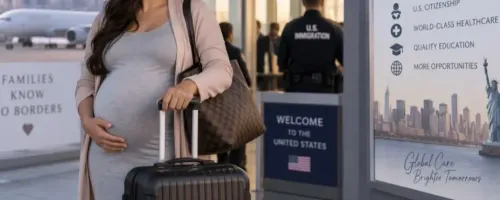
On March 11, in Washington (NationPress), apprehensions regarding Chinese individuals taking advantage of America's birthright citizenship laws through an expanding "birth tourism" sector were highlighted during a US Senate hearing. A witness cautioned legislators that numerous children born in the US are subsequently brought up in China.
This topic was discussed in a session of the Senate Judiciary Subcommittee on the Constitution, which is assessing whether children born in the United States to undocumented immigrants or temporary visitors should automatically acquire American citizenship.
Investigative journalist Peter Schweizer informed the lawmakers that organized firms facilitate travel, medical assistance, and logistics for non-citizens aiming to give birth in the US to secure American citizenship for their offspring.
"What constitutes birth tourism? Birth tourism is fundamentally an industry that offers comprehensive services for foreign nationals… they will transport them to the US, arrange medical care, secure citizenship for the child, and once the child is old enough to travel, they will return to China," Schweizer elaborated in his testimony.
He informed the committee that the magnitude of this practice could be considerable, with estimates indicating that potentially tens of thousands of Chinese nationals may give birth in the US annually.
"A few years back, the Chinese government estimated that approximately 50,000 Chinese citizens give birth in the US or its territories like Saipan each year," he stated.
Other estimates suggest even higher figures.
"A research firm in China estimated that in 2018 alone, 180,000 managed to give birth in the United States," Schweizer added.
Given these estimates, he posited that the number of American citizens raised in China due to birth tourism could be considerable.
"Doing the math indicates that there are about 1 million US citizens currently being raised in the People's Republic of China," he said.
Schweizer also expressed concerns that some clients of birth tourism companies are from China's political and military elite.
"These individuals are not political dissidents; they are military officers and high-ranking officials from the Ministry of Propaganda in the Chinese Communist Party," he said.
He emphasized that this practice raises long-term national security concerns since children born in the US automatically receive citizenship and could later exercise rights such as voting or applying for government positions.
Some lawmakers expressed skepticism regarding these claims during the hearing.
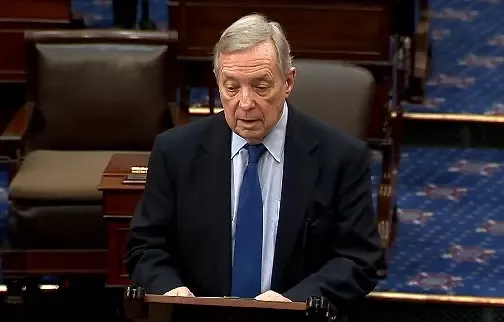
Senator Richard Durbin questioned the evidence presented and urged for concrete statistics concerning prosecutions related to birth tourism.
"You have some significant claims, but when it comes to figures, you should be able to inform us how many have been prosecuted," Durbin remarked.
Legal experts also informed the committee that birth tourism is already curtailed under current immigration laws.
Amanda Frost, a law professor at the University of Virginia, noted that US immigration regulations already permit officials to deny entry to travelers attempting to enter the country on tourist visas solely for the purpose of giving birth.
"There’s a regulation in place that makes it illegal to enter the US on a tourist visa for the purpose of giving birth," Frost stated.
She added that enforcing existing regulations could tackle the issue without amending the constitutional principle of birthright citizenship.
The discourse on birth tourism has emerged as part of a wider political and legal conflict regarding birthright citizenship in the United States.
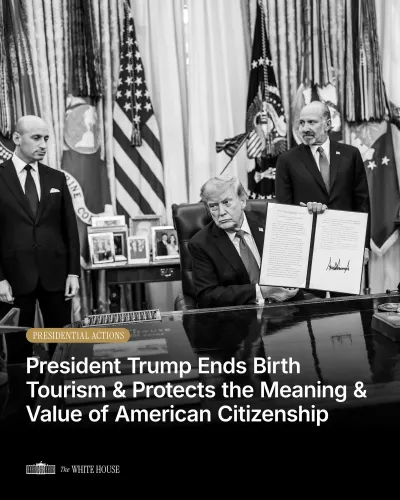
Former President Donald Trump issued an executive order aiming to revoke automatic citizenship for children born to undocumented migrants or temporary visitors, asserting that the Constitution does not necessitate such a policy.
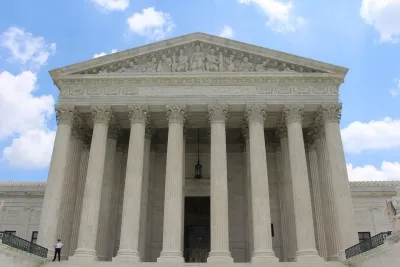
This matter is anticipated to reach the US Supreme Court shortly, where justices will deliberate whether the 14th Amendment’s citizenship clause guarantees citizenship to anyone born on American soil.
The 14th Amendment, ratified in 1868 post-Civil War, declares that "all persons born or naturalized in the United States, and subject to the jurisdiction thereof, are citizens of the United States." This provision was partially intended to overturn the Supreme Court’s 1857 Dred Scott ruling, which denied citizenship to African Americans.
In 1898, the Supreme Court’s decision in United States v. Wong Kim Ark affirmed that children born in the US to foreign parents are citizens, a precedent that has influenced American citizenship law for over a century.
Point of View
It reflects broader debates about immigration laws and citizenship principles in the United States. A balanced approach is crucial to address these challenges while adhering to constitutional mandates.
NationPress
3 Oct 2026
Frequently Asked Questions
What is birth tourism?
Birth tourism refers to the practice where individuals travel to another country to give birth, allowing their child to obtain citizenship from that country.
Why is birth tourism a concern?
It raises issues about national security, potential misuse of citizenship laws, and the implications of having thousands of citizens raised outside the country.
How many Chinese nationals give birth in the US each year?
Estimates suggest that between 50,000 and 180,000 Chinese nationals may give birth in the US annually.
What are the legal implications of birth tourism?
Current US immigration laws restrict entry for those intending to give birth on tourist visas, but enforcement remains a challenge.
What is the 14th Amendment?
The 14th Amendment grants citizenship to all persons born or naturalized in the US, a principle that has faced scrutiny in the context of birth tourism.