Is China Now Encouraging Women to Have More Children Amid Demographic Decline?
Synopsis
China's shifting stance on childbirth reflects a dramatic reversal from its strict population control measures. As the nation grapples with declining birth rates and demographic challenges, the government is now pushing for increased childbirth among women, raising questions about individual rights and societal pressures. Will these new policies effectively address the looming demographic crisis?
Key Takeaways
China's demographic crisis has led to a push for increased childbirth.
The one-child policy previously enforced strict population control.
Women face social and economic pressures in response to new policies.
Long-term consequences of past policies may be irreversible .
The government's approach reflects economic rather than personal considerations .
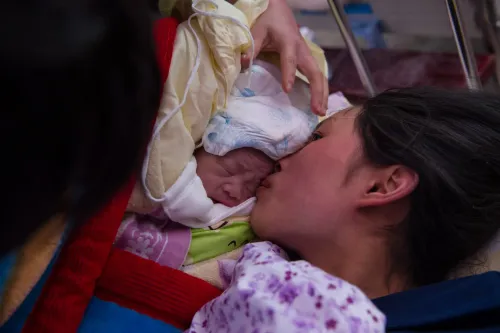
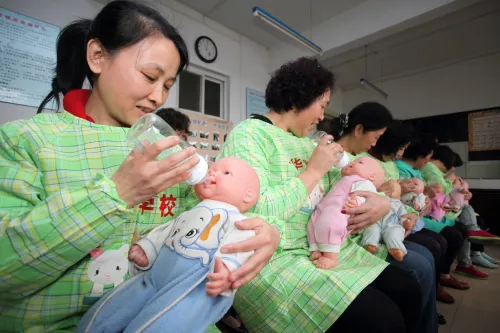
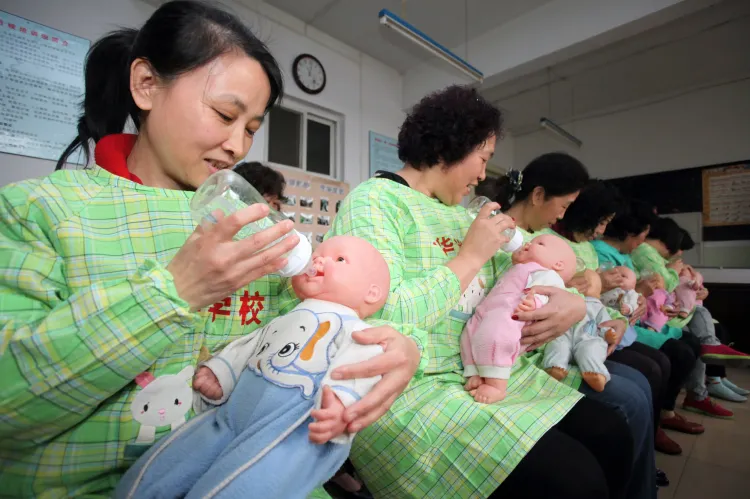
New Delhi, Feb 6 (NationPress) From enforcing a strict one-child policy to managing population control, China has now shifted its focus towards encouraging women to have more children in an effort to improve its declining demographic trends, according to a media report.
The Myanmar-based MeKong News indicated that for the last forty years, the government—not women—has been the primary architect of the nation’s birth policies.
Initially introduced in 1979, the one-child policy was aimed at curbing population growth. However, as the nation faces the threat of a demographic crisis, the current push is for women to increase their birth rates.
According to official statistics released in January, the number of births in 2025 plummeted by 17% year-on-year to just 7.92 million, marking the lowest figures recorded since population tracking began in 1949.
“The government in Beijing continues to view reproduction as a tool of economic strategy, rather than a matter of individual rights,” the report noted.
To achieve goals such as “accelerating development, enhancing incomes, and mitigating resource pressure,” the former one-child policy resulted in numerous human rights violations, including forced abortions, involuntary sterilizations, and significant pressure tactics such as detention, fines, and harassment.
The state’s coercive measures “became an enforcement mechanism embedded in local governance, where compliance was linked to administrative performance,” the report elaborated, leading not only to demographic control but also to a systemic form of reproductive surveillance.
Moreover, the traditional preference for sons has distorted the country’s sex ratio.
“Under the one-child limitation, the consequences of having the 'wrong' gender led to severe economic and cultural repercussions for families,” according to the report.
It emphasized that the societal costs have disproportionately affected girls, whose births were frequently perceived as liabilities in a system designed to restrict choices.
China transitioned from the one-child policy to a two-child policy in 2016 and later expanded to a three-child policy as birth rates continued to decline.
“The inconsistency in China’s policy changes highlights a fundamental issue: instead of acknowledging individual rights, the government recalibrated reproductive restrictions based on economic necessities,” the report stated.
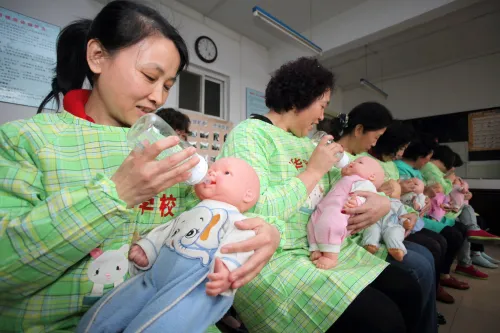
While the state is now advocating for increased childbirth, many couples are grappling with escalating living expenses, employment uncertainties, housing challenges, and gender-specific workplace disadvantages.
Notably, due to the imbalanced sex ratio, China is now experiencing a decreasing number of women in childbearing age.
“Even as the government urges more childbirth, women find themselves trapped between policy demands and societal realities,” the report concluded.
It warned that the repercussions of decades of social engineering may be irreversible, despite recent policy reversals.
Point of View
It's essential to recognize that China's demographic strategy reflects a complex interplay between government policies and individual rights. While the push for increased childbirth aims to address an urgent demographic crisis, it also raises critical questions about women's autonomy and social pressures. The long-term consequences of decades of state control over reproductive rights may be challenging to reverse.
NationPress
22 Oct 2026
Frequently Asked Questions
What was China's one-child policy?
The one-child policy was a population control measure implemented in 1979, aiming to curb population growth by restricting most families to just one child.
Why is China encouraging more childbirth now?
With declining birth rates and an aging population, China is encouraging more childbirth to prevent a demographic collapse and maintain economic stability.
What were the consequences of the one-child policy?
The one-child policy led to forced abortions, sterilizations, and a skewed sex ratio, as families preferred sons over daughters.
What changes have been made to China's birth policies?
China transitioned from a one-child policy to a two-child policy in 2016 and later introduced a three-child policy in response to falling birth rates.
How are women affected by these policy changes?
Women are caught between state demands for increased childbirth and societal pressures, including rising living costs and job insecurities.