Concerns Mount for H-1B Families Amid Supreme Court Citizenship Case
Synopsis
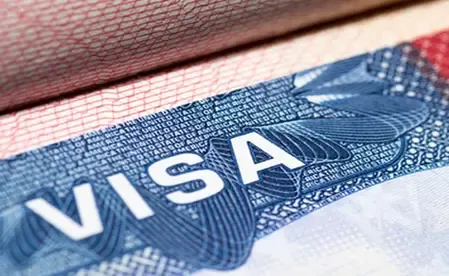
A US Supreme Court case on birthright citizenship has raised significant concerns for Indian H-1B visa holders. The outcome may redefine citizenship for children born to temporary visitors, threatening the status of many families and their access to essential rights.
Key Takeaways
Supreme Court Case: Focused on birthright citizenship.
H-1B Visa Impact: Thousands of Indian families affected.
Constitutional Argument: Challenges existing interpretations.
Potential Changes: Could redefine citizenship status for US-born children.
Historical Precedent: Relates to United States v.
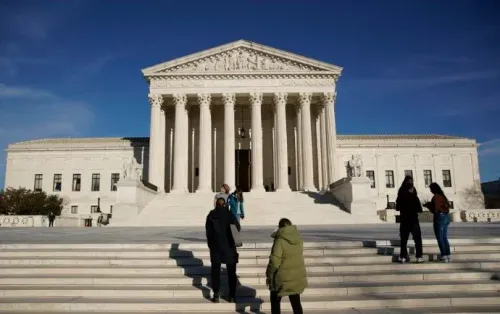
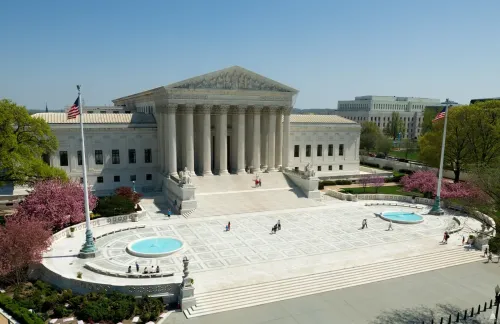
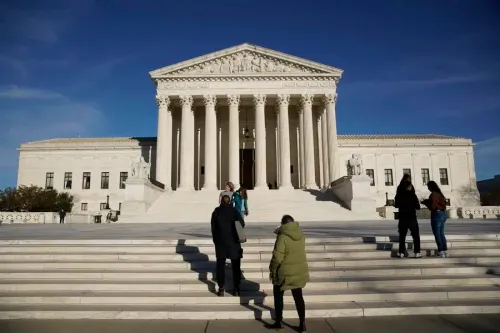
Washington, April 2 (NationPress) A case before the US Supreme Court regarding birthright citizenship has sparked anxiety among Indian professionals holding H-1B visas and other non-permanent permits.
The previous administration asserted in court that children born to individuals classified as "temporary visitors" might not qualify for automatic US citizenship.
Solicitor General John Sauer stated that the Constitution necessitates "direct and immediate allegiance" to the United States, which he argued does not merely stem from being born on American soil.
He contended that children born to parents on temporary visas do not satisfy this requirement.
This stance could have significant implications for thousands of Indian families, as Indians represent the largest demographic of H-1B visa holders in the United States.
Many of these families reside in the US for extended periods while awaiting green cards, establishing careers, and raising children. Under current legislation, their children born in the US are considered citizens.
The government's argument challenges this long-standing interpretation.
Sauer maintained that the phrase "subject to the jurisdiction thereof" should be interpreted as necessitating allegiance linked to lawful residency.
He suggested that this rule should not extend to individuals present in the country temporarily.
Several justices raised concerns regarding the practical implementation of such a policy.
They inquired about how officials would ascertain a child’s citizenship status at birth and whether it would require checking the parents’ immigration status each time.
The government indicated that the system would depend on "objectively verifiable" immigration data, implying that a child's citizenship could hinge on the parents' visa status.
Legal representatives opposing the administration cautioned that this approach could overturn established law.
They referenced the 1898 Supreme Court decision in United States v. Wong Kim Ark, which determined that most children born in the US are citizens, irrespective of their parents' immigration status.
They asserted that the Constitution provides a clear guideline: "Everyone born here is a citizen alike," as stated by counsel in court.
For Indian families, the implications are substantial.
H-1B visa holders frequently endure lengthy delays in achieving permanent residency. During this waiting period, their US-born children possess full citizenship rights.
A modification in the law could introduce uncertainty, impacting access to education, employment, and government benefits.
The court also examined whether any potential ruling would only have future implications.
The government claimed its policy would be prospective, but challengers warned that the rationale could jeopardize the status of many individuals.
This case arises amid a backdrop of ongoing immigration debates within the United States.
The administration argued that existing regulations serve as a "pull factor" for unlawful immigration.
The 14th Amendment, ratified in 1868, grants citizenship to all individuals born in the US and subject to its jurisdiction, originally intended to secure citizenship for freed slaves after the Civil War.
For over a century, the US has upheld a broad interpretation of birthright citizenship.
The Supreme Court's decision has the potential to alter this foundational principle, directly impacting Indian professionals and their families.
Point of View
The Supreme Court's deliberations on birthright citizenship represent a pivotal moment. This case could redefine longstanding interpretations of citizenship, particularly affecting H-1B visa holders. The implications of this ruling extend beyond legal definitions, touching the lives and futures of countless families in America.
NationPress
15 Oct 2026
Frequently Asked Questions
What is the Supreme Court case about?
The case addresses whether children born to parents on temporary visas should automatically receive US citizenship.
How could this case impact Indian H-1B families?
A ruling against birthright citizenship could jeopardize the citizenship status of children born in the US to H-1B visa holders, affecting their rights and opportunities.
What precedent is being challenged?
The case challenges the 1898 ruling in United States v. Wong Kim Ark, which established that most children born in the US are citizens, regardless of their parents' immigration status.
What are the potential consequences of this ruling?
If the court rules against birthright citizenship, it could create uncertainty regarding citizenship rights for many children, impacting education, employment, and government benefits.
What does the 14th Amendment say about citizenship?
The 14th Amendment grants citizenship to all persons born in the United States and subject to its jurisdiction, intended to ensure citizenship for freed slaves after the Civil War.