Native American Tribes at the Center of US Citizenship Debate
Synopsis
In a pivotal Supreme Court hearing, Native American tribes are spotlighted as key players in the discussion surrounding birthright citizenship, a matter President Trump seeks to change. Legal arguments hinge on historical interpretations of the 14th Amendment and its implications for modern immigration.
Key Takeaways
Native American tribes are central to the Supreme Court's current citizenship debate.
The 14th Amendment historically excluded tribal members from automatic citizenship.
Arguments hinge on interpretations of sovereignty and allegiance.
A court decision may redefine the scope of birthright citizenship.
The outcome could create new precedents for citizenship law.
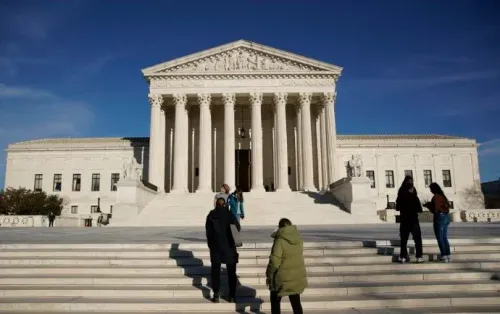
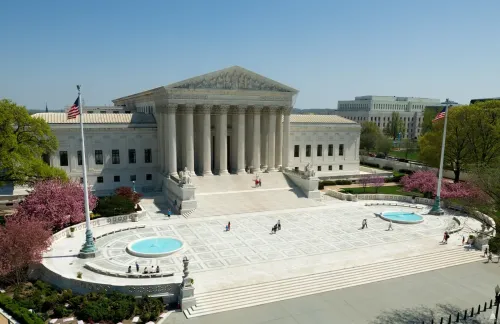
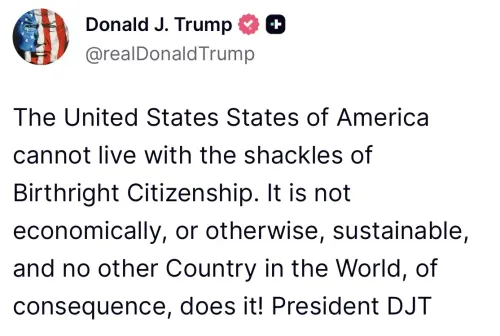
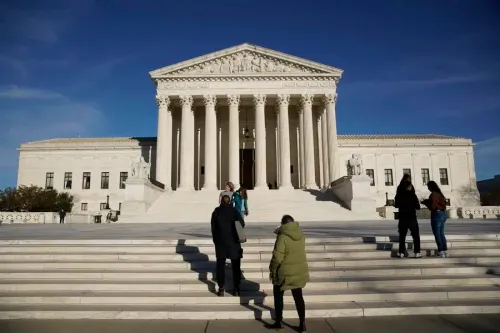
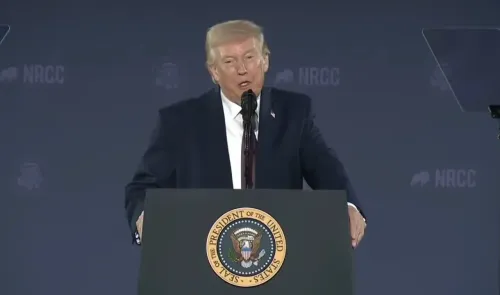
Washington, April 2 (NationPress) American Indian tribes have taken center stage in the ongoing US Supreme Court hearings regarding birthright citizenship, an issue President Donald Trump aims to alter as lawyers explore how foundational constitutional principles relate to contemporary immigration matters.
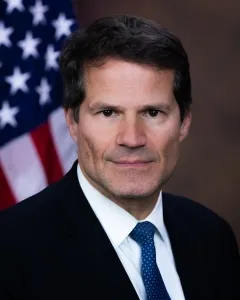
During the proceedings on Wednesday, Solicitor General John Sauer, representing the Trump administration, argued that the 14th Amendment was never intended to confer universal citizenship to all individuals born within the United States.
Sauer highlighted a longstanding exception: children born to American Indian tribes were not automatically granted citizenship at the time the Amendment was ratified.
“The offspring of tribal Indians do not fall under the rule of birthright citizenship,” Sauer stated before the justices.
This illustrates that merely being born on US soil does not guarantee citizenship; it hinges upon whether an individual is fully subject to US jurisdiction.
Several justices engaged with this argument, including Clarence Thomas, who questioned how the citizenship clause relates to historical rulings such as Dred Scott, and Samuel Alito, who examined how established constitutional principles apply to current circumstances.
Elena Kagan and Ketanji Brown Jackson raised concerns about whether the government’s interpretation diverges from established precedents and common law regarding jurisdiction and allegiance.
The administration contended that American Indian tribes were traditionally recognized as distinct political entities with their own sovereign status, with tribal members seen as owing loyalty to their tribal governments rather than fully to the United States.
This implies that they were not entirely under US authority like other residents.
In contrast, attorneys representing the challengers argued that this exception is unique and cannot be applied to immigrants.
“They are subject to another sovereign's jurisdiction even while they are in the United States,” the attorney told the court, labeling the tribal status as a “fiction of extraterritoriality.”
The attorney noted that this scenario does not pertain to foreign nationals, who remain entirely subject to US law while in the country.
Neil Gorsuch and Amy Coney Barrett questioned whether the tribal exception is linked to territorial claims or political identity, and whether it could lead to new restrictions on citizenship.
Historically, American Indian tribes were excluded from automatic citizenship, even if born within US borders, until 1924 when Congress granted citizenship to Native Americans through legislation.
The discussion underscored that the 14th Amendment was influenced by two primary issues: ensuring citizenship for freed slaves and maintaining the distinct status of tribal nations.
“I believe the main focus… really concerned not with immigrants, but with the Indian tribes,” Sauer stated.
Legal experts assert that this distinction is vital, as it indicates that early citizenship discussions were linked to sovereignty rather than immigration policy.
The case now seeks to determine if this narrow historical exception can be invoked to justify broader limitations on birthright citizenship in the modern context.
The 14th Amendment reversed the Dred Scott ruling and established a national definition of citizenship.
For over a century, that definition has been broadly interpreted under the precedent set by United States v. Wong Kim Ark.
The court's ruling could decide whether new exceptions may be created or if the original rule will remain intact.
Point of View
The ongoing Supreme Court case highlights the complexities surrounding birthright citizenship as it intersects with the historical status of Native American tribes. The arguments presented reflect a significant moment in legal history, questioning the balance between sovereignty and citizenship rights within the context of modern immigration.
NationPress
17 Sept 2026
Frequently Asked Questions
What is the main issue in the Supreme Court case?
The core issue revolves around whether the 14th Amendment's citizenship clause applies universally, particularly concerning Native Americans and their historical exclusion from automatic citizenship.
Why were Native Americans excluded from the citizenship clause initially?
Native Americans were historically recognized as separate political entities with sovereign status, which led to their exclusion from the birthright citizenship provisions of the 14th Amendment.
What implications could the court's ruling have?
The ruling could set a precedent for new exceptions to birthright citizenship or reaffirm the original interpretations established over a century ago.
How does this case relate to historical rulings like Dred Scott?
The case challenges how historical rulings, such as Dred Scott, inform current interpretations of citizenship and sovereignty concerning Native American tribes.
What was the significance of the 1924 Citizenship Act?
The 1924 Citizenship Act granted US citizenship to Native Americans, marking a significant change from their previous exclusion from automatic citizenship.