Most-wanted Maoist Asim Mandal arrested in Bengal's Patashpur after ₹2.20 crore bounty
Synopsis
After years underground following the 2011 killing of Maoist supremo Kishanji, CPI (Maoist) leader Asim Mandal — wanted across three states with a ₹2.20 crore combined bounty and nearly 55 criminal cases on his record — has finally been caught by Kolkata's STF in a pre-dawn operation in Patashpur. His arrest is being called the biggest LWE breakthrough in eastern India in years.
Key Takeaways
Kolkata STF arrested senior CPI (Maoist) leader Asim Mandal on 17 September 2026 in Patashpur, East Midnapore , West Bengal.
A combined bounty of ₹2.20 crore had been announced — ₹1 crore by Jharkhand and ₹1.20 crore by Odisha.
Nearly 55 serious criminal cases are registered against him across West Bengal, Jharkhand and Odisha.
Mandal served as Secretary of the West Bengal State Committee of CPI (Maoist) from 2010 and later held a key position in the Bengal-Jharkhand-Odisha Regional Committee .
Investigators recovered Maoist literature, booklets and electronic communication equipment from his possession at the time of arrest.
His wife, also an alleged Maoist activist, has been in judicial custody since 2010 .
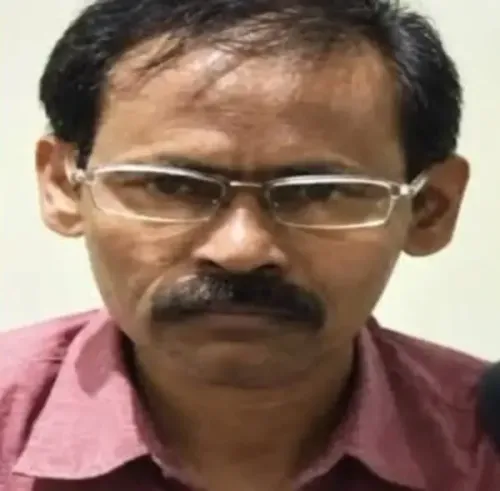
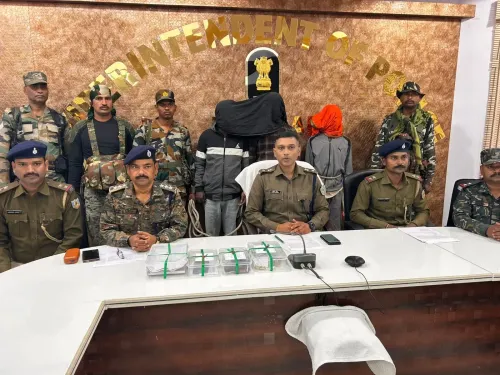
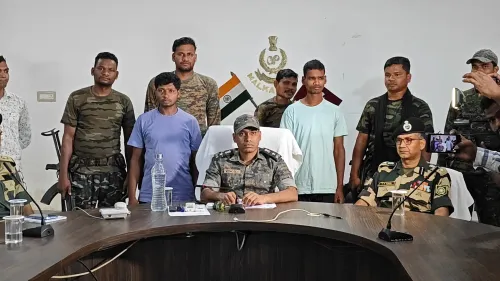
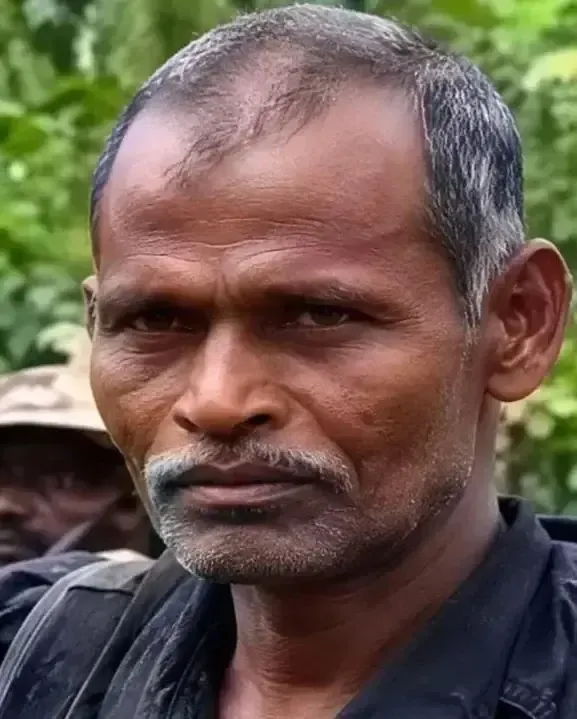
The Special Task Force (STF) of Kolkata Police on Thursday, 17 September 2026, arrested senior CPI (Maoist) leader Asim Mandal — also known by aliases Akash, Timir, and Manoj — in a pre-dawn operation at Patashpur in East Midnapore district, West Bengal. Mandal was among the most wanted Maoist leaders operating across West Bengal, Jharkhand, and Odisha, with a combined bounty of ₹2.20 crore on his head announced by three state governments.
The Arrest and What Was Recovered
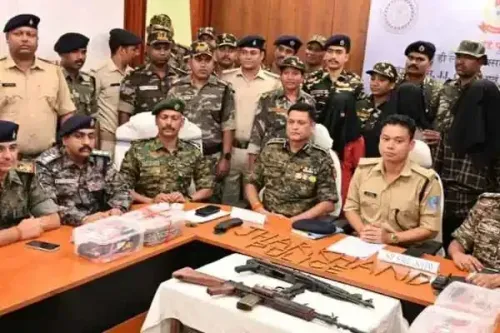
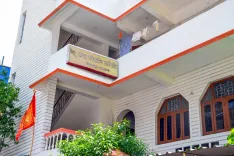
Security forces apprehended Mandal during an early morning operation in Patashpur, according to West Bengal Police. Investigators reportedly recovered two bags from his possession containing Maoist literature, booklets, and electronic communication equipment — material likely used to coordinate operations across the tri-state extremist network.
The Jharkhand government had announced a reward of ₹1 crore for his arrest, while the Odisha government had placed a bounty of ₹1.20 crore on him. The cumulative reward underscores how seriously security agencies across the region had rated his operational threat.
Who Is Asim Mandal
A native of Fulchak village under Chandrakona Police Station in West Midnapore district, Mandal is said to have been drawn into Left-Wing extremist activities during his student years in the 1980s. He subsequently joined the People's War Group, working extensively in the Sarenga and Goaltor regions of West Bengal as well as the Gurabanda area of Jharkhand's East Singhbhum district.
Following the formation of CPI (Maoist) in September 2004, he returned to the Jangalmahal region — spanning parts of Bankura, Purulia, and West Midnapore districts — and deepened his involvement in the outfit's activities. He reportedly played a key role during the Lalgarh movement, after which he was entrusted with the position of Secretary of the West Bengal State Committee in 2010. He later held positions in the Bengal-Jharkhand-Odisha Regional Committee.
Criminal Record and Family Ties
Security agencies' records show that nearly 55 serious criminal cases are registered against Mandal across the three states, several of them relating to attacks on security forces and armed encounters in Jharkhand. His wife, a resident of the Patashpur area and an alleged CPI (Maoist) activist, was arrested by the STF in 2010 and is currently in judicial custody, according to police sources.
Context: Maoist Network After Kishanji's Death
The Maoist network in West Bengal suffered a significant blow after the November 2011 encounter killing of senior leader Kishanji. Thereafter, Mandal reportedly went completely underground, evading security forces for years before his capture on Thursday. His arrest is being viewed by security agencies as a major setback to Maoist activities across the tribal and forested regions of the three eastern states.
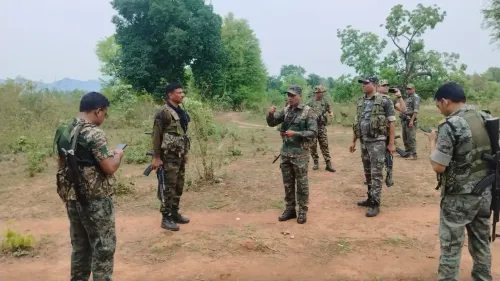
This comes amid a sustained national push against Left-Wing Extremism, with the Centre repeatedly identifying West Bengal, Jharkhand, and Odisha as key areas of persistent LWE activity. The arrest signals that STF operations in the region remain both active and effective.
Point of View
But it also reveals something uncomfortable: a man with 55 registered cases and a ₹2.20 crore bounty remained at large for over a decade after Kishanji's death. That gap between the size of the network's criminal record and the pace of its dismantlement points to persistent intelligence failures and jurisdictional friction between West Bengal, Jharkhand and Odisha. The recovery of electronic communication equipment is the detail to watch — it could either unlock a broader network or prove to be the last active node in a movement that has dramatically shrunk in the state. The real test for security agencies is whether this arrest translates into actionable intelligence, or remains a headline without a follow-through.
NationPress
17 Sept 2026
Frequently Asked Questions
Who is Asim Mandal, the Maoist leader arrested in West Bengal?
Asim Mandal, also known by aliases Akash, Timir, and Manoj, is a senior CPI (Maoist) leader who was among the most wanted Left-Wing extremists operating across West Bengal, Jharkhand and Odisha. He was Secretary of the CPI (Maoist) West Bengal State Committee from 2010 and later held a key role in the Bengal-Jharkhand-Odisha Regional Committee, with nearly 55 criminal cases registered against him.
Where and when was Asim Mandal arrested?
Asim Mandal was arrested in Patashpur, East Midnapore district, West Bengal, during a pre-dawn operation by the Kolkata Police STF on 17 September 2026.
How much was the bounty on Asim Mandal?
A combined reward of ₹2.20 crore had been announced for his capture — ₹1 crore by the Jharkhand government and ₹1.20 crore by the Odisha government.
What was recovered from Asim Mandal at the time of his arrest?
Investigators reportedly recovered two bags from his possession containing Maoist literature, booklets, and electronic communication equipment, which security agencies believe were used to coordinate activities across the tri-state network.
What is the significance of this arrest for the Maoist movement in eastern India?
Security agencies have described it as a major setback for Left-Wing Extremism across the tribal and forested regions of West Bengal, Jharkhand and Odisha. Mandal had been underground since the November 2011 encounter killing of senior Maoist leader Kishanji, making his capture one of the most significant LWE arrests in the region in recent years.