India must shift to tech-driven mining competitiveness: MoS Jitendra Singh
Synopsis
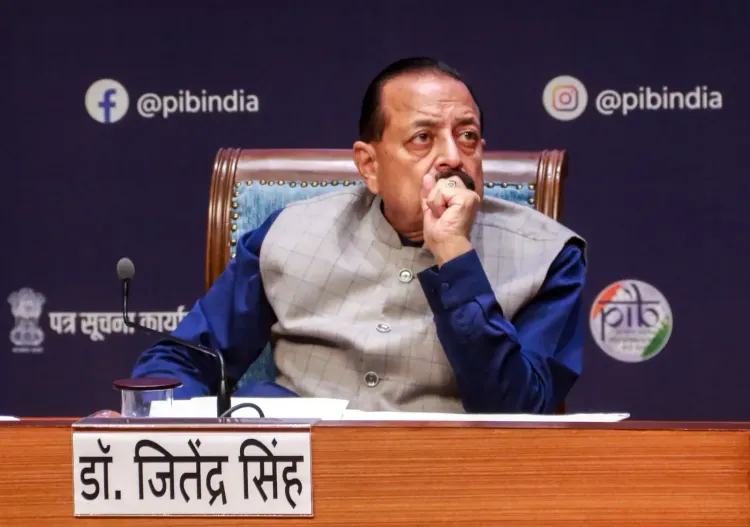
At a FICCI Conference in New Delhi, MoS Dr. Jitendra Singh issued a clear directive: India's mining and metals sector must stop treating technology as a pilot project and start deploying it as a strategic enabler — spanning exploration to recycling — or risk losing ground on critical minerals that will define the clean-energy economy.
Key Takeaways
Jitendra Singh on 17 September 2026 called for a shift from resource-based to technology-driven competitiveness in India's mining and metals sector.
He addressed a FICCI Conference in New Delhi , urging a move beyond isolated pilots to connected, scalable technology systems .
Key challenges cited include declining ore grades , geopolitical concentration of critical-mineral supply chains, and rising decarbonisation requirements.
The minister called for domestic capabilities in separation, purification, refining, advanced materials, magnet manufacturing, and recycling .
The push is framed within India's Viksit Bharat @ 2047 vision, with mining central to energy transition and manufacturing growth.
Union Minister of State for Science & Technology and Earth Sciences Dr. Jitendra Singh on Thursday, 17 September 2026, called for India to move from a resource-based advantage to a technology-driven competitive model in the mining and metals sector, with digital and process technologies integrated across the full value chain — from geological exploration and extraction to processing, logistics, recycling, and downstream manufacturing.
What the Minister Said
Addressing a FICCI Conference in New Delhi, Dr. Singh argued that the future competitiveness of India's mining sector would hinge not just on the scale of mineral extraction, but on how efficiently, safely, sustainably, and intelligently the country converts its geological resources into high-value, resilient, and circular material supply chains.
He urged industry stakeholders to move beyond isolated technology pilots towards 'connected, scalable and trusted technology systems' capable of transforming the sector at industrial scale. Technology, he said, must be treated as a strategic enabler spanning the entire mineral-resource-to-metals-to-downstream value chain — not merely as a capital investment line item.
Key Challenges Driving the Push
Dr. Singh identified a set of structural pressures making the status quo untenable: declining ore grades, deeper and more complex deposits, rising energy and logistics costs, geopolitical concentration of critical-mineral supply chains, decarbonisation requirements, and shifting customer expectations. Together, these forces, he noted, are creating an urgent need for a technology-led approach to remain globally competitive.
This comes amid India's broader push to secure self-sufficiency in critical minerals — rare earths, lithium, cobalt, and others essential for electric vehicles, semiconductors, and clean energy infrastructure — as global supply chains grow increasingly fragile.
Digital and Process Technologies as Enablers
The minister outlined two broad pillars of technological transformation. First, digital technologies — integrating geological, operational, equipment, process, energy, logistics, and market data — can enable faster, more precise decision-making through greater visibility, prediction, coordination, and automation. Second, process technologies can improve extraction and recovery rates, unlock value from low-grade ores and residues, reduce energy and water intensity, support lower-carbon metal-making, and strengthen capabilities in separation, refining, advanced materials, and recycling.
Together, these levers can reduce costs for extraction and refining, improving the competitiveness of Indian minerals and metals in both domestic and global markets, according to the ministry statement.
Building Domestic Capabilities
Dr. Singh specifically called for India to build indigenous capabilities in separation, purification, refining, advanced materials, magnet manufacturing, and recycling, along with associated equipment, skills, and intellectual property. This signals a policy intent to move up the value chain rather than continuing to export raw or semi-processed minerals.
The two-day FICCI conference — bringing together policymakers, industry leaders, technology providers, startups, researchers, and international partners — forms part of the broader dialogue on technology adoption across India's mineral-based industries as the country advances toward its Viksit Bharat @ 2047 vision.
Context: Mining's Role in Viksit Bharat
The minister underscored that India's mining and metals sector is entering a defining phase, playing a central role in infrastructure development, energy transition, manufacturing growth, self-reliance, and economic competitiveness. A decade of growth anchored in infrastructure build-out, domestic manufacturing, digital infrastructure, and innovation has created the scale and capabilities required for technology-led expansion, he said.
As India accelerates its industrial and clean-energy ambitions, the next phase of policy and investment in the mining sector is expected to place technology adoption — not resource endowment alone — at its core.
Point of View
But India has a long record of conference-stage commitments to technology adoption in extractive industries that stall at the pilot phase. The real test is whether the Centre backs this vision with procurement mandates, R&D funding, and — critically — domestic IP development rather than imported systems. On critical minerals specifically, India risks repeating the solar-panel trap: building downstream capacity while remaining dependent on foreign processing technology. The emphasis on recycling and refining is the most strategically significant signal in this speech, and the one least likely to get headlines.
NationPress
17 Sept 2026
Frequently Asked Questions
What did MoS Jitendra Singh say about India's mining sector?
Dr. Jitendra Singh called for India to shift from a resource-based advantage to technology-driven competitiveness in mining and metals, with technology integrated across the full value chain from exploration to recycling. He made the remarks at a FICCI Conference in New Delhi on 17 September 2026.
Why does India need a technology-led approach to mining?
Declining ore grades, deeper deposits, rising energy and logistics costs, geopolitical concentration of critical-mineral supply chains, and decarbonisation pressures are making traditional resource-extraction approaches less viable. A technology-led model can improve efficiency, reduce costs, and unlock value from lower-grade ores.
What domestic capabilities did the minister call for India to build?
Dr. Singh specifically called for building indigenous capabilities in separation, purification, refining, advanced materials, magnet manufacturing, and recycling, along with associated equipment, skills, and intellectual property — signalling a policy push to move up the minerals value chain.
How does this relate to India's Viksit Bharat @ 2047 vision?
The minister framed the mining and metals sector as central to India's Viksit Bharat @ 2047 goals, linking it to infrastructure development, energy transition, manufacturing growth, and economic self-reliance. Technology-led transformation of the sector is seen as a prerequisite for sustaining that growth trajectory.
What is the FICCI Conference where these remarks were made?
It is a two-day conference organised by FICCI in New Delhi, bringing together policymakers, industry leaders, technology providers, startups, researchers, and international partners to discuss technology adoption across India's mineral-based industries.