ESTIC 2026: Jitendra Singh urges outcome-driven science for Viksit Bharat
Synopsis
ESTIC 2026 wrapped up in New Delhi with a pointed message: India's science ecosystem must stop measuring itself by publications and start measuring itself by outcomes. Two landmark documents — a cross-ministry National Vision Document and an annually updatable STI Outlook — were released, setting the stage for a more accountable, deployment-focused science and technology policy ahead of Viksit Bharat 2047.
Key Takeaways
MoS Jitendra Singh addressed the valedictory session of ESTIC 2026 in New Delhi on 29 October 2026 , calling for 'transformation through technology.' Two landmark documents released: the National Vision Document for ESTIC 2026 (covering 12 ministries across 12 thematic areas ) and the India STI Outlook 2026 , to be updated annually.
Both documents are aligned with the Viksit Bharat 2047 national development goal.
Priority sectors identified include biotechnology , genomics , ocean science , nuclear medicine , autonomous systems , robotics , and advanced manufacturing .
Participants called for stronger research-industry collaboration and common performance indicators linking researchers with industrial partners.
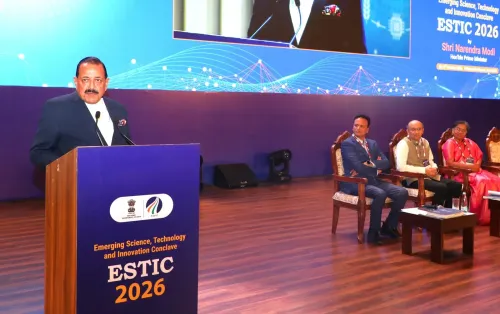
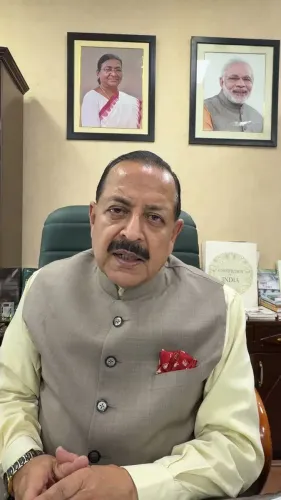
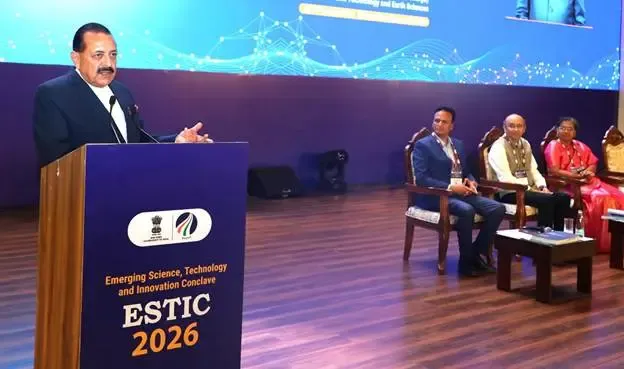
Minister of State for Science and Technology Jitendra Singh on Thursday, 29 October 2026 called for a decisive shift from laboratory discovery to real-world deployment, arguing that India's research and innovation ecosystem must be judged by its tangible contributions to national development. His remarks came at the valedictory session of the Emerging Science, Technology and Innovation Conclave (ESTIC) 2026, held in New Delhi, where he urged stakeholders to pursue 'transformation through technology.'
Key Outcomes from ESTIC 2026
The closing session saw the release of two landmark documents that are set to shape India's science and technology agenda. The first, the National Vision Document for ESTIC 2026, consolidates long-term science, technology and innovation priorities across 12 ministries and departments spanning 12 thematic areas, all aligned with the Viksit Bharat 2047 goal. The second, India: Science, Technology and Innovation Outlook 2026, provides an evidence-based, quantifiable account of India's evolving innovation ecosystem, designed to support policymaking and deepen engagement with international partners. The STI Outlook is envisaged as a dynamic resource to be updated annually.
Minister's Call to Action
Building on Prime Minister Narendra Modi's vision of outcome-oriented science and technology, Singh stressed the importance of setting clear, measurable three-year targets to track national progress and reinforce India's long-term scientific capabilities. He pointed to biotechnology, genomics, and space research as domains where anticipation of future needs — including space medicine for increasingly complex and prolonged human missions — would be critical.
The minister also highlighted the broader societal potential of nuclear science and technology, including nuclear medicine, underscoring that its relevance extends well beyond energy and strategic applications to healthcare. He further stressed the strategic importance of ocean science and the blue economy in shaping India's future economic and geopolitical standing, while calling for affordable and accessible nutrition to remain a national priority.
Collaboration and Industrial Adoption
Participants at the conclave called for stronger collaboration between research laboratories and industry, common performance indicators for researchers and industrial partners, and greater capacity building in specialised manufacturing tools and technologies. There was also a push to explore conventional materials for advanced applications and to translate indigenous research into solutions with measurable economic and societal impact.
The session underlined the need to connect scientific excellence with industrial adoption and national priorities — a recurring concern in India's innovation policy debates. This comes amid growing pressure on public research institutions to demonstrate returns on government investment, with the Centre increasingly tying funding to commercialisation milestones.
Broader Agenda and Sectors Covered
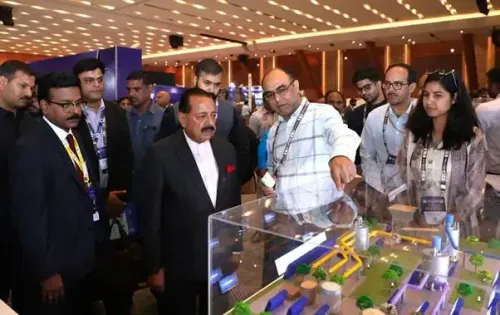
ESTIC 2026's recommendations spanned a wide range of priority domains: advanced manufacturing, ocean science and maritime technologies, biotechnology, autonomous systems and robotics, agriculture, and nutrition. The conclave served as a cross-ministerial platform for identifying research and deployment priorities, with participation from scientific institutions, industry and academia reinforcing a multi-stakeholder approach.
With the STI Outlook set for annual updates and sectoral recommendations now on record, the next phase will test whether the coordinated intent expressed at ESTIC 2026 translates into funded, time-bound action plans across ministries.
Point of View
But India has a track record of producing well-crafted strategy papers that stall at the funding and accountability stage. The minister's call for measurable three-year targets is the right instinct — the question is whether any ministry will be held to them. With the STI Outlook designed for annual updates, the framework at least creates a public audit trail; the test will come when the first update reveals whether the rhetoric of 'transformation through technology' produced any verifiable movement.
NationPress
29 Oct 2026
Frequently Asked Questions
What documents were released at ESTIC 2026?
Two documents were released at the valedictory session on 29 October 2026: the National Vision Document for ESTIC 2026, consolidating STI priorities across 12 ministries and 12 thematic areas, and the India STI Outlook 2026, an evidence-based resource designed to support policymaking and international engagement, to be updated annually.
What did Minister Jitendra Singh call for at ESTIC 2026?
Minister of State Jitendra Singh called for a shift from scientific discovery to practical application, urging 'transformation through technology.' He stressed the need for clear, measurable three-year targets to track India's scientific progress and highlighted priority areas including biotechnology, space medicine, nuclear science, ocean science and nutrition.
How does ESTIC 2026 connect to Viksit Bharat 2047?
The National Vision Document released at ESTIC 2026 aligns the long-term STI priorities of 12 ministries across 12 thematic areas directly with the Viksit Bharat 2047 goal. The conclave is intended to ensure that India's science and technology ecosystem contributes measurably to national development milestones set for 2047.
What sectors did ESTIC 2026 prioritise for future research and deployment?
ESTIC 2026 identified advanced manufacturing, ocean science and maritime technologies, biotechnology, autonomous systems, robotics, agriculture and nutrition as key priority areas. Participants also called for stronger research-industry collaboration and capacity building in specialised manufacturing tools to translate indigenous research into economic and societal impact.