India startup-industry linkages: Jitendra Singh urges collaboration at ESTIC-2026
Synopsis
At ESTIC-2026, Union Minister Jitendra Singh pushed for a structural shift: getting India's deep-tech startups out of the lab and into the market. With 50 startups, government tech showcases, and the Viksit Bharat 2047 vision as backdrop, the conclave is the Centre's most direct attempt yet to close the persistent gap between scientific research and commercial adoption.
Key Takeaways
Union Minister Dr Jitendra Singh called for stronger startup-industry partnerships at ESTIC-2026 in New Delhi on 28 October 2026 .
The conclave features 50 deep-tech startups , 13 departmental stalls , and 10 departmental technologies .
CSIR Designer Rice — a high-protein, low-glycaemic-index variety from CSIR-NIIST — was among the innovations showcased.
The minister linked stronger innovation collaboration to India's Viksit Bharat 2047 national vision.
The government positioned itself as a facilitator of R&D-to-market transitions, not just a funder.
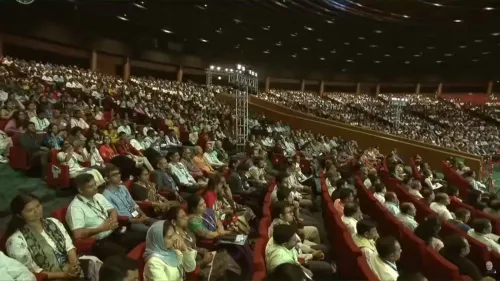
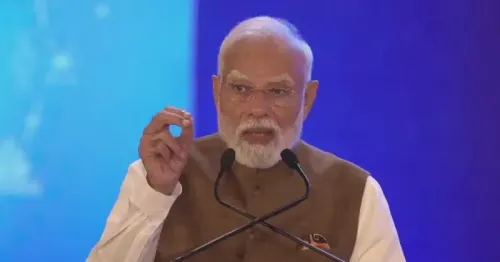
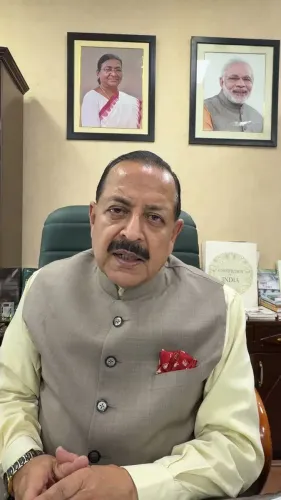
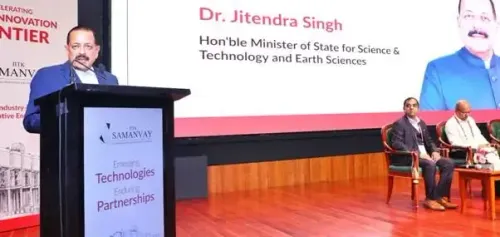
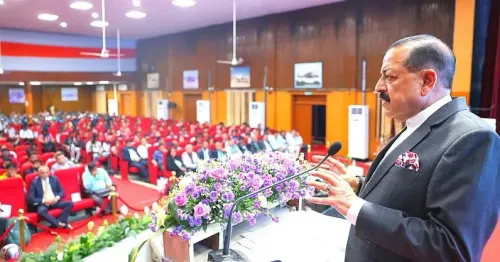
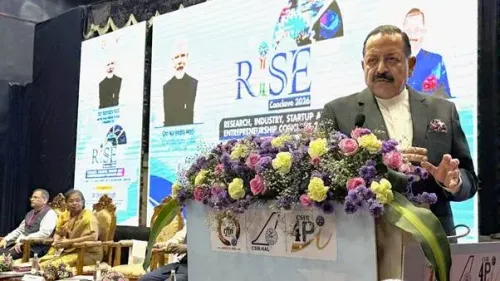
Union Minister of State (Independent Charge) for Science and Technology Dr Jitendra Singh on Wednesday, 28 October 2026 called for stronger linkages between startups and industry at the 'Emerging Science, Technology and Innovation Conclave' (ESTIC)-2026 in New Delhi, urging stakeholders to leverage India's expanding innovation ecosystem to move indigenous technologies from research and development into wider commercial use.
Key Developments at ESTIC-2026
The conclave brings together 50 deep-tech startups, 13 departmental stalls, and 10 departmental technologies, offering a direct platform for startups to engage with prospective industry partners, investors, and research institutions. Dr Singh said India's growing innovation ecosystem presents significant opportunities for startups to develop practical applications and scale up their solutions through industry collaboration.
He urged industry leaders, investors, and research institutions to actively build mutually beneficial partnerships with startups and indigenous technology developers, helping take promising Indian innovations to wider markets.
What the Minister Said
Dr Singh emphasised that stronger coordination among research institutions, startups, industry, and government is essential to ensure that scientific discoveries translate into tangible economic and societal benefits. He described the government's role as that of a facilitator — creating the conditions under which partnerships can form and technologies can achieve commercial scale.
'Stronger collaboration across the innovation ecosystem,' he said, 'can help accelerate technology adoption, strengthen domestic technological capabilities and advance the national vision of Viksit Bharat 2047.'
Innovations on Display
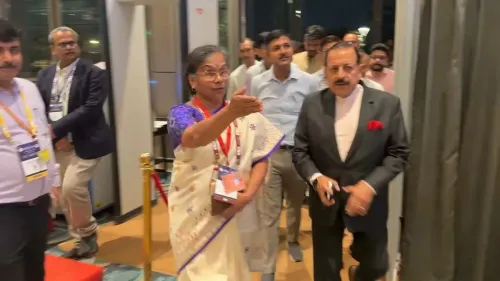
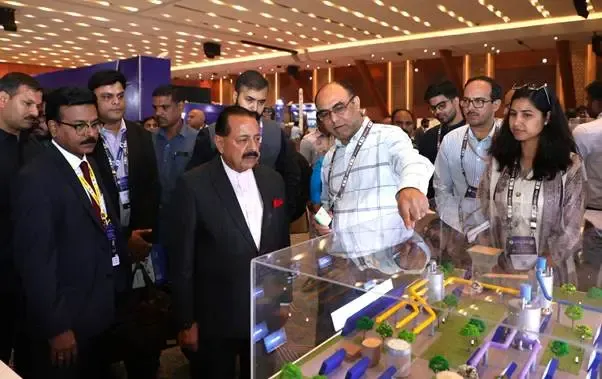
During his walkthrough of the exhibition, Dr Singh reviewed innovations spanning sectors from food and nutrition to advanced electronics. A notable exhibit was CSIR Designer Rice — a high-protein, low-glycaemic-index rice variety developed at the CSIR–National Institute for Interdisciplinary Science and Technology (CSIR-NIIST), illustrating how government-funded research can yield commercially relevant outcomes.
Broader Policy Context
This comes amid India's sustained push to increase the share of domestic technology in its industrial base, with the Viksit Bharat 2047 vision framing deep-tech adoption as central to long-term economic transformation. Notably, India now ranks among the top three global startup ecosystems by volume, yet critics have long argued that the gap between lab-stage innovation and commercial deployment remains a structural weakness. ESTIC-2026 is positioned as a bridge-building exercise to address precisely that gap.
With sectoral challenges in food security, electronics manufacturing, and healthcare converging, the government's emphasis on startup-industry partnerships at a ministerial level signals that facilitating technology transfer is now an explicit policy priority — not merely an aspiration.
Point of View
But signals alone have not closed that gap before. The real test is whether the conclave produces binding partnership commitments or merely networking. Until the government ties R&D funding outcomes to commercialisation metrics — not just patents or publications — the risk is that ESTIC becomes one more well-intentioned annual showcase rather than a genuine inflection point for technology transfer.
NationPress
28 Oct 2026
Frequently Asked Questions
What did Minister Jitendra Singh announce at ESTIC-2026?
Dr Jitendra Singh urged stronger collaboration between startups, industry, research institutions, and government to move Indian innovations from R&D to commercial deployment. He framed this as central to India's Viksit Bharat 2047 vision and described the government's role as a facilitator of such partnerships.
What is CSIR Designer Rice and why is it significant?
CSIR Designer Rice is a high-protein, low-glycaemic-index rice variety developed at CSIR-NIIST and was among the innovations displayed at ESTIC-2026. It illustrates how government-funded scientific research can produce commercially relevant solutions for food security and nutrition challenges.
Who is affected by the push for startup-industry linkages?
Deep-tech startups, investors, research institutions, industry bodies, and technology adopters across sectors — including food and nutrition, electronics, and healthcare — stand to benefit. The initiative is aimed at anyone involved in taking scientific research from the lab to the marketplace in India.
How does ESTIC-2026 connect to Viksit Bharat 2047?
The government has positioned stronger domestic technology adoption and startup-industry collaboration as foundational to the Viksit Bharat 2047 vision of a fully developed India. ESTIC-2026 is designed to accelerate that agenda by creating direct connections between innovators and the partners who can scale their technologies.