Dr. Jitendra Singh closes ESTIC 2026 with a call for indigenous tech
Synopsis
Union Minister Dr. Jitendra Singh closed ESTIC 2026 at Bharat Mandapam calling on India's scientists to prioritise indigenous technologies and deliver measurable outcomes for common citizens, anchored to the Viksit Bharat 2047 vision.
Key Takeaways
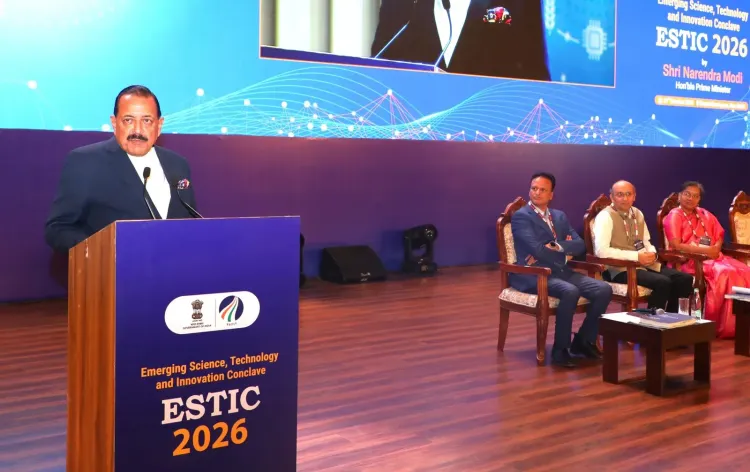
Jitendra Singh addressed the valedictory session of the three-day ESTIC 2026 at Bharat Mandapam, New Delhi on 29 October 2026 .
He called for ESTIC to evolve into a globally recognised platform connecting researchers, startups, and investors for collaboration and co-creation.
The minister stressed that India's research priorities must focus on indigenous resources, methodologies, and technologies developed domestically.
He linked the success of India's innovation ecosystem directly to Viksit Bharat 2047 — the government's goal of a developed India by the centenary of independence.
Singh invoked PM Narendra Modi's directive to pursue measurable, tangible outcomes for common citizens rather than purely academic metrics.
The address reflects the broader policy arc of Atmanirbhar Bharat , which since 2020 has prioritised self-reliance in critical technologies.
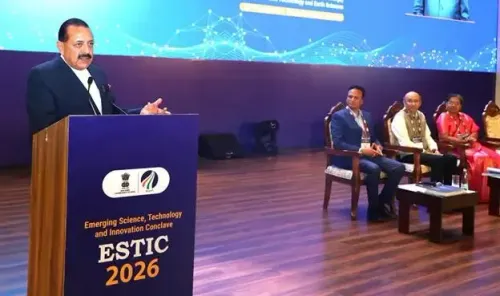
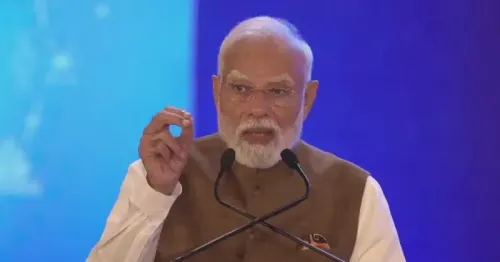
India's scientific community received a clear directional mandate on Thursday, 29 October 2026, when Union Science and Technology Minister Dr. Jitendra Singh addressed the valedictory session of the three-day Emerging Science, Technology and Innovation Conclave (ESTIC 2026) at Bharat Mandapam, New Delhi — and used the closing platform to reframe what success in Indian science must actually look like.
Speaking at the conclusion of the conclave, Dr. Singh commended the gathering of researchers, Nobel laureates, innovators, startups, and investors across scientific disciplines, calling it a sign of ESTIC's growing stature. But his ambition stretched well beyond applause. 'Our future aim has to be to ensure that ESTIC progressively evolves into a globally recognised platform where researchers, academicians, innovators, StartUps and Investors reach out to seek opportunities to participate, collaborate and co-create,' he said.
The indigenous-technology imperative at the heart of ESTIC 2026
The sharpest line of the address was also its most consequential. Dr. Singh stated that India's research priorities 'need to increasingly focus on indigenous resources, indigenous methodologies and indigenous technologies developed within the country.' That is not merely rhetoric — it is a policy compass pointing squarely at Atmanirbhar Bharat, the self-reliance drive announced in 2020, which called for reducing dependence on foreign technologies in sectors from defence electronics to pharmaceuticals.
The framing matters. For decades, a significant share of Indian publicly funded research was measured by publication counts and citation indices — metrics that travel well in global academic journals but translate imperfectly to, say, a farmer's drought-resistant seed or a low-cost diagnostic kit in a tier-three district. Dr. Singh's address signals that the ministry intends to shift the evaluation needle toward what actually reaches a common citizen.
Viksit Bharat 2047: the deadline that shapes everything
Dr. Singh tied the conclave's mandate explicitly to Prime Minister Narendra Modi's vision of Viksit Bharat 2047 — the government's north-star goal of making India a fully developed nation by the centenary of independence. 'The success of India's research and innovation ecosystem would increasingly be assessed through its tangible contributions to national development and the vision of 2047,' he said, invoking the PM's advice to 'work on measurable outcomes for the years to come.'
The 2047 deadline is not a distant abstraction — it is roughly 21 years away, which means technology pipelines seeded at a conclave today must be productive, deployable, and scaled within a single career generation. That urgency gives the ESTIC platform a harder edge than a typical academic gathering.
What ESTIC must become — and who must show up
Dr. Singh's valedictory set an explicit benchmark for future editions: draw in not just scientists but also startups and investors who can translate laboratory breakthroughs into market-ready solutions. The Science, Technology and Innovation Policy framework — updated through successive drafts since 2020 — has consistently stressed closing the gap between domestic R&D capacity and real-world deployment. ESTIC, under this vision, is meant to be one of the structural bridges.
The minister closed with a call to 'disperse from here with a call for transformation through technology with tangible outcomes for common citizens' — the kind of closing line that doubles as a performance contract. Whether ESTIC's subsequent editions deliver on that contract will be watched in policy circles and in the ministry's own budget allocations.
India's science establishment has been handed a clear yardstick: not citations, but citizens.
Point of View
Framing publicly funded science as an instrument of sovereignty, not just scholarship. The explicit inclusion of startups and investors as target participants signals a deliberate push to commercialise research pipelines rather than let findings stall in journals. If translated into funding criteria and evaluation frameworks, this reorientation could meaningfully reshape how Indian universities and laboratories prioritise their work over the next decade.
NationPress
29 Oct 2026
Frequently Asked Questions
What is ESTIC 2026 and where was it held?
ESTIC 2026 — the Emerging Science, Technology and Innovation Conclave — was a three-day event held at Bharat Mandapam in New Delhi, concluding on 29 October 2026. It brought together researchers, academicians, innovators, startups, investors, and international experts including Nobel laureates across scientific disciplines.
What did Dr. Jitendra Singh say at ESTIC 2026?
Dr. Jitendra Singh, in his valedictory address, called for India's research priorities to focus on indigenous resources, methodologies, and technologies, and said the success of India's innovation ecosystem must be measured through tangible contributions to national development and the Viksit Bharat 2047 vision.
What is Viksit Bharat 2047?
Viksit Bharat 2047 is the Indian government's vision to make India a fully developed nation by the centenary of its independence in 2047. It serves as a long-term policy north-star across sectors including science, technology, economy, and infrastructure.
How does ESTIC 2026 connect to Atmanirbhar Bharat?
Dr. Singh's emphasis on indigenous technologies at ESTIC 2026 directly echoes the Atmanirbhar Bharat self-reliance initiative announced in 2020, which called for reducing dependence on foreign technologies and building domestic R&D capacity in critical sectors.
What is the future vision for ESTIC as a platform?
Dr. Singh expressed the aim for ESTIC to evolve into a globally recognised platform where researchers, academicians, innovators, startups, and investors come together to participate, collaborate, and co-create, moving beyond a purely academic forum to one that drives market-ready technological solutions.