CM Samrat Choudhary amplifies Nadda's four-step attack on Rahul Gandhi
Synopsis
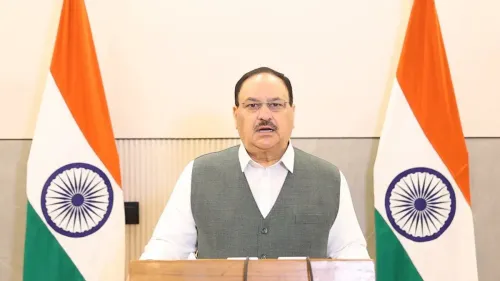
Bihar Chief Minister Samrat Choudhary amplified Union Health Minister JP Nadda's four-point indictment of Rahul Gandhi's politics on 1 November 2026, calling the Ramleela Maidan rally a 'planned conspiracy' to hand the country over to anarchy and destabilise the elected government via foreign influence.
Key Takeaways
Bihar CM Samrat Choudhary shared Union Health Minister JP Nadda's speech attacking Rahul Gandhi and the Congress-led opposition on 1 November 2026 .
Nadda outlined a four-stage model he attributed to the opposition: spreading lies, creating street unrest, damaging the economy, and destabilising the government via foreign powers.
The remarks were directed at an event at Ramleela Maidan , Delhi, which the BJP characterised as a 'carefully planned drama'.
The accusation of acting on foreign instructions is a recurring charge BJP leaders have levelled during major opposition mobilisations.
Choudhary's amplification illustrates the BJP's networked, state-leader-led approach to national political communication.
Congress has not yet publicly responded to Nadda's specific four-stage characterisation.
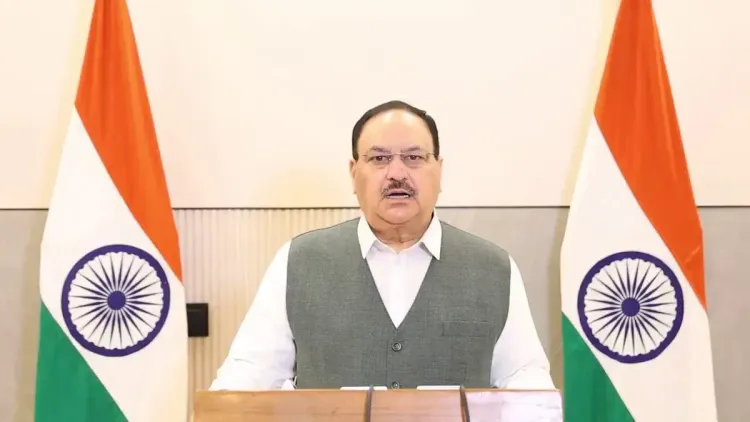
A political rally at Ramleela Maidan in Delhi on Sunday, 1 November 2026 became the flashpoint for a sharp BJP counter-offensive, with Bihar Chief Minister Samrat Choudhary amplifying a blistering speech by Union Health Minister JP Nadda that accused the opposition — and Rahul Gandhi by name — of running a four-stage blueprint to destabilise a democratically elected government.
Nadda's four-stage framework, decoded
The statement Choudhary shared lays out what Nadda described as the Congress model of politics in explicit, numbered sequence. Stage one: spread lies and rumours. Stage two: engineer chaos and unrest on the streets. Stage three: inflict damage on the national economy. Stage four: attempt to destabilise an elected government at the behest of foreign powers.
Nadda addressed Rahul Gandhi directly — 'Rahul Gandhi, aapki rajneeti ka model kya hai?' ('Rahul Gandhi, what is your model of politics?') — framing the question as something he wanted to answer on behalf of the Indian public. The rhetoric was deliberate: cast the opposition not as critics of policy, but as architects of disorder.
Ramleela Maidan as political battleground
Ramleela Maidan, the sprawling public ground in central Delhi, has a long history as the venue of choice for both ruling-party shows of strength and opposition mass mobilisations. Its symbolic weight makes any event there carry outsized political meaning. The BJP's framing of whatever was unfolding there on 1 November as a 'carefully planned drama' — 'moorkhatapurna aur suniyojit natak' — is a direct attempt to delegitimise the gathering before the opposition narrative could take hold.
Bihar CM's role in the BJP information chain
Samrat Choudhary, who leads the BJP government in Bihar, has increasingly used his X platform to amplify central leadership messaging beyond his state. Sharing a Health Minister's speech on a Delhi protest is not accidental — it signals coordinated party communication, with state leaders recruited as amplifiers in national political battles. The BJP has consistently deployed this networked approach during periods of heightened opposition activity.
Congress, foreign influence, and a recurring charge
The accusation of operating 'at the behest of foreign powers' is among the most inflammatory in BJP's rhetorical arsenal, and it has surfaced repeatedly during opposition-led agitations in recent years. Indian National Congress and Rahul Gandhi's camp have consistently rejected such characterisations as deflection and intimidation. The charge lands differently each time depending on the political temperature, but its reappearance here suggests the BJP believes the foreign-interference frame retains traction with its core voters.
Congress has not yet issued an official response to Nadda's remarks as carried by Choudhary. The next move is Rahul Gandhi's — and his answer, whenever it comes, will set the tempo for the next round.
Point of View
Samrat Choudhary is performing a dual function: reinforcing BJP's national counter-narrative while demonstrating Bihar's loyalty to the central leadership ahead of any political realignment. The four-stage framework is a rhetorical device designed to shift the conversation from the substance of the opposition's grievances to the legitimacy of their methods — a classic move when a ruling party wants to avoid engaging policy critiques head-on. The 'foreign influence' allegation, the sharpest of the four charges, is historically difficult to disprove and easy to repeat, giving it persistent utility in BJP communications. If Congress responds vigorously and with specifics, it risks elevating the BJP framing; if it stays silent, that silence risks being read as confirmation — a dilemma the opposition has faced with this playbook before.
NationPress
1 Nov 2026
Frequently Asked Questions
What did JP Nadda say about Rahul Gandhi at Ramleela Maidan?
JP Nadda outlined what he called a four-stage political model attributed to Rahul Gandhi: first, spread lies and rumours; second, create street unrest; third, damage the national economy; fourth, attempt to destabilise the elected government at the behest of foreign powers.
Why did Bihar CM Samrat Choudhary share JP Nadda's speech?
Samrat Choudhary shared the statement to amplify the BJP's national counter-narrative against the opposition's Ramleela Maidan rally, a pattern in which state BJP leaders act as amplifiers of central party messaging during key political moments.
What is Ramleela Maidan and why is it significant?
Ramleela Maidan is a large public ground in central Delhi historically used for major political rallies and protests by both the ruling party and the opposition, making it a high-visibility venue that carries strong symbolic weight.
Has BJP accused the Congress of acting on foreign instructions before?
Yes. The allegation that opposition leaders are acting at the behest of foreign powers has recurred in BJP political rhetoric during periods of heightened opposition activity, and has consistently been rejected by the Congress as baseless intimidation.
What has Congress said in response to Nadda's remarks?
As of the time of reporting, Congress had not issued a specific public response to Nadda's four-stage characterisation as shared by Samrat Choudhary.