CM Majhi Races to Restore Odisha After Cyclone Arnab

Synopsis
Odisha CM Mohan Charan Majhi declared on November 1, 2026 that his government is prioritising public safety, relief, and restoration of electricity and drinking water in areas hit by Cyclone Arnab, with evacuation and recovery efforts in full swing.
Key Takeaways
Odisha CM Mohan Charan Majhi confirmed on November 1, 2026 that the state government is treating public safety and relief as its top priority after Cyclone Arnab .
Efforts to restore electricity and drinking water supply are being expedited across affected areas.
Safe evacuation of residents was among the first actions taken, reflecting Odisha's post-1999 disaster management framework.
Odisha's disaster response system — built after the 1999 super cyclone that killed over 10,000 people — underpins the current mobilisation.
The state has a track record of receiving central assistance under the National Disaster Response Fund for major cyclone events.
With Cyclone Arnab battering Odisha's coastline, the state government is in full emergency mode — prioritising evacuation, relief, and the swift restoration of power and drinking water across affected communities. Odisha Chief Minister Mohan Charan Majhi confirmed on Sunday, November 1, 2026, that efforts are being expedited on every front.
What CM Majhi's message says
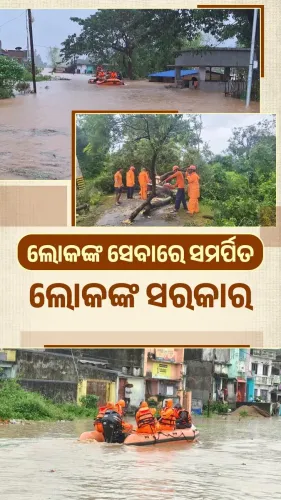
Posting in both Odia and English, the Chief Minister stated: 'ଲୋକଙ୍କ ସରକାର ସର୍ବାଧିକ ଗୁରୁତ୍ୱ ଦେଉଛନ୍ତି' ['the people's government is giving the highest priority'] to the safety, relief, and restoration of essential services in Cyclone Arnab-hit areas. 'Efforts are being expedited to restore normalcy, including electricity and drinking water supply,' the post reads. The bilingual messaging — reaching both Odia-speaking coastal communities and a national audience — underscores the urgency the government is projecting.
Safe evacuation to service restoration: the two-stage push
The government's response spans two distinct phases. The first — moving people to safety before and during landfall — has been a cornerstone of Odisha's disaster playbook since the catastrophic 1999 super cyclone, which killed over 10,000 people and fundamentally reshaped how the state prepares for storms. Decades of investment in early warning networks and cyclone shelters mean today's evacuations are faster and more systematic than anything the state could manage a generation ago.
The second phase — restoring electricity and clean drinking water — is where the real race begins once a storm passes. Downed power lines, flooded pumping stations, and damaged distribution infrastructure can leave coastal villages without basics for days. CM Majhi's post signals that restoration teams are already mobilised.
Odisha's hard-won edge in disaster response
Odisha sits on the Bay of Bengal, one of the world's most cyclone-active water bodies, and has earned a global reputation for turning crisis management from catastrophe into controlled response. The state has repeatedly drawn central government assistance under the National Disaster Response Fund for major events, channelling funds into relief distribution and infrastructure repair. That institutional muscle is now being tested again by Arnab.
Whether the restoration timeline holds — and whether additional central aid is mobilised — will determine how quickly life returns to normal for the communities caught in the cyclone's path. All eyes are on the recovery clock.
Point of View
A competent cyclone response carries real political weight in a state where disaster management has long defined the credibility of whoever sits in Bhubaneswar. The pressure now shifts from announcement to execution: how quickly power and water are restored will be the real verdict.
NationPress
1 Nov 2026
Frequently Asked Questions
What is Cyclone Arnab and which areas of Odisha has it affected?
Cyclone Arnab is a tropical storm that has struck Odisha's Bay of Bengal coastline as of November 2026. Specific district-level impact details are being assessed by state authorities, with relief and restoration operations under way across affected coastal areas.
What steps has the Odisha government taken after Cyclone Arnab?
The Odisha government has prioritised safe evacuation of residents, distribution of relief, and the restoration of electricity and drinking water supply in Cyclone Arnab-affected areas, as confirmed by Chief Minister Mohan Charan Majhi on November 1, 2026.
How has Odisha's disaster management improved since the 1999 super cyclone?
After the 1999 super cyclone killed over 10,000 people, Odisha built a robust disaster management system including early warning networks, dedicated cyclone shelters, and trained rapid-response teams — widely regarded as a model for India's coastal states.
Will the central government provide aid for Cyclone Arnab relief in Odisha?
Odisha has historically received central government assistance under the National Disaster Response Fund for major cyclone events. Whether additional aid will be mobilised for Cyclone Arnab depends on the assessed scale of damage.
Who is Mohan Charan Majhi?
Mohan Charan Majhi is the Chief Minister of Odisha and a BJP leader who assumed office in June 2024 after the state assembly elections.