Uttarakhand CM Office: Black and Red Rice Fetch Premium Prices in Bageshwar

Synopsis
The Chief Minister's Office of Uttarakhand highlights strong yields and better market prices for black and red paddy cultivation in Bageshwar, signalling progress in the state's push to raise hill farmers' incomes through specialty crops.
Key Takeaways
The Chief Minister's Office of Uttarakhand highlighted black and red paddy cultivation in Bageshwar district on November 1, 2026 .
Farmers in Bageshwar are reportedly achieving good yields from these indigenous paddy varieties.
These varieties are fetching better market prices than conventional rice, boosting farmer incomes.
Bageshwar lies in the Kumaon region, where rain-fed hilly terrain is well-suited to traditional paddy varieties.
The development is part of Uttarakhand's broader strategy to promote specialty and traditional crops for hill farmers.
Expansion of procurement support and formal branding for these varieties in adjacent districts remains a key next step to watch.
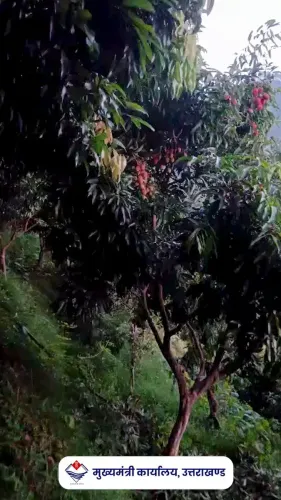
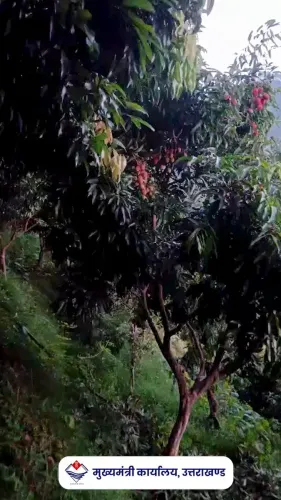
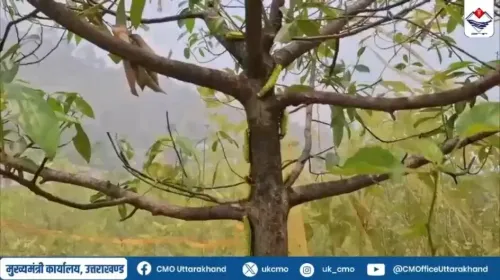
In Uttarakhand's hilly Bageshwar district, an age-old grain is finding a new price tag — and for farmers tending terraced fields in the Kumaon region, that difference is real money. The Chief Minister's Office of Uttarakhand announced on Sunday, November 1, 2026, that cultivation of black and red paddy varieties in Bageshwar is yielding strong harvests and commanding better market prices, part of the state's push to grow farmer incomes.
The post, shared in Hindi, reads: 'प्रदेश में किसानों की आय बढ़ाने के क्रम में जनपद बागेश्वर में काले और लाल धान की खेती की अच्छी पैदावार के साथ ही मिल रहा बेहतर बाजार मूल्य' — ('In the effort to increase farmers' incomes in the state, black and red paddy cultivation in Bageshwar district is delivering good yields along with better market prices.')
Why Black and Red Rice in Bageshwar
Bageshwar, nestled in Uttarakhand's Kumaon division, carries hilly, rain-fed terrain that suits traditional paddy varieties far better than high-yield hybrids bred for flat, irrigated plains. Black rice and red rice are not new to these slopes — they are indigenous varieties with deep roots in Himalayan farming. What is newer is the premium they are attracting: urban health-food demand and niche export interest have lifted prices for these nutritionally dense grains well above those of common white rice.
Uttarakhand's state government has, in recent years, pushed specialty and traditional crops as a route out of low-return subsistence farming. The logic is straightforward — small hill farmers cannot compete on volume with the plains, but they can compete on distinctiveness. Black and red rice, with their higher fibre, antioxidant profiles, and distinct visual appeal, fit squarely into that strategy.
A Broader Pattern Across Hill States
Uttarakhand is not alone in this pivot. Several other Himalayan and northeastern states have made similar moves — linking traditional grain varieties to premium urban and export channels. The challenge has always been the same: getting from a remote hill district to a market willing to pay a premium requires branding support, aggregation infrastructure, and consistent quality grading. The question now is whether Bageshwar's success prompts the state to extend procurement or formal branding support to adjacent districts, and whether the area under these varieties expands in the next sowing season.
For the farmers of Bageshwar, the signal from the Chief Minister's Office is clear: specialise, go niche, and the market will respond. If the infrastructure follows, that promise has real legs.
Point of View
However, is institutional: market price signals only translate into sustained income gains when backed by aggregation infrastructure, quality certification, and reliable procurement. Flagging success in one district is a useful political signal, but the durable policy question is whether Uttarakhand builds the supply-chain architecture to scale it. How the state responds to Bageshwar's early results in the coming sowing cycles will reveal whether this is a showcase pilot or the beginning of a genuine structural shift.
NationPress
1 Nov 2026
Frequently Asked Questions
What is black and red rice and why is it grown in Bageshwar?
Black and red rice are indigenous, nutrient-dense paddy varieties suited to the rain-fed, hilly terrain of Bageshwar in Uttarakhand's Kumaon region. They fetch premium prices due to their higher fibre and antioxidant content, making them attractive for health-conscious urban and export markets.
Why is Uttarakhand promoting specialty crops for hill farmers?
Hill farmers in Uttarakhand cannot compete with plains farmers on volume due to small landholdings and difficult terrain. The state promotes specialty and traditional crops — which command higher market prices — as a way to raise rural incomes without requiring scale.
Which district in Uttarakhand is growing black and red paddy?
Bageshwar district in the Kumaon division of Uttarakhand has been highlighted by the Chief Minister's Office for its black and red paddy cultivation delivering good yields and better market prices.
What is the market demand for black and red rice in India?
Demand for black and red rice has grown steadily in India's urban health-food segment and in niche export markets, driven by their nutritional profile. This demand premium is a key reason why hill states are encouraging farmers to shift toward these varieties.
What should we watch for next in Uttarakhand's black rice initiative?
Key developments to watch include whether Uttarakhand introduces formal procurement support or branding programmes for black and red rice, and whether cultivation expands to districts adjacent to Bageshwar in the next agricultural season.