CM Dhami Makes 4 Panchayat Pledges at Uttarakhand Block Chiefs Meet
Synopsis
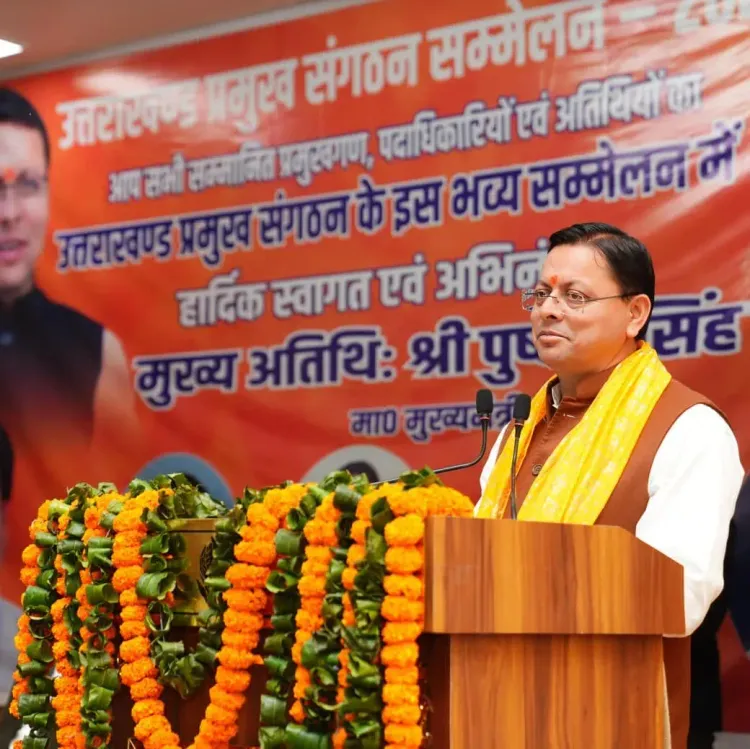
CM Pushkar Singh Dhami addressed the Uttarakhand Pramukh Sangathan Sammelan 2026 on 1 November, announcing four measures to empower block panchayats — including restarting the area panchayat fund, raising representative honoraria, including block heads in NRLM committees, and consulting gram panchayats before urban boundary expansion — backed by a Rs 721 crore supplementary budget allocation.
Key Takeaways
Four announcements made by CM Dhami at the Uttarakhand Pramukh Sangathan Sammelan 2026 on 1 November 2026 at Mukhya Sevak Sadan, Dehradun.
The Kshetra Panchayat Nidhi (area panchayat fund) will be restarted, restoring direct financial resources to block-level bodies.
Honoraria and allowances of block panchayat representatives will be increased.
Block panchayat heads will be included in block-level NRLM committees, elevating elected leaders into the rural livelihoods programme.
Gram panchayats will be formally consulted before their areas are merged into urban local bodies.
Local bodies' share of state tax revenue proposed to rise from 10.5% to 12.5% , with Rs 721 crore allocated in the supplementary budget.
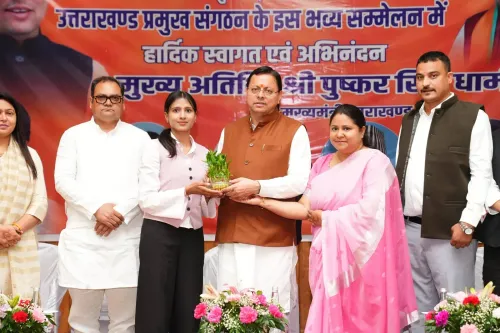
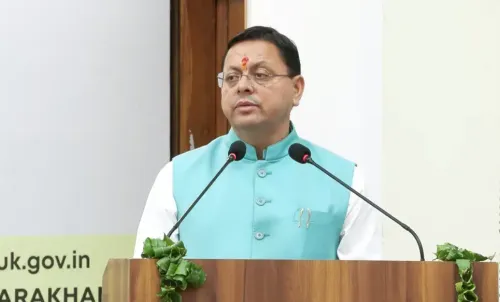
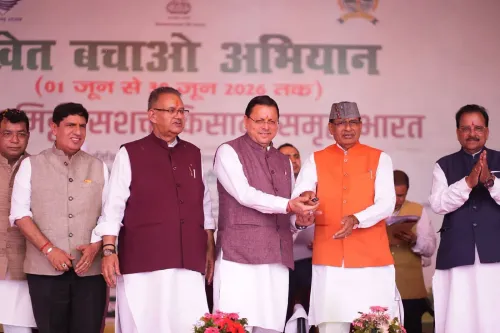
In a direct signal that Uttarakhand's village-level governance machinery is getting a reboot, Chief Minister Pushkar Singh Dhami on Sunday, 1 November 2026, addressed the Uttarakhand Pramukh Sangathan Sammelan 2026 at Mukhya Sevak Sadan in Dehradun — and walked away from the podium with four concrete announcements for block panchayat leaders.
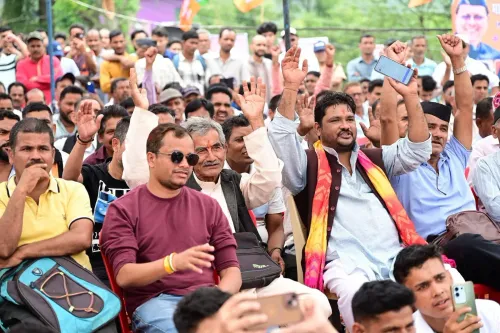
Block panchayat chiefs and elected representatives from across the state had gathered at the official residence of the Chief Minister. Dhami welcomed them not as audiences but as partners, declaring: 'Block pramukh aur panchayat pratinidhi sarkar tatha janta ke beech mahatvapurn setu ka karya karte hain' — 'Block heads and panchayat representatives serve as a crucial bridge between government and the people.'
The Four Announcements That Matter
The centrepiece of the event was a set of four targeted commitments. First, Dhami announced action to restart the Kshetra Panchayat Nidhi — the area panchayat fund that had been dormant — giving block bodies direct financial firepower. Second, he committed to increasing the honoraria and allowances of block panchayat representatives, acknowledging that their current compensation lags far behind their responsibilities.
Third, and notably consequential for rural livelihoods, the Chief Minister announced that block panchayat heads will now be included in the block-level committees of the National Rural Livelihood Mission (NRLM) — a centrally sponsored scheme that organises the rural poor into self-help groups. This inclusion directly elevates elected local leaders into a programme that handles rural credit, skill-building and women's enterprise. Fourth, Dhami pledged that before any rural area is absorbed into an urban local body, the concerned gram panchayat will be formally consulted. That last point is a direct check on a process that has frequently blindsided village councils.
Rs 721 Crore and the Finance Commission Push
The financial architecture behind these announcements is significant. Dhami disclosed a proposal from the Sixth State Finance Commission to raise local bodies' share of state tax revenue from 10.5 percent to 12.5 percent. To fund this jump, Rs 721 crore has been earmarked in the supplementary budget. The move extends a lineage that stretches back to the 73rd Constitutional Amendment of 1992, which mandated the three-tier panchayati raj structure and devolution of powers — but which critics have long argued has not been matched by adequate financial devolution.
Dhami also cited the state government's outreach campaign 'Jan-Jan Ki Sarkar, Jan-Jan Ke Dwar' ('Government of Everyone, At Everyone's Doorstep'), saying it delivered government schemes directly to thousands of citizens and resolved numerous local problems on the spot.
Reversing the Exodus, One Panchayat at a Time
The political undertow of the entire conference is Uttarakhand's most stubborn problem: outmigration. The Chief Minister cited a 44 percent rise in reverse migration to argue the momentum is turning — though that specific figure has not been independently verified. The state's strategy to sustain that reversal rests on expanding rural employment through homestays, agri-tourism, horticulture, animal husbandry and local products, all of which require active, resourced panchayats to execute at the last mile.
Dhami also referenced ongoing master-plan development at Kedarnath and Badrinath Dhams, the corridor projects for major temples in Kedarkhand and Manskhand, and the Lakhpati Didi campaign to economically empower women through self-help groups — weaving a broader picture of a state trying to anchor its population in place through opportunity rather than compulsion.
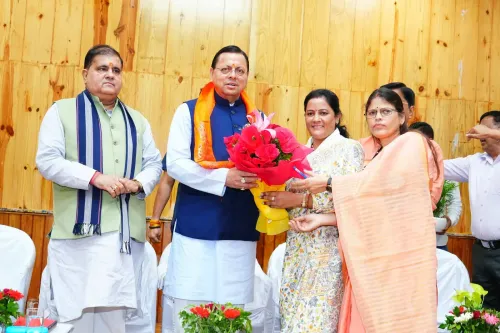
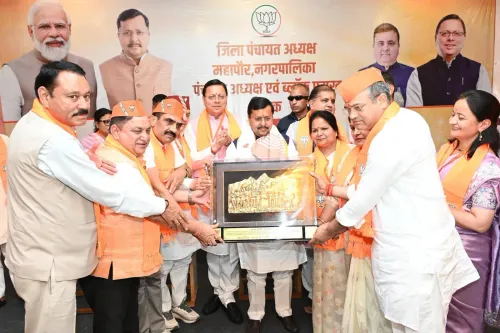
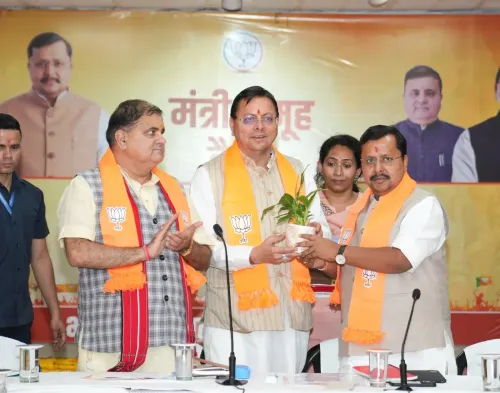
Present at the conference were state president of the Block Pramukh Sangathan Rajiv Kandari, general secretary Ganesh Chandola, Jyoti Grover, patron Harish Bisht, and block panchayat heads from across Uttarakhand.
Four announcements, Rs 721 crore, and a seat at the NRLM table — the question now is whether the money and the mandate reach the hills before the next migration season does.
Point of View
The state is attempting to stitch elected legitimacy into a scheme that has historically been administered by bureaucratic channels. The Rs 721 crore supplementary allocation and the proposed Finance Commission revision to 12.5 percent devolution are the most measurable tests — if ring-fenced and disbursed on time, they could meaningfully shift the resource calculus at the block level. Politically, the timing ahead of any panchayat cycle reinforces Dhami's positioning as a CM who governs through, rather than around, local representative bodies.
NationPress
1 Nov 2026
Frequently Asked Questions
What announcements did CM Dhami make at the Uttarakhand Block Chiefs Conference 2026?
CM Pushkar Singh Dhami made four announcements: restarting the Kshetra Panchayat Nidhi (area panchayat fund), increasing honoraria and allowances for block panchayat representatives, including block panchayat heads in NRLM block-level committees, and mandating consultation with gram panchayats before rural areas are merged into urban local bodies.
What is the Rs 721 crore allocation for Uttarakhand panchayats?
The Rs 721 crore has been earmarked in the supplementary budget to fund an increase in local bodies' share of state tax revenue — proposed to rise from 10.5 percent to 12.5 percent as recommended by the Sixth State Finance Commission — providing additional resources to both rural and urban local bodies.
What is the Kshetra Panchayat Nidhi in Uttarakhand?
The Kshetra Panchayat Nidhi is an area panchayat fund that provides direct financial resources to block-level panchayat bodies. CM Dhami announced that action will be taken to restart it after it had been dormant.
How will block panchayat heads be involved in NRLM in Uttarakhand?
Block panchayat heads (Kshetra Panchayat Pramukhs) will now be included as members of the block-level committees of the National Rural Livelihood Mission, giving elected local leaders a formal role in overseeing rural livelihood and self-help group activities in their areas.
What is reverse migration in Uttarakhand and what figure did CM Dhami cite?
Reverse migration refers to people returning to Uttarakhand's rural areas after having migrated to cities. CM Dhami cited a 44 percent increase in reverse migration in the state, attributing it to expanding livelihood opportunities in villages through homestays, agri-tourism, horticulture and other rural programmes.