CM Dhami: Strong Panchayats Are Foundation of Developed Uttarakhand
Synopsis
Chief Minister Pushkar Singh Dhami of Uttarakhand has declared that strong panchayats form the foundation of a developed state, reaffirming grassroots Panchayati Raj institutions as central to the hill state's development vision.
Key Takeaways
Chief Minister Pushkar Singh Dhami stated that 'strong panchayats are the strong foundation of a developed Uttarakhand' on October 15, 2026 .
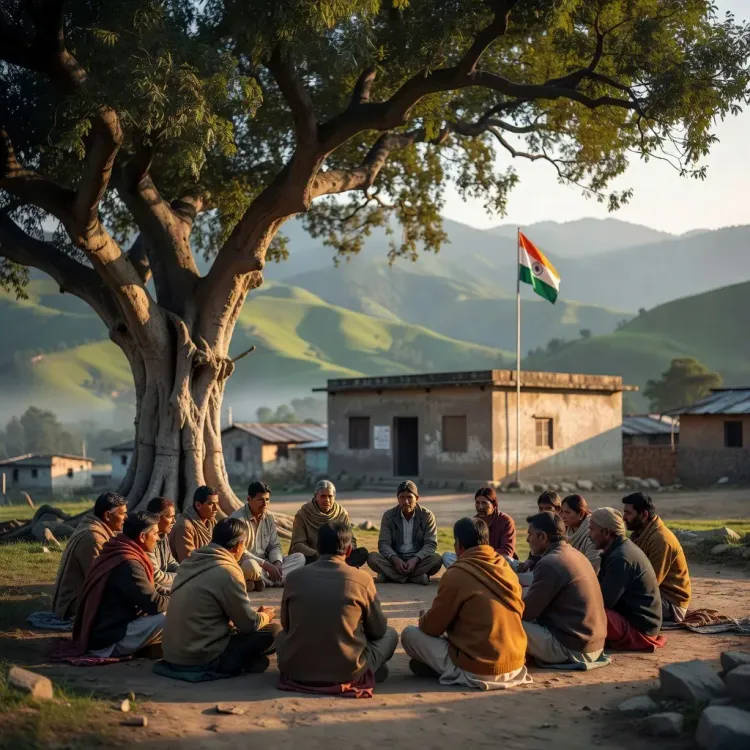
Uttarakhand is a predominantly mountainous state where Panchayati Raj institutions serve as the primary governance interface for remote rural communities.
The 73rd Constitutional Amendment Act, 1992 gave constitutional status to three-tier Panchayati Raj institutions across India.
Dhami has been Chief Minister of Uttarakhand since March 2021 , with administrative reform as a stated focus of his tenure.
The statement signals continued political focus on decentralised, grassroots-led development in the hill state.
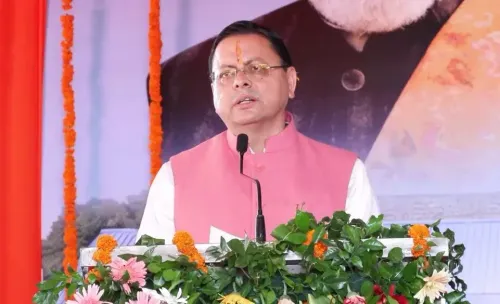
Grassroots democracy got a firm endorsement from the top of Uttarakhand's government on Thursday, October 15, 2026, as Chief Minister Pushkar Singh Dhami declared that empowered panchayats are the bedrock of a developed state.
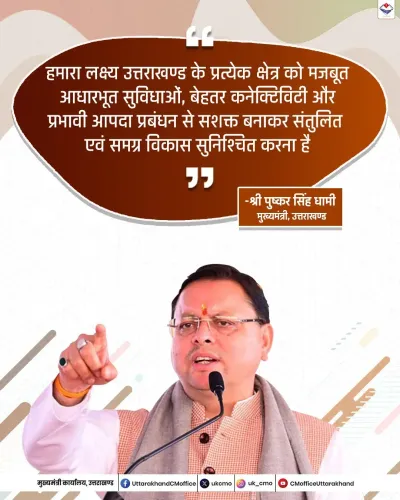
Posting from the Chief Minister's Office of Uttarakhand, Dhami stated: 'Sashakt panchayatein viksit Uttarakhand ki mazboot neev hain' — 'Strong panchayats are the strong foundation of a developed Uttarakhand.' In five words, the message frames local self-governance not as a peripheral detail but as the structural precondition for the state's broader ambitions.
Why Panchayats Matter More in Uttarakhand
Uttarakhand, carved out of Uttar Pradesh in November 2000, is defined by its geography — a largely mountainous, rural terrain where the long arm of centralised administration has historically struggled to reach. With scattered habitations across high-altitude districts, the three-tier Panchayati Raj system is not just a constitutional formality here; it is often the only government a village actually sees.
The 73rd Constitutional Amendment Act of 1992 gave Panchayati Raj Institutions their constitutional backbone across India — mandating elections, reservations, and the devolution of functions, funds, and functionaries to local bodies. More than three decades on, the gap between that promise and on-the-ground reality remains a live political question in hilly states where capacity and connectivity constrain delivery.
Dhami's Governance Push and What It Signals
Chief Minister Dhami, who has helmed the state since March 2021, has consistently framed administrative reform and decentralised development as twin pillars of his tenure. By elevating panchayats explicitly in official communication, his government signals intent to invest political capital — and, potentially, budgetary resources — in strengthening local body capacity.
Across India, states that have genuinely empowered panchayats with funds and autonomy have seen faster last-mile delivery of central and state schemes in sectors from drinking water to rural roads. For Uttarakhand, with its dependence on schemes targeting remote communities, that linkage is direct and consequential.
Whether the statement translates into concrete capacity-building programmes or enhanced budget allocations for local bodies will be the measure observers watch for. A declaration is a starting line, not a finish tape.
Point of View
Where geographic fragmentation makes centralised delivery inherently inefficient, genuinely empowered panchayats represent a structural governance dividend, not just a political talking point. The real test is fiscal: how much of state revenue actually flows to gram panchayats with untied strings attached. Observers will watch whether this statement is followed by measurable increases in panchayat capacity-building expenditure in the next state budget.
NationPress
15 Oct 2026
Frequently Asked Questions
What did CM Pushkar Singh Dhami say about panchayats in Uttarakhand?
CM Dhami stated that 'strong panchayats are the strong foundation of a developed Uttarakhand,' reaffirming grassroots local governance as central to the state's development vision.
What is the Panchayati Raj system in India?
Panchayati Raj is India's three-tier rural local self-government system, given constitutional status by the 73rd Constitutional Amendment Act of 1992, which mandates elected local bodies at the village, block, and district levels.
Why are panchayats especially important in Uttarakhand?
Uttarakhand's mountainous and rural terrain means panchayats are often the primary point of government contact for remote communities, making them critical for delivering development schemes and local administration.
When did Pushkar Singh Dhami become Chief Minister of Uttarakhand?
Pushkar Singh Dhami became Chief Minister of Uttarakhand in March 2021 and has focused on state development and administrative reforms during his tenure.
How does Uttarakhand fit into India's broader Panchayati Raj framework?
Like all Indian states, Uttarakhand operates under the 73rd Constitutional Amendment framework, but its unique geography and rural population make effective panchayat empowerment particularly significant for last-mile governance.