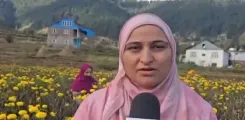
Uttarakhand women craft millet gift hampers for festive season
Synopsis
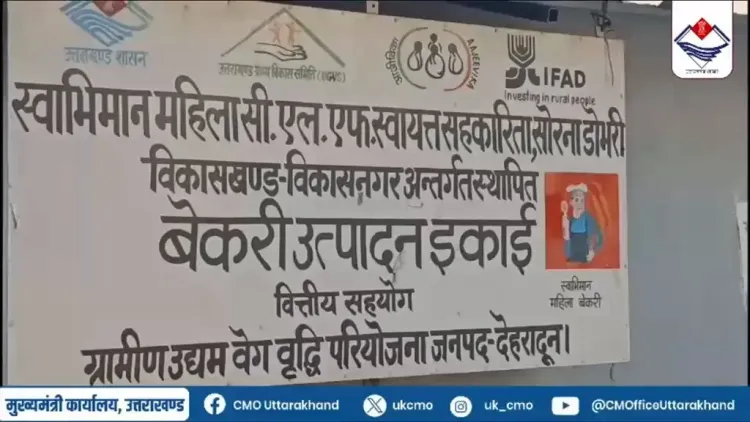
Women of the Swabhiman Mahila Cluster Level Federation in Sorna Dobhari, Dehradun are crafting millet gift hampers for the festive season, turning Uttarakhand's traditional grain into a value-added enterprise spotlighted by the Chief Minister's Office.
Key Takeaways
The Chief Minister's Office of Uttarakhand highlighted the millet gift hamper initiative on 1 November 2026 .
Women of the Swabhiman Mahila Cluster Level Federation in Sorna Dobhari village, Dehradun are producing festive millet hampers.
The initiative aligns with India's push that began with designating 2023 as the International Year of Millets .
Uttarakhand's hilly terrain has historically supported millet varieties like finger millet and barnyard millet, making the state a natural hub for such enterprise.
The Cluster Level Federation model enables rural women to aggregate, add value, and access larger markets collectively.
In a village tucked into the hills of Dehradun district, rural women are turning an ancient grain into a festive product — and signalling exactly where India's millet push is landing. The Chief Minister's Office of Uttarakhand shared on Sunday, 1 November 2026 that women of the Swabhiman Mahila Cluster Level Federation in Sorna Dobhari village are busy preparing attractive millet gift hampers ahead of the festive season.
The post, shared in Hindi, reads: 'Dehradun janpad ke gram Sorna Dobhari mein Swabhiman Mahila Cluster Level Federation ki mahilaen tyohaari season mein millets ke aakarshak gift hamper kar rahi hain taiyaar' — 'Women of the Swabhiman Mahila Cluster Level Federation in Sorna Dobhari village, Dehradun, are preparing attractive millet gift hampers for the festive season.'From 'forgotten grain' to festive shelves in Sorna Dobhari
The timing is deliberate. Festivals drive gifting, and gifting drives demand. By packaging millets as premium hampers rather than bulk commodity, the Swabhiman Mahila Cluster Level Federation is repositioning a traditional Uttarakhand crop — long suited to the state's rain-fed, hilly terrain — into a value-added consumer product. It is a small enterprise move, but it carries a larger logic.
India's designation of 2023 as the International Year of Millets was meant to do exactly this: shift millets from the margins of nutrition policy to the centre of the market. Uttarakhand, with its history of cultivating varieties like finger millet (mandua) and barnyard millet (jhangora), was always a natural fit for that mission. What followed — linking women's self-help groups to millet processing clusters under rural livelihood missions — is now visible on the ground in villages like Sorna Dobhari.
Self-help federation economics: why the cluster model works
Cluster Level Federations aggregate individual self-help groups, giving rural women collective bargaining power, shared infrastructure, and access to larger markets. The Swabhiman federation's move into gift hampers is a textbook application: add packaging, presentation, and a seasonal hook to a raw material the region already produces. The festive window — Diwali and beyond in November — is the sharpest demand spike of the year.
Central and state rural livelihood programmes have actively encouraged such models, using women's collectives as the last-mile engine of millet promotion. The dual benefit is clear: millet farmers get a more reliable, higher-value buyer, and the women's federation captures margin that would otherwise go to middlemen.
What the hampers signal beyond the season
The real test will come after the festival lights dim. Whether this cluster can sustain volumes, expand its product range, and seed similar units in other Uttarakhand villages will determine whether this is a seasonal sprint or a structural shift. The state government's attention — visible in this CMO post — at least ensures the model stays on the policy radar.
A women's collective in a Dehradun hill village, packaging millet for the gift economy — that is not a footnote to India's nutrition policy. It may well be its most persuasive proof of concept.
Point of View
High-visibility strategy that generates both economic and political returns. The broader pattern — state governments using the International Year of Millets momentum as a springboard for SHG enterprises — suggests this model could be scaled, but its real test is post-festive demand sustainability, not peak-season optics.
NationPress
1 Nov 2026
Frequently Asked Questions
What is the Swabhiman Mahila Cluster Level Federation in Dehradun?
The Swabhiman Mahila Cluster Level Federation is a women's self-help collective operating in Dehradun district, Uttarakhand, focused on promoting self-reliance through value-added millet products such as festive gift hampers.
Where is Sorna Dobhari village?
Sorna Dobhari is a village in Dehradun district, Uttarakhand, where the Swabhiman Mahila Cluster Level Federation conducts its millet processing and packaging activities.
Why is Uttarakhand promoting millets?
Uttarakhand's hilly terrain is naturally suited to millet cultivation, and the state has aligned with India's national push following the designation of 2023 as the International Year of Millets to boost farmer incomes and nutrition security.
What are millet gift hampers and why are they popular during festivals?
Millet gift hampers are attractively packaged products made from nutritious grains like finger millet and barnyard millet, positioned as healthy gifting alternatives during festive seasons such as Diwali.
How do Cluster Level Federations help rural women?
Cluster Level Federations aggregate individual self-help groups, giving rural women collective infrastructure, shared resources, and stronger access to markets, allowing them to capture more value from locally produced goods.