Is Technology Driving Space and Economic Transformation in India?
Synopsis
Discover how technology is revolutionizing India's space and economic landscape, driven by visionary leadership and innovative initiatives. Dr. Jitendra Singh shares insights on groundbreaking missions and the nation's journey towards becoming a global powerhouse. Don't miss this exploration of India's bright future!
Key Takeaways
Technology is central to India's economic transformation .
Flagship missions like Gaganyaan highlight India's ambition in space .
The RDI Fund supports private sector innovation.
India is shifting from an importer to an exporter of advanced technologies .
Public outreach initiatives promote a scientific mindset among youth.
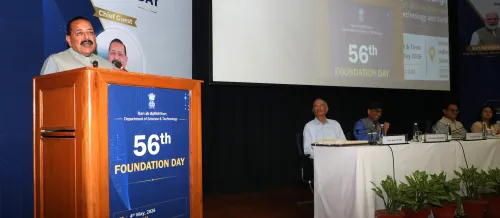
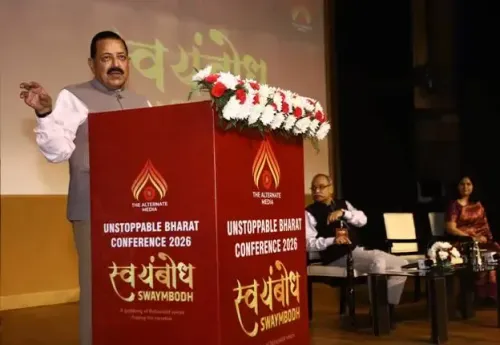
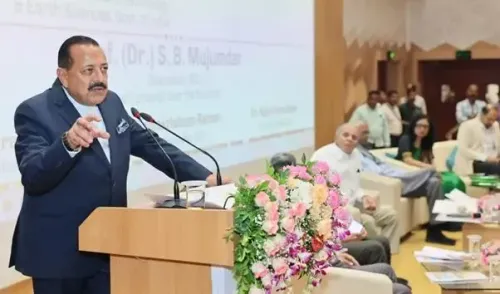
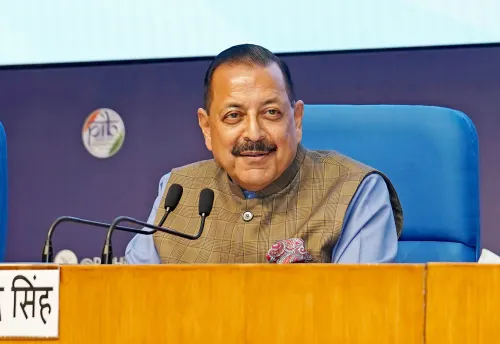
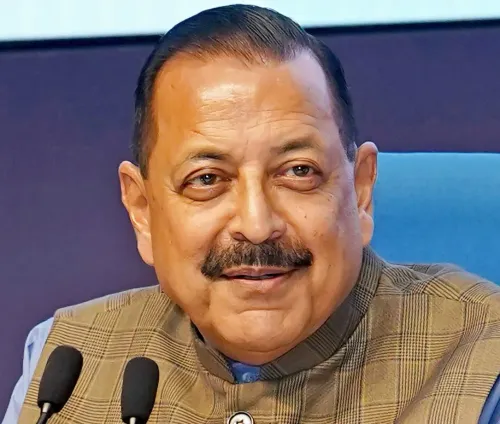
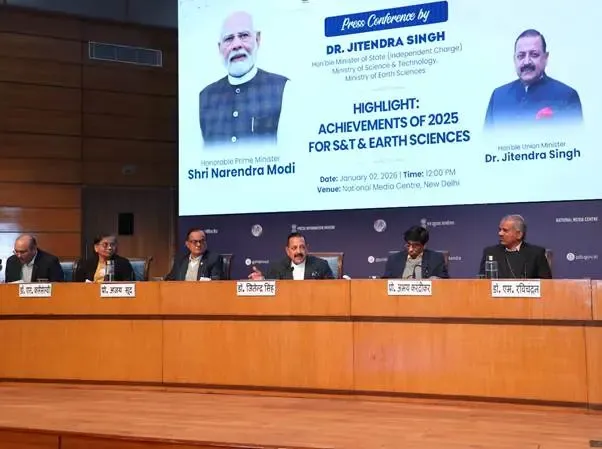
New Delhi, Jan 2 (NationPress) Technology is emerging as the pivotal element driving space and economic transformation in India, asserted Dr. Jitendra Singh, Union Minister of State (Independent Charge) for Science & Technology, during a press briefing on the accomplishments of the Ministry of Science and Technology and the Ministry of Earth Sciences for the year 2025.
During the conference, the Minister highlighted that sectors fueled by innovation, including space, oceans, biotechnology, clean energy, and advanced manufacturing, will be instrumental in driving India's growth trajectory over the next two decades.
“India’s reform journey is powered by science, technology, and innovation, with technology serving as the backbone of governance, administration, and economic change,” Singh commented.
Singh elaborated that each significant reform initiated by the government across various departments and ministries is facilitated by technology.
“This transformation has been achievable through the unwavering emphasis on science, technology, and innovation in national policy frameworks,” the Minister added.
He underscored flagship initiatives like the Deep Ocean Mission and Gaganyaan, asserting that “India is simultaneously gearing up for human spaceflight and deep-sea exploration.”
Singh mentioned that while an Indian astronaut prepares for space, India will also deploy a manned submersible to depths of 6,000 meters, culminating in a historic dual achievement in 2027.
He also brought attention to the Research Development and Innovation (RDI) Fund of ₹1 lakh crore, which supports private sector R&D directly, along with the Anusandhan National Research Foundation (ANRF) aimed at democratizing research financing.
Furthermore, Singh highlighted initiatives such as the National Quantum Mission, NIDHI, PRERNA / PURSE, and the VAIBHAV program, which are geared towards bolstering startups, enhancing research infrastructure, and fostering global scientific collaboration, including structured engagement with the Indian scientific diaspora.
Discussing the contributions of CSIR, the Minister pointed out globally significant innovations such as steel-slag-based durable roads, indigenous paracetamol production, India’s first domestic antibiotic Nafithromycin, sustainable food initiatives featuring millet-based products, and the HANSA-NG two-seater trainer aircraft developed under a PPP model. He regarded these achievements as instances of “foreign markets embracing Swadeshi innovation.” Public engagement initiatives like One Day as a Scientist were also mentioned for promoting scientific awareness among students.
On the Earth Sciences front, the Minister indicated that India has made considerable strides in weather forecasting through IMD’s Nowcasting capability, allowing for accurate three-hour predictions. He highlighted the desalination plant in Lakshadweep as a global benchmark for sustainable freshwater production utilizing ocean resources, along with advancements in ocean energy, marine observation systems, and climate resilience.
In conclusion, Dr. Jitendra Singh stated that India has transitioned from being an importer to an exporter of advanced technologies, including vaccines and medical devices, with the country’s bioeconomy emerging as a key growth catalyst. “The best is yet to come,” he remarked, emphasizing that science-led reforms will accelerate India’s trajectory towards becoming a leading global economy well before 2047.
Point of View
The integration of science and technology into governance and economic policies is not just beneficial but essential for India's growth trajectory. Dr. Jitendra Singh's insights reflect a commitment to innovation and sustainability, ensuring that India remains competitive on a global scale. Such initiatives foster not only technological advancements but also social progress, aligning with national interests and aspirations.
NationPress
27 Sept 2026
Frequently Asked Questions
What are the key initiatives mentioned by Dr. Jitendra Singh?
Key initiatives include the Deep Ocean Mission, Gaganyaan, National Quantum Mission, and the Research Development and Innovation Fund.
How is technology influencing India's economy?
Technology is serving as the backbone of governance and economic reforms, enabling significant advancements across various sectors.
What does the future hold for India's space exploration?
India is set for historic dual achievements in 2027, with an astronaut heading to space and a human-occupied submersible exploring deep ocean.
How is India contributing to global scientific collaboration?
Through programs like VAIBHAV and structured engagement with the Indian scientific diaspora, India is strengthening its global scientific ties.
What is the significance of the RDI Fund?
The RDI Fund aims to directly support private sector research and development, fostering innovation and economic growth.