Is Lakshadweep Set to Establish an Integrated Fisheries Hub for a Thriving Blue Economy?
Synopsis
The recent 'Matsya Mela' in Lakshadweep ignites a vision for an integrated fisheries hub to revolutionize the archipelago's fishing industry, enhancing sustainability and economic value. With expert insights and community support, this initiative aims to reshape local livelihoods and strengthen the blue economy.
Key Takeaways
Integrated fisheries hub aims for sustainability.
Focus on enhancing local livelihood security .
Addressing post-harvest losses and market access.
Importance of scientific catch data for policymaking.
Exploring cage farming and new aquaculture practices.
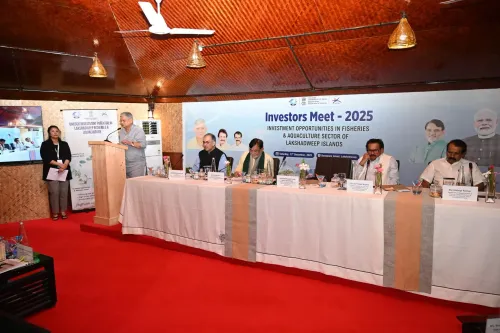
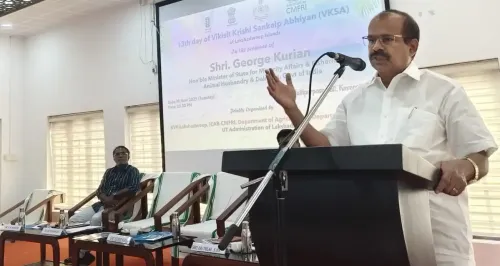
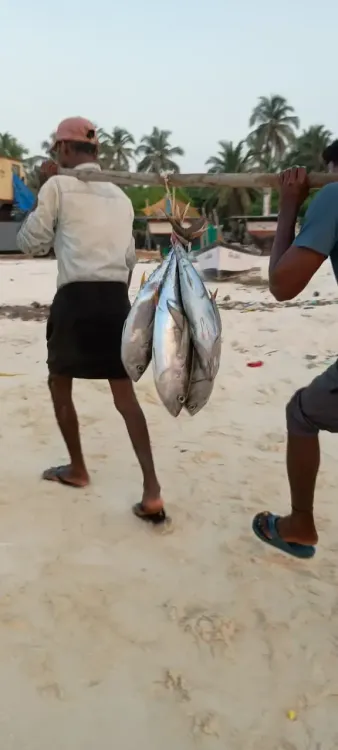
Kochi, Jan 13 (NationPress) The 'Matsya Mela' at Kavaratti wrapped up with a robust initiative to create an integrated fisheries hub in Lakshadweep, aiming to evolve the archipelago’s fisheries landscape into a sustainable and high-value contributor to the local economy.
The envisioned hub is designed as a centralized platform to facilitate fish marketing, fortify the fisheries value chain, and boost income and livelihood security for the community of local fishers.
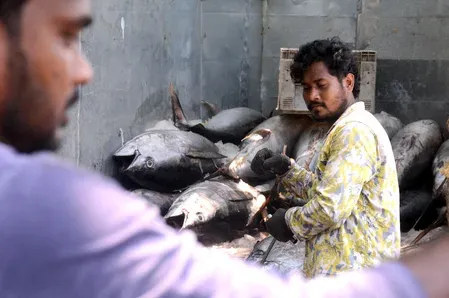
Experts and stakeholders indicated that such an establishment could enable Lakshadweep to transition from fragmented operations and fully unlock the economic potential of its tuna-centered fisheries and developing mariculture practices.
Essential elements of the hub would comprise organized fish marketing systems, shared landing and handling facilities, cold storage and cold-chain infrastructure, value addition units, and services for export facilitation.
These initiatives collectively aim to tackle persistent issues such as post-harvest losses, price fluctuations, and restricted access to premium markets both domestically and internationally.
A prominent discussion point at the mela was the critical need for regular and scientific assessments of fish catch data in the region.
Experts emphasized that reliable data is crucial for informed policymaking, sustainable stock management, and long-term strategies, particularly in light of climate change and escalating pressures on marine resources.
Another significant recommendation was to identify appropriate locations for cage fish farming, considering environmental capacity, ecosystem health, and climate adaptability.
Scientists pointed out the potential in cage farming, seaweed cultivation, and ornamental fisheries as diverse livelihood options that could complement capture fisheries, thereby alleviating strain on natural stocks.
The event also spotlighted citizen science initiatives aimed at connecting fishing communities with research institutions, allowing fishers to actively participate in data collection, stock assessment, and ecosystem monitoring.
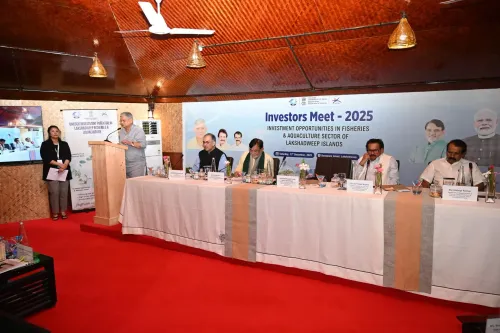
Organized by the Krishi Vigyan Kendra (KVK) Lakshadweep under the ICAR-Central Marine Fisheries Research Institute (CMFRI), in collaboration with the Lakshadweep Fisheries Department, the mela attracted policymakers, scientists, and industry participants.
Lakshadweep Fisheries Director K. Buzar Jamhar, CMFRI Director Dr. Grinson George, and KVK Head Dr. P.N. Ananth emphasized that collaborative efforts among fishers, cooperatives, entrepreneurs, and government will be pivotal in transforming Lakshadweep’s marine resources into a resilient engine for blue economy growth.
Point of View
I see the establishment of an integrated fisheries hub in Lakshadweep as a pivotal move towards sustainable economic development. This initiative not only addresses local livelihood challenges but also aligns with broader goals of environmental stewardship and resource management. It reflects a growing recognition of the importance of sustainable practices in the fisheries sector, which is critical in today's climate-conscious world.
NationPress
19 Sept 2026
Frequently Asked Questions
What is the purpose of the integrated fisheries hub in Lakshadweep?
The hub aims to streamline fish marketing, enhance the fisheries value chain, and provide income and livelihood security for local fishing communities.
How will the hub benefit the local fishing communities?
It will create organized systems for fish marketing, improve access to cold storage, and facilitate export opportunities, ultimately boosting local economies.
What challenges does the hub intend to address?
The hub seeks to tackle issues like post-harvest losses, price volatility, and access to premium markets.
Why is fish catch data important?
Reliable fish catch data is crucial for sustainable management, informed policymaking, and long-term planning, especially in light of climate change.
What new opportunities are being explored in Lakshadweep fisheries?
Opportunities in cage farming, seaweed cultivation, and ornamental fisheries are being explored as diversified income sources.