How is Lakshadweep Planning to Enhance Fisheries Entrepreneurship and Tap into the Blue Economy?

Synopsis
Lakshadweep is taking significant strides to develop its fisheries sector with a new road map aimed at fostering entrepreneurship and tapping into its blue economy. This initiative promises to boost local livelihoods and attract investments, paving the way for sustainable growth.
Key Takeaways
New Road Map: Aims to enhance fisheries entrepreneurship.
Investment Opportunities: Over Rs 500 crore secured in proposals.
Sustainable Practices: Focus on marine cage farming and IMTA.
Strong Value Chains: Targeting tuna and seaweed sectors.
Local Empowerment: Emphasis on youth and women entrepreneurship.
Kochi, Jan 12 (NationPress) In a pivotal move to harness its extensive blue economy potential, the Lakshadweep administration is set to unveil a detailed road map designed to foster entrepreneurship, drive technological advancements, and attract significant investments in the fisheries and mariculture domains.
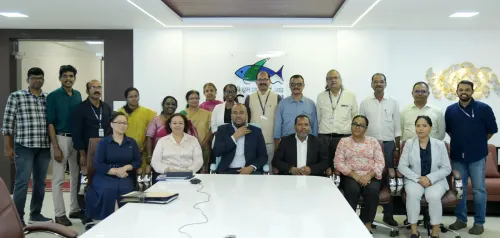
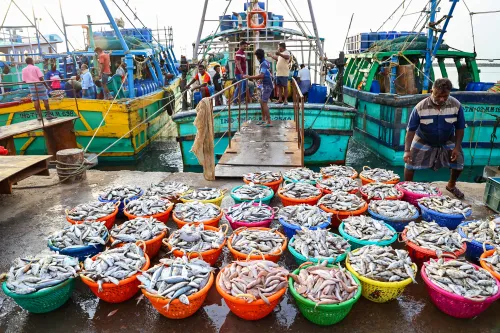
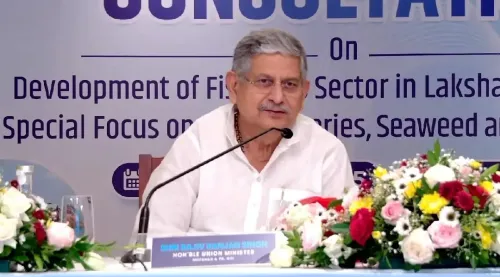
During a discussion with stakeholders at the ongoing Matsya Mela in Kavaratti, Lakshadweep Fisheries Secretary Raj Thilak, IFS, presented a range of strategic initiatives aimed at bolstering the tuna and seaweed value chains, as well as ornamental fisheries and marine cage fish farming.
These initiatives are intended to promote the comprehensive development of the fisheries sector while creating sustainable livelihoods for the island's communities.
The Matsya Mela is being organized by the Lakshadweep Krishi Vigyan Kendra in collaboration with the ICAR–Central Marine Fisheries Research Institute (CMFRI) and the Lakshadweep Fisheries Department.
Highlighting the importance of innovation-led growth, Thilak mentioned that focused efforts would be directed towards encouraging startups and fisheries-based entrepreneurship, especially among the youth and women of the islands.
Investments in fisheries infrastructure and value chains are expected to significantly boost production and export capabilities, thus aiding the socio-economic development of Lakshadweep’s coastal communities. There is a strong emphasis on leveraging advanced technologies and fostering private participation to fully exploit the islands’ blue economy potential.
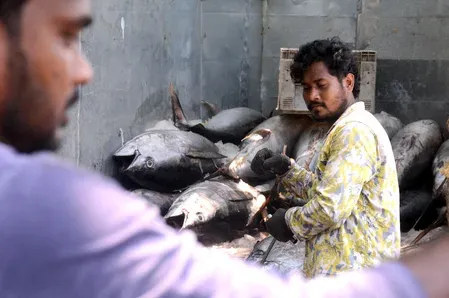
Experts and stakeholders at the meeting underscored the promising prospects within the tuna value chain and seaweed-based ventures, emphasizing Lakshadweep’s strategic positioning, pristine waters, and abundant marine biodiversity.
High-growth segments with substantial global demand include value-added tuna products, seaweed-derived nutraceuticals, functional foods, and ornamental fish farming.
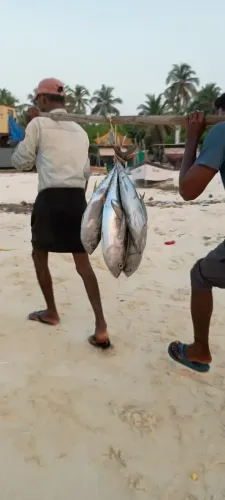
A scientific report presented during the technical session revealed that while Lakshadweep has a fisheries potential of nearly 100,000 tonnes, actual production hovers around 20,000 tonnes, indicating a substantial opportunity for sustainable mariculture expansion.
Marine cage farming, which features high-value species such as cobia, pompano, seabass, groupers, and snappers, was recognized as a scalable and environmentally sound technology suitable for open seas and lagoons.
Experts also recommended the implementation of Integrated Multi-Trophic Aquaculture (IMTA), which combines finfish with seaweeds and shellfish, to bolster ecological sustainability and enhance profitability.
Opportunities for establishing hatcheries, feed manufacturing units, cold-chain infrastructure, processing facilities, and branding of “Lakshadweep premium seafood products” were also discussed, with support for export logistics through mainland hubs.
Funding under the Pradhan Mantri Matsya Sampada Yojana (PMMSY) was addressed, with a need assessment initiated to identify projects under PMMSY 2.0.
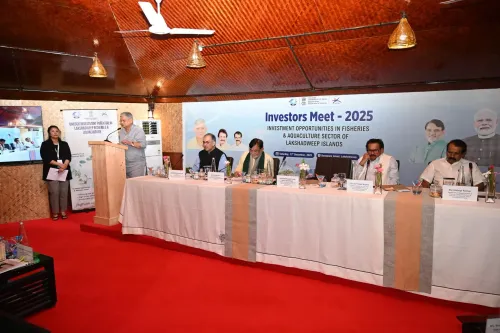
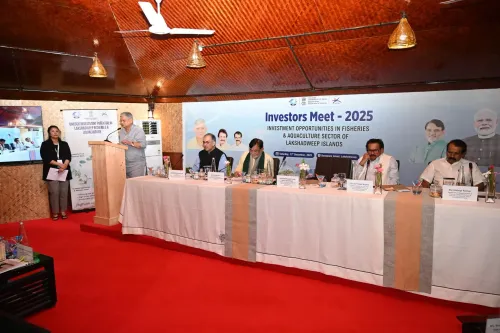
Notably, investment proposals exceeding Rs 500 crore were secured during an Investors’ Meet held in Lakshadweep last December.
CMFRI Director Dr Grinson George, Lakshadweep Fisheries Director K. Buzar Jamhar, DANICS officials, and Lakshadweep KVK Head Dr P.N. Ananth also contributed to the stakeholder meeting.
Point of View
Lakshadweep's initiative to enhance its fisheries sector represents a significant and timely effort to leverage local resources for sustainable development. This approach aligns with broader national goals of economic growth and environmental stewardship, making it a noteworthy development in India's coastal regions.
NationPress
6 Oct 2026
Frequently Asked Questions
What is the main goal of Lakshadweep's new fisheries road map?
The main goal is to promote entrepreneurship, technological advancement, and large-scale investments in the fisheries and mariculture sectors to enhance local livelihoods.
How much fisheries potential does Lakshadweep have?
Lakshadweep has an estimated fisheries potential of nearly 100,000 tonnes.
What are some key initiatives mentioned in the road map?
Key initiatives include strengthening tuna and seaweed value chains, promoting ornamental fisheries, and encouraging sustainable mariculture expansion.
What is IMTA and its significance?
Integrated Multi-Trophic Aquaculture (IMTA) combines different species to improve ecological sustainability and profitability in aquaculture.
What funding support is available for fisheries development?
Funding support is available through the Pradhan Mantri Matsya Sampada Yojana (PMMSY), which aims to identify and support relevant projects.