Are Investors Set to Inject Rs 500 Crore into Lakshadweep's Blue Economy?
Synopsis
Lakshadweep is witnessing a surge in investment interest as a recent meet revealed proposals worth over Rs 500 crore in key sectors. This initiative aims to unlock the immense potential of the region's Blue Economy, which includes sustainable fishing practices and innovative seafood processing techniques.
Key Takeaways
Investors' meet in Lakshadweep generated proposals exceeding Rs 500 crore.
Focus areas include tuna fisheries, seaweed cultivation, and waste management.
Single-window system being developed for project approvals.
Potential for sustainable practices in ornamental fisheries.
Lakshadweep's Exclusive Economic Zone presents vast opportunities.
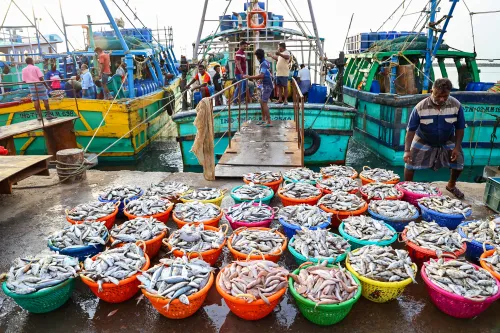
New Delhi, Dec 14 (NationPress) An investors' gathering in Lakshadweep has sparked significant enthusiasm, leading to investment proposals exceeding Rs 500 crore in sectors such as tuna and deep-sea fisheries, seaweed cultivation, ornamental fisheries, and waste management, as reported in an official statement released on Sunday.
To enhance investment and simplify procedures, a single-window system is being introduced for efficient project approvals in Lakshadweep, according to the statement.
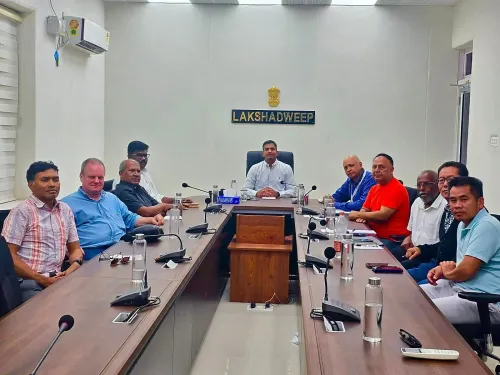
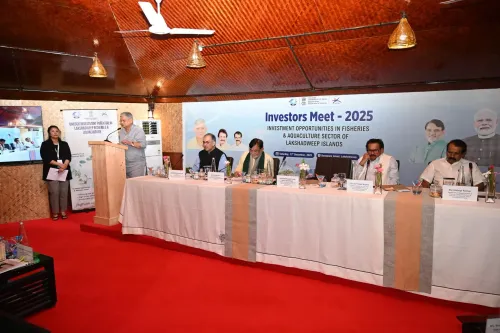
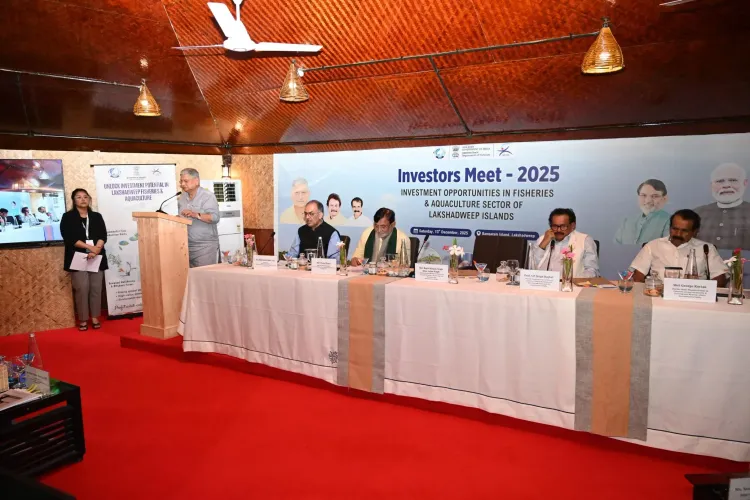
Twenty-two investors and prominent entrepreneurs from across the nation took part in the investors' meet held in the Lakshadweep Islands over the weekend, aiming to tap into the vast potential of Lakshadweep’s Blue Economy.
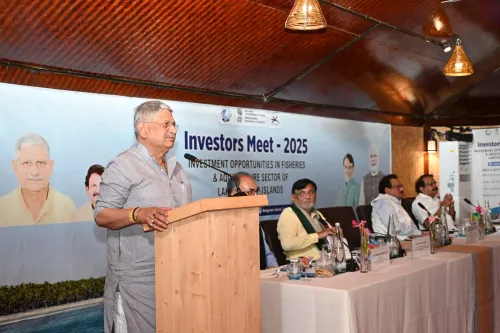
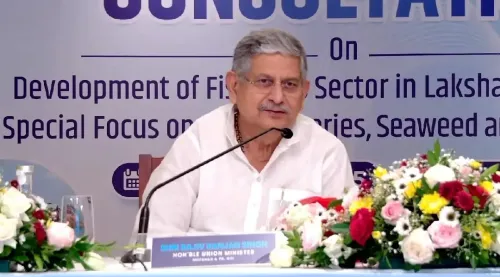
This inaugural investors’ meet was organized by the Centre’s Department of Fisheries on Saturday in the Bangaram Islands of Lakshadweep. The gathering was graced by the Minister of Fisheries, Animal Husbandry & Dairying, Rajiv Ranjan Singh, and Minister of State George Kurian.
The Department of Fisheries delineated investment opportunities in tuna fishing, offshore seaweed cultivation, hatcheries, brood banks, integrated units, and offshore cage farming.
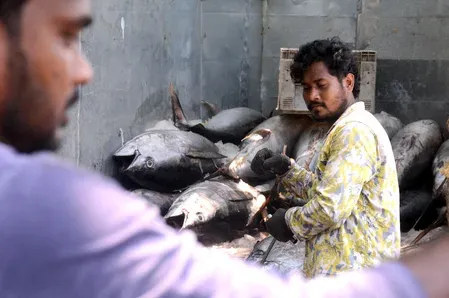
Lakshadweep boasts significant investment potential in tuna and deep-sea fisheries, covering nearly 20 percent of India’s Exclusive Economic Zone, which harbors abundant stocks of tuna and other valuable species. Despite current production hovering around 15,000 tonnes, this is merely a fraction of the estimated one lakh tonnes potential. By establishing a modern value chain encompassing fishing, certification, branding, and export-oriented processing, investors can position Lakshadweep tuna in premium international markets under a robust identity, such as "Lakshadweep Sustainable Tuna", the statement indicated.
Traditional fishing methods in the area render it suitable for global eco-labeling systems like the Marine Stewardship Council (MSC), which can unlock access to high-end markets and premium pricing. There are also prospects in infrastructure development, including smart fishing harbours, cold chain facilities, processing units, and fleet modernization with advanced multi-gear deep-sea fishing vessels equipped with onboard storage and processing, along with mother vessels for catch aggregation and transportation. Collectively, these initiatives have the potential to transform Lakshadweep into a hub for sustainable, globally competitive tuna fisheries, the statement elaborated.
Lakshadweep’s extensive lagoon area, exceeding 4,200 square km, provides an ideal setting for seaweed cultivation. With the global demand for seaweed-based products escalating, the region offers substantial investment opportunities in farming systems, nurseries, biomass processing, and bioproduct manufacturing. As a designated Seaweed Cluster, Lakshadweep has laid a solid groundwork under the PMMSY through initiatives such as a Seaweed Seed Bank and a Seaweed Hatchery, fostering accelerated sectoral growth.
Moreover, the Lakshadweep administration is actively developing a leasing policy to enable private sector engagement in offshore seaweed farming. Investors can leverage this momentum by expanding seaweed farming, processing capabilities, logistics networks, and market connections to establish Lakshadweep products in global markets. Beyond economic prospects, seaweed farming yields environmental advantages like carbon sequestration and enhancement of marine biodiversity, while supporting diverse industries including food, pharmaceuticals, and cosmetics.
Lakshadweep is also home to nearly 300 species of marine fish suitable for the ornamental trade, spanning around 35 families such as wrasses, damselfish, cardinalfish, groupers, surgeonfish, butterflyfish, goatfish, blennies, scorpionfish, triggerfish, and squirrelfish. This rich biodiversity renders the islands an ideal site for establishing marine ornamental hatcheries, broodstock development facilities, and integrated rearing units aimed at diminishing reliance on wild-caught species. With the growing global appetite for ornamental fish, investors have a prime opportunity to penetrate the lucrative aquarium trade by developing sustainable breeding systems and export-oriented enterprises, the statement further stated.
Lakshadweep also holds tremendous potential for offshore cage farming, utilizing its expansive Exclusive Economic Zone of nearly 4 lakh square km to promote large-scale, sustainable mariculture. This sector is bolstered by successful pilot projects demonstrating its viability in various parts of the country, such as Odisha, the statement concluded.
Point of View
This investment initiative in Lakshadweep represents a significant stride toward sustainable development and economic growth in the region. By harnessing the natural resources and potential of the Blue Economy, the government is not only aiming to boost local livelihoods but also positioning India as a leader in sustainable marine practices.
NationPress
19 Sept 2026