Is the BJP's Youngest Chief a Game Changer in Politics?
Click to start listening
Synopsis
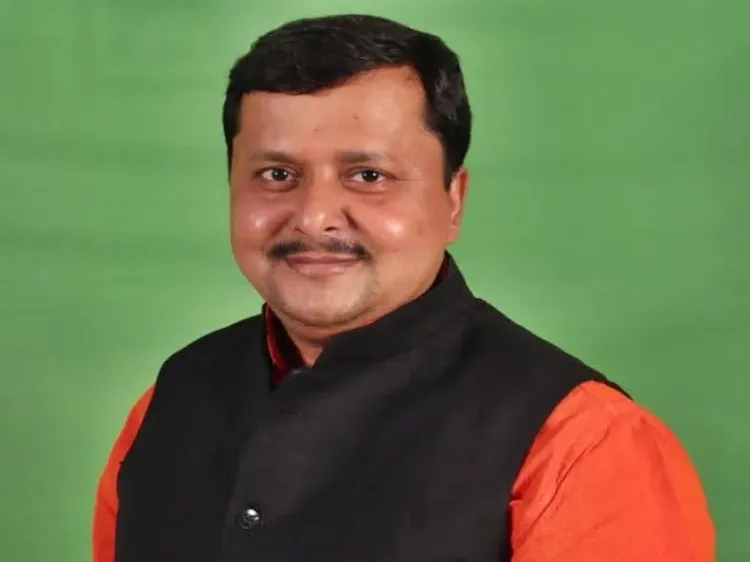
In a striking contrast to the aging leadership of major Indian political parties, the BJP has appointed 45-year-old Nitin Nabin as its National Working President. This decision not only highlights a generational shift but also reflects the BJP's commitment to nurturing young talent within its ranks.
Key Takeaways
- Nitin Nabin's appointment represents a generational shift in BJP leadership.
- The BJP is prioritizing youth and talent over seniority.
- Leadership transitions within the BJP reflect strategic planning for the future.
- The disparity in ages among party leaders highlights contrasting political approaches.
- Long-term governance potential is being emphasized in new appointments.
New Delhi, Dec 15 (NationPress) In a time when the leadership of most significant political parties in India is dominated by individuals in their seventies and eighties, the Bharatiya Janata Party (BJP) stands out for its refreshing choice. Nitin Nabin, recently appointed as the BJP National Working President, is just 45 years old, making him the youngest among senior leaders across major political parties and highlighting a stark difference in the age demographics of leadership.
This age disparity becomes even clearer when compared to other national and regional parties. For instance, Congress President Mallikarjun Kharge is a notable 83 years of age, and Nationalist Congress Party-SP (NCP-SP) chief Sharad Pawar is 85.
Furthermore, Trinamool Congress leader and West Bengal Chief Minister Mamata Banerjee is 70, while Bahujan Samaj Party (BSP) chief and former Uttar Pradesh Chief Minister Mayawati is 69. Dravida Munnetra Kazhagam (DMK) president and Tamil Nadu Chief Minister M.K. Stalin is also in his seventies at 72. In these parties, leadership remains with seasoned veterans who have long held sway over their organizations.
Other leaders surpassing Nitin Nabin's age include Aam Aadmi Party (AAP) national convenor and ex-Delhi Chief Minister Arvind Kejriwal at 57, National Conference leader and Jammu & Kashmir Chief Minister Omar Abdullah at 55, and Samajwadi Party president and former Uttar Pradesh chief minister Akhilesh Yadav at 52.
In this context, Nitin Nabin's relatively youthful age sets him apart. Being appointed to a significant national role before reaching 50 represents a generational shift that is becoming increasingly influential in political discussions.
Commenting on this pivotal appointment, BJP national spokesperson Shehzad Poonawalla remarked on X: "BJP vs Congress. BJP has selected a 45-year-old Nitin Nabin as its National Working President. This move underscores how the BJP prioritizes merit, talent, and youthful energy. Recently, Congress leader from Odisha, Mohammad Moquim, suggested that Kharge ji, at 83, should step down as he lacks connection with the youth."
Political analysts observe that the BJP's leadership structure showcases a deliberate focus on succession planning and sustainable organizational growth. Over the last decade, the party has consistently promoted leaders who are expected to remain politically engaged for the long haul, rather than relying solely on legacy figures approaching the end of their careers.
This strategy is particularly evident in the BJP's management of leadership shifts following electoral victories.
In the wake of the 2023 Assembly elections, the BJP appointed relatively younger and first-time Chief Ministers in Rajasthan, Chhattisgarh, and Madhya Pradesh, favoring leaders with the potential for long-term political influence over their older counterparts.
The choices were generally perceived as an effort to invest in governance-oriented individuals who could mold state politics for the upcoming decade.
According to experts, the BJP has also emphasized nurturing leaders through enduring roles within the party and governance, enabling them to gain administrative experience early on.
From state units to parliamentary leadership, the party has consistently indicated that longevity and adaptability are as critical as seniority.
In contrast, numerous opposition parties remain tethered to longstanding figures whose authority is largely unchallenged internally. While these leaders command significant loyalty and political acumen, critics argue that a prolonged concentration of power at the summit can inhibit leadership renewal and restrict generational transition.
However, it is important to note that age alone does not determine political efficacy, as many senior leaders across various parties continue to play crucial roles in governance and strategic decision-making.
Point of View
It is essential to recognize the significance of Nitin Nabin's appointment as a pivotal moment for the BJP and Indian politics. This move reflects the party's strategy of fostering youth leadership and ensuring continuity in governance. It is a step towards aligning with the aspirations of younger voters, ultimately shaping the political narrative in India.
NationPress
15/12/2025
Frequently Asked Questions
Who is Nitin Nabin?
Nitin Nabin is the newly appointed National Working President of the Bharatiya Janata Party (BJP) at the age of 45, making him the youngest leader among major political parties in India.
What sets Nitin Nabin apart from other leaders?
Nitin Nabin's youthfulness at 45 contrasts sharply with the older leadership in other parties, emphasizing a generational shift within the BJP.
What does this appointment signify for the BJP?
This appointment signals the BJP's focus on nurturing talent and leadership among younger members, aligning with the aspirations of the youth in India.
How does Nabin's age compare to other party leaders?
Nitin Nabin, at 45, is significantly younger than other major party leaders, such as Congress President Mallikarjun Kharge (83) and NCP-SP chief Sharad Pawar (85).
What is the BJP's strategy regarding leadership?
The BJP's strategy emphasizes succession planning and promoting younger leaders to ensure long-term organizational continuity and governance.