Could the 1st Investors’ Meet in Lakshadweep Unlock Rs 519 Crore in Investment Plans?
Synopsis
The first-ever investors' meet in Lakshadweep has revealed investment plans totaling Rs 519 crore, aimed at enhancing fisheries and aquaculture. This initiative is set to unlock the region's vast potential and attract investors to explore lucrative opportunities.
Key Takeaways
Investment of Rs 519 crore to boost fisheries in Lakshadweep.
New fishing regulations provide legal fishing rights.
Potential for fisheries production to increase significantly.
Importance of sustainable fishing practices highlighted.
Interactive sessions reveal investor challenges and opportunities.
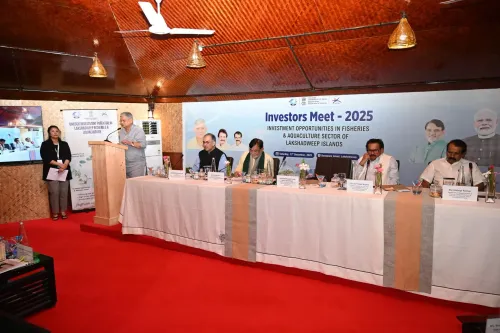
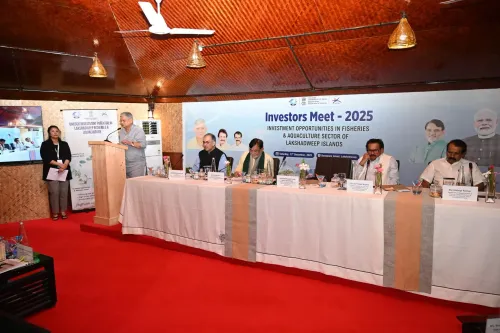
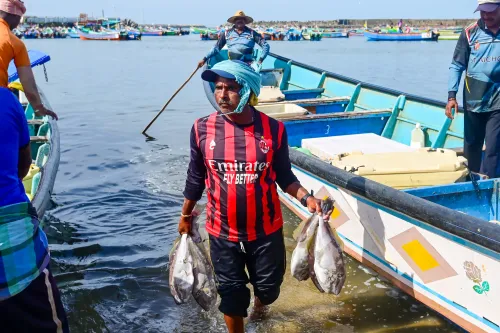
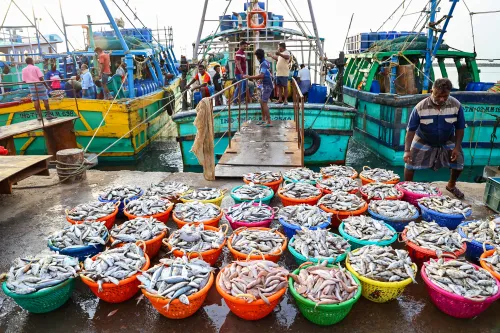
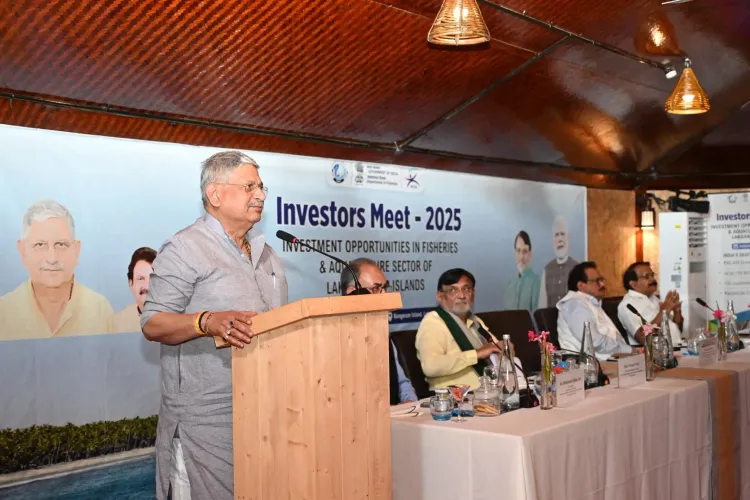
New Delhi, Dec 14 (NationPress) The inaugural investors’ meet in the Lakshadweep Islands has witnessed an astounding investment plan worth Rs 519 crore aimed at tapping into the potential of fisheries and aquaculture, as reported by the government.
The Department of Fisheries, part of the Ministry of Fisheries, Animal Husbandry and Dairying (MoFAHD), in partnership with the Union Territory of Lakshadweep, facilitated this pivotal meeting.
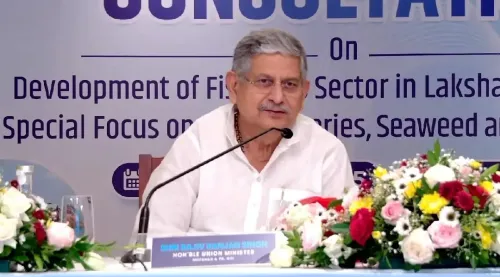
Union Minister Rajiv Ranjan Singh announced that the government has introduced new fishing regulations for the Exclusive Economic Zone (EEZ). This allows fishermen operating within the EEZ to legally fish with an authorized “Access Pass,” permitting them to export high-value products like tuna to global markets.
Under international law, fishery resources found in India’s EEZ will be classified as “Indian Origin,” which will simplify the export process for fish products, Singh elaborated during the event.
Furthermore, Singh mentioned the release of the ‘High Seas Fishing Guidelines,’ granting Indian-flagged vessels the legal authority to operate in these waters.
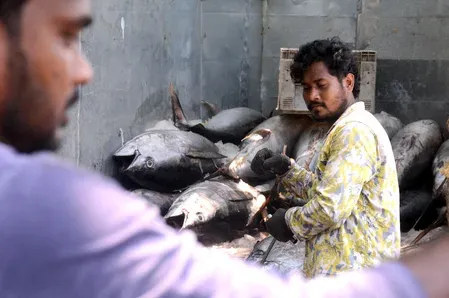
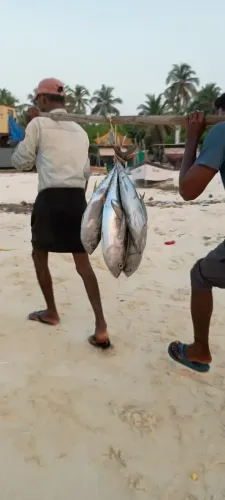
He encouraged investors to harness the extensive investment opportunities available in the Islands, which have considerable potential for high-demand species such as tuna.
An interactive session provided investors with a platform to share experiences and discuss challenges.
Participants highlighted several concerns including the need for improved transportation of products to the mainland, cold storage facilities, ice plants, and the establishment of chilled fish handling centers for better post-harvest management.
They also called for value addition facilities for sashimi-grade tuna, fish oil refining capabilities, skilled labor requirements, and ornamental fish brood banks to optimally utilize Lakshadweep’s EEZ for sustainable growth.
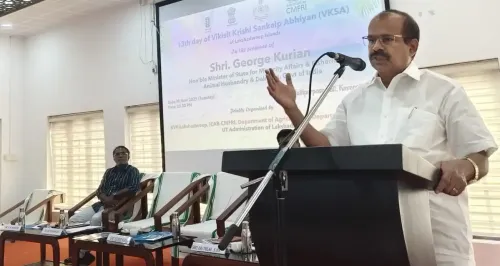
Minister of State S.P. Singh Baghel underscored Lakshadweep’s untapped fisheries potential, emphasizing the gap between the current production of 14,000 tonnes and the estimated potential of 1 lakh tonnes.
He highlighted that the islands are naturally advantageous for high-quality tuna fishing using pole-and-line and handline methods, which are recognized globally for their clean and sustainable practices.
Baghel urged exporters to seek out new markets and take advantage of existing government welfare programs to fortify the fisheries value chain.
Point of View
It's evident that the inaugural investors' meet in Lakshadweep marks a significant step towards unlocking its fisheries potential. With substantial investment plans and government support, the region could see transformative growth in aquaculture and fisheries, benefiting local communities and the national economy.
NationPress
21 Sept 2026
Frequently Asked Questions
What was the investment amount discussed at the meet?
The investment amount discussed at the meet was Rs 519 crore.
What new regulations were introduced for fishermen?
New fishing regulations for the Exclusive Economic Zone (EEZ) were introduced, allowing fishermen to fish legally with an authorized 'Access Pass.'
What potential does Lakshadweep have in fisheries?
Lakshadweep has the potential to increase its fisheries production from 14,000 tonnes to 1 lakh tonnes.
What is the significance of the 'High Seas Fishing Guidelines'?
The 'High Seas Fishing Guidelines' grant Indian-flagged vessels the legal right to operate in high seas, enhancing fishing opportunities.
What challenges were highlighted by investors?
Investors highlighted challenges such as transportation logistics, cold storage needs, and the establishment of chilled fish handling centers.