King defends Punjabi rap, compares objectification debate to Bhojpuri and Bollywood
Synopsis
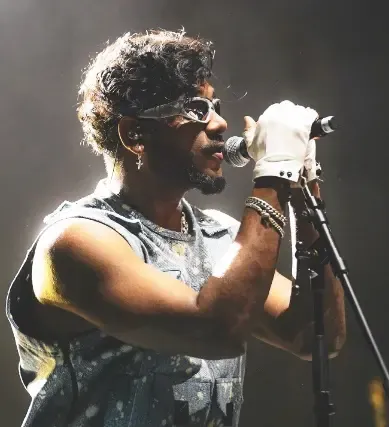
King's defence hinges on a comparative argument: if Punjabi rap is problematic for objectifying women, why aren't Bhojpuri and Bollywood equally scrutinised? His framing shifts blame to listeners for over-moralising art, and to critics for selective outrage. Whether that deflects or reframes the conversation depends on how seriously one takes his 'vibe over words' thesis.
Key Takeaways
King countered objectification criticism by comparing Punjabi rap to Bhojpuri and Bollywood music, questioning selective moral scrutiny.
The artist argued that music is subjective and that artists evolve based on lived experience, environment, and personal journey.
In hip-hop, King noted, experiences are often exaggerated or told in raw or poetic manner—stylistic choices distinct from literal endorsement.
He attributed song popularity to 'vibe' over lyrical content, cautioning against over-intellectualising music consumption.
King has released chartbusters Tu Aake Dekhle , Maan Meri Jaan , and OOPS ; recently debuted in OTT drama Lukkhe .
Singer-rapper King has pushed back against persistent criticism of objectification of women in Punjabi rap music, arguing that the debate unfairly singles out one genre while overlooking similar patterns across Indian music industries.
In an exclusive interaction, King countered the narrative by drawing comparisons to Bhojpuri and Bollywood music, questioning whether listeners have genuinely engaged with the full spectrum of Indian music before levelling accusations at Punjabi artists.
The subjectivity argument
King framed music as a subjective art form rather than a medium to be evaluated by a single moral standard. "Have you listened to Bhojpuri songs? Have you listened to Bollywood songs? How much music have people actually heard while growing up? Music is a very subjective thing," he said, challenging the premise that Punjabi rap uniquely promotes problematic representation.
The artist stressed that boxing an entire genre into a stereotype misses the nuance of artistic expression. He argued that listeners bear equal responsibility in interpreting music within a broader cultural and artistic context, rather than extracting isolated lyrics for moral judgment.
Artists as mirrors of lived experience
King explained that artistic output is intrinsically tied to personal evolution, lived experiences, and environmental influences. "Artists are human beings too. What an artist experienced ten years ago, with certain people or in a certain environment, can show up in their music," he noted.
In hip-hop specifically, King observed that experiences are often conveyed through exaggeration, raw storytelling, or poetic licence — stylistic choices that distinguish the genre but are frequently misread as literal endorsement. This distinction, he suggested, is lost when critics collapse artistic representation into real-world advocacy.
The role of vibe over literal meaning
King also attributed the popularity of controversial tracks to factors beyond lyrical content. "Sometimes it's not about words, it's about the vibe. If you like a peppy number, you will listen to it," he said, arguing that listeners often prioritise sonic appeal and mood over textual scrutiny.
He further cautioned against over-intellectualising music consumption. "We tend to take music way more seriously than it actually is. We need to relax and enjoy the songs instead of putting so much thought to it," King added, suggesting that the moral reading of popular tracks may impose frameworks alien to their original intent.
Career milestones
King has built a substantial following with chartbusters including Tu Aake Dekhle, Maan Meri Jaan, and OOPS. He recently expanded into acting, debuting in the OTT drama series Lukkhe alongside Palak Tiwari and Raashii Khanna, signalling a diversification beyond music.
Point of View
Bhojpuri and Bollywood objectify women—that's not a defence of Punjabi rap, it's an indictment of Indian music broadly. His 'vibe over words' argument also glosses over the real issue: when women are consistently portrayed as objects across genres, listeners absorbing that messaging don't get to opt out by calling it 'subjective art.' Evolution matters, but so does accountability. Comparing genres doesn't excuse any of them.
NationPress
27 Sept 2026
Frequently Asked Questions
What did King say about objectification in Punjabi rap?
King argued that music is subjective and that critics unfairly single out Punjabi rap while overlooking similar objectification in Bhojpuri and Bollywood music. He called for listeners to understand art in a broader context rather than extracting isolated lyrics for moral judgment.
How does King explain controversial lyrics in hip-hop?
King explained that in hip-hop, artists often exaggerate experiences, tell stories in raw ways, or use poetic licence to convey their lived reality. These stylistic choices, he argued, should not be read as literal endorsement or advocacy.
Why do controversial songs become popular, according to King?
King attributed popularity to 'vibe' over lyrical content. He said listeners often prioritise sonic appeal and mood over textual scrutiny, and that people should not over-intellectualise music consumption.
What are King's recent career highlights?
King released chartbusters including Tu Aake Dekhle, Maan Meri Jaan, and OOPS. He recently made his acting debut in the OTT drama series Lukkhe, alongside Palak Tiwari and Raashii Khanna.