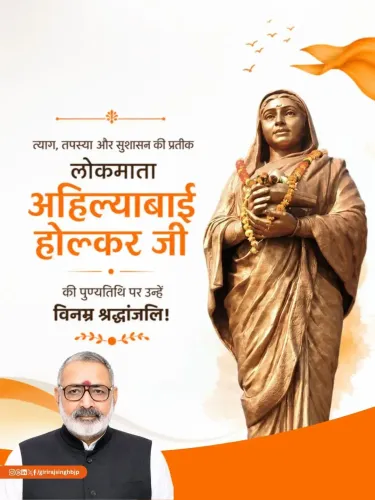
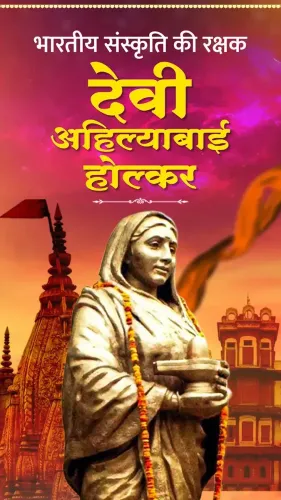
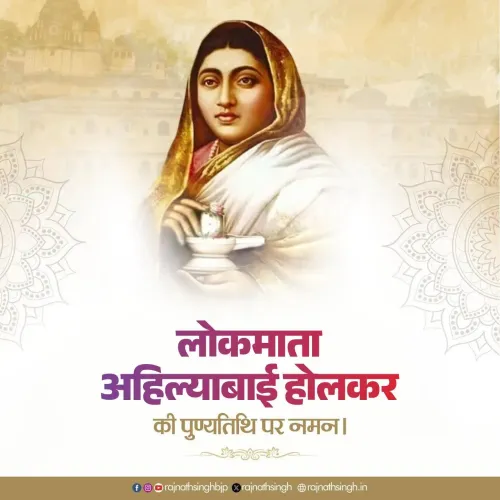
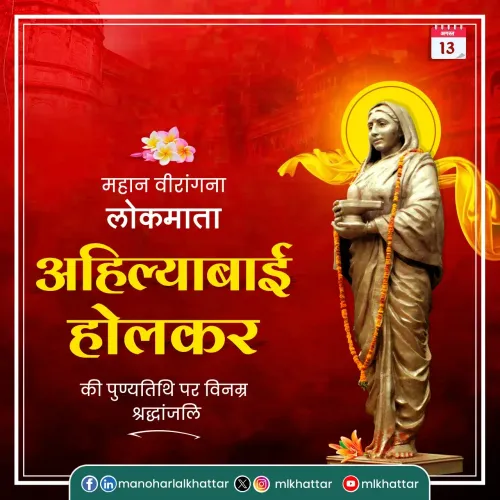
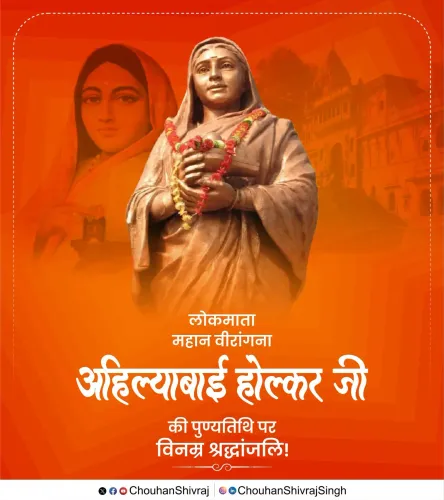
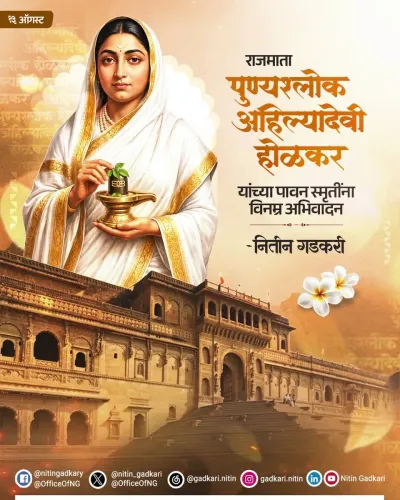
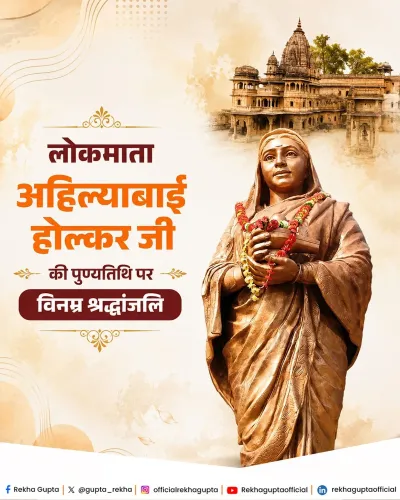
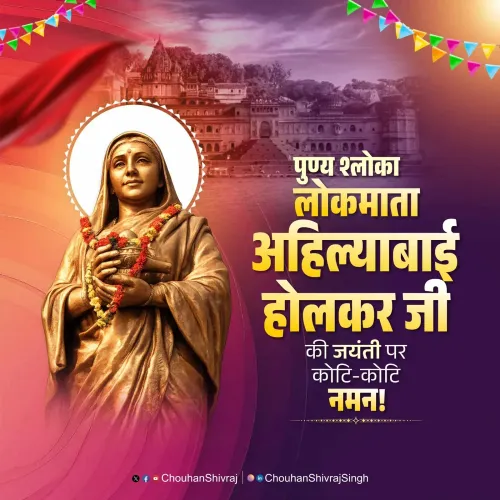
Shekhawat pays tribute to Ahilyabai Holkar on death anniversary
Synopsis
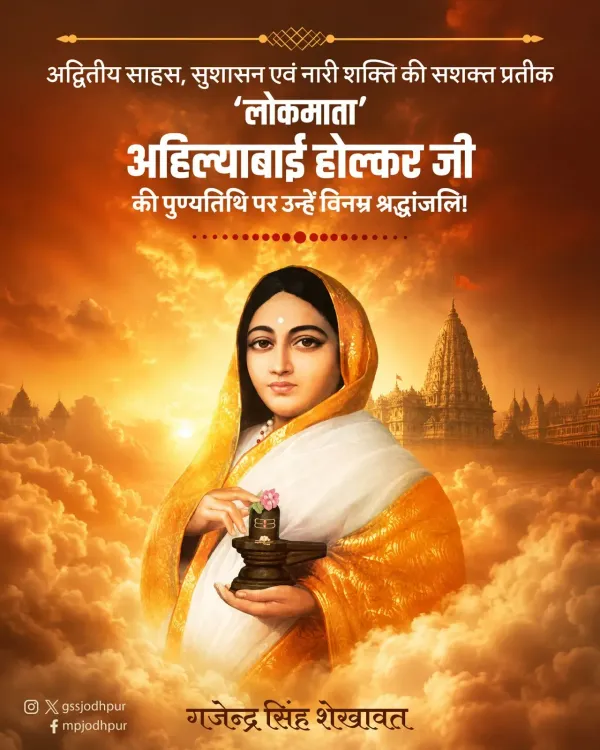
Union Culture and Tourism Minister Gajendra Singh Shekhawat paid tribute to 18th-century Malwa queen Ahilyabai Holkar on her death anniversary, 13 August, calling her an unparalleled symbol of courage, good governance, and women's power.
Key Takeaways
Union Culture and Tourism Minister Gajendra Singh Shekhawat paid tribute to Ahilyabai Holkar on her death anniversary, 13 August 2026 .
Shekhawat referred to her as 'Lokamata' — mother of the people — and called her a symbol of courage, good governance, and women's power.
Ahilyabai Holkar ruled the Malwa kingdom from 1767 to 1795 , overseeing temple restorations and public infrastructure across India.
The tribute aligns with a broader pattern of Indian political leaders commemorating Holkar on 13 August each year.
As head of the Ministry of Culture , Shekhawat's tribute carries institutional significance for cultural commemoration efforts.
On her death anniversary, Union Culture and Tourism Minister Gajendra Singh Shekhawat on Thursday, 13 August 2026 paid tribute to Ahilyabai Holkar, the 18th-century queen he called an unparalleled symbol of courage, good governance, and women's power.
Posting in Hindi, Shekhawat addressed her as 'Lokamata' — 'mother of the people' — a title that captures the reverence she commands across India centuries after her reign. He offered his vinarm shraddhanjali, a humble tribute, to the queen on her punyatithi, or death anniversary.
Who was Ahilyabai Holkar?
Ahilyabai Holkar assumed rule of the Malwa kingdom in 1767 and governed until her death in 1795 — nearly three decades of administration that left a mark far beyond her territory. She oversaw the construction and restoration of temples, ghats, and public infrastructure across the subcontinent, from Varanasi to Somnath, earning a reputation as a ruler who governed with both firmness and compassion. In an era when women's public authority was rare, her reign stood as a striking exception.
A date on every political calendar
Shekhawat's tribute follows a well-established pattern: 13 August sees Indian ministers and public figures across the political spectrum issue commemorations of Holkar, invoking themes of female leadership and enlightened governance drawn from pre-colonial history. As the head of the Ministry of Culture, Shekhawat's tribute carries institutional weight — the ministry has a broader mandate to promote cultural commemoration of historical figures. Holkar's legacy, bridging governance, spirituality, and women's empowerment, makes her a recurring reference point in that effort.
Her story endures not as museum history but as a living political touchstone — proof that strong, just leadership has deep roots in India's own past.
Point of View
Such commemorations are not merely ceremonial; they signal which historical figures the state wishes to elevate. Holkar's appeal is bipartisan, but her repeated invocation by ruling-party ministers suggests a conscious effort to anchor women's empowerment narratives in indigenous, pre-colonial precedents rather than post-independence frameworks.
NationPress
13 Aug 2026
Frequently Asked Questions
Who was Ahilyabai Holkar?
Ahilyabai Holkar was an 18th-century queen who ruled the Malwa kingdom from 1767 to 1795. She was known for her administrative reforms, restoration of temples and ghats across India, and compassionate governance, and is remembered as 'Lokamata' — mother of the people.
When is Ahilyabai Holkar's death anniversary?
Ahilyabai Holkar's death anniversary, or punyatithi, falls on 13 August each year. Indian political leaders and ministers typically issue tributes on this date.
Why did Gajendra Singh Shekhawat pay tribute to Ahilyabai Holkar?
As Union Culture and Tourism Minister, Shekhawat paid tribute on her death anniversary, 13 August 2026, calling her an unparalleled symbol of courage, good governance, and women's power. Such commemorations are part of the Ministry of Culture's broader mandate.
What does 'Lokamata' mean?
'Lokamata' is a Hindi honorific meaning 'mother of the people.' It is commonly used to describe Ahilyabai Holkar, reflecting the deep reverence Indians hold for her legacy of just and compassionate rule.
What is Ahilyabai Holkar known for?
She is known for governing the Malwa kingdom for nearly three decades, restoring temples and public infrastructure across India — including at Varanasi and Somnath — and for being one of the most prominent female rulers in pre-colonial Indian history.