Giriraj Singh hoists Tiranga, backs Har Ghar Tiranga drive
Synopsis
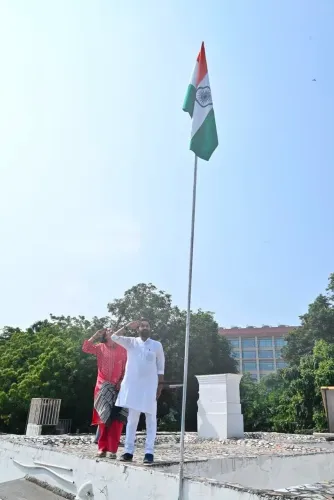
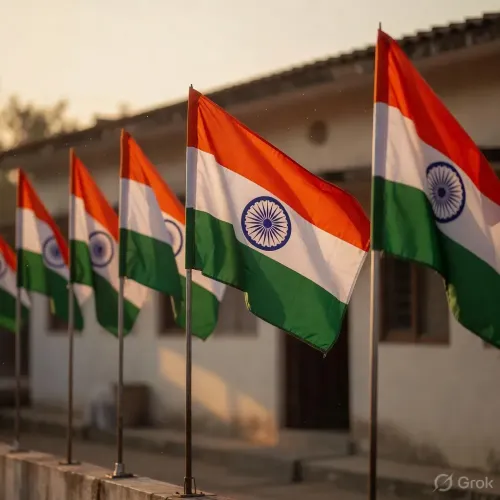
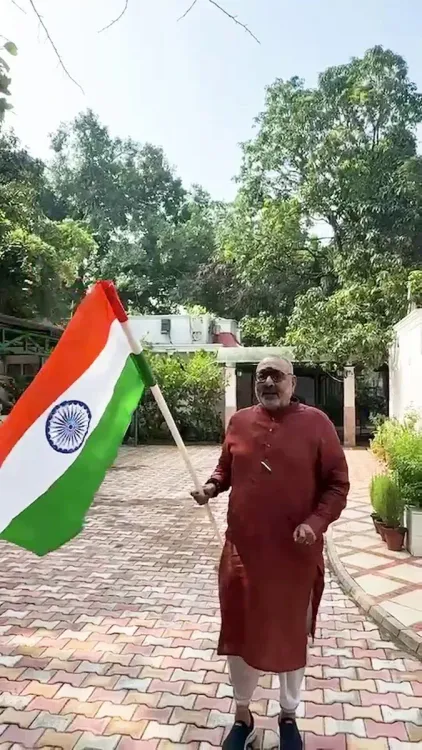
Union Textiles Minister Giriraj Singh hoisted the national flag at his residence on 13 August 2026 and urged citizens to join the Har Ghar Tiranga campaign, calling the Tricolour a symbol of India's self-respect, freedom, and unity ahead of Independence Day.
Key Takeaways
Giriraj Singh hoisted the Tricolour at his residence on 13 August 2026 , two days before Independence Day.
He described the national flag as a symbol of India's 'self-respect, freedom, and national pride,' not merely a piece of cloth.
Singh credited Prime Minister Narendra Modi's leadership for the sight of the Tricolour flying from Kashmir to Kanyakumari.
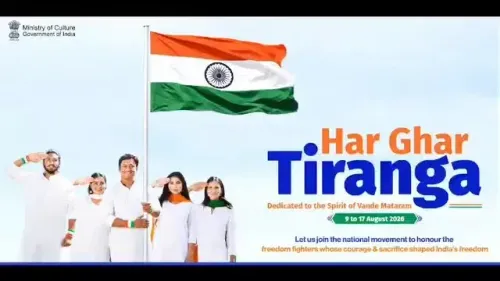
The Har Ghar Tiranga campaign was launched in August 2022 as part of Azadi Ka Amrit Mahotsav marking 75 years of Indian independence.
Amendments to the Flag Code of India in 2022 enabled machine-made flags and round-the-clock hoisting, broadening public participation.
The campaign has run annually since 2022, with public figures and citizens hoisting flags in the days surrounding 15 August .
Days before Independence Day on 15 August, Union Textiles Minister Giriraj Singh hoisted the national flag at his residence and called on every Indian to make the Har Ghar Tiranga campaign a people's celebration — a moment of personal patriotism folded into a nationwide movement.
Sharing the moment on 13 August 2026, Singh wrote: 'आज अपने आवास पर देश का गौरव तिरंगा फहराया' — 'Today I hoisted the Tricolour, the pride of the nation, at my residence.' He described the flag not merely as cloth and colour, but as 'a living symbol of India's self-respect, freedom, and national pride.'
From Kashmir to Kanyakumari — the imagery behind the call
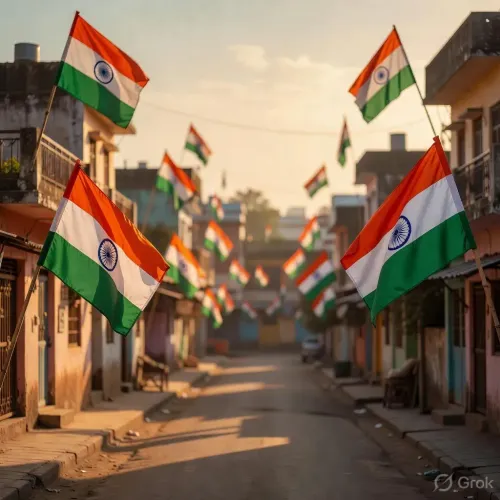
Singh invoked the full geographic sweep of India — Kashmir to Kanyakumari — to underscore the campaign's ambition: a flag flying with dignity at every home across the country. He credited Prime Minister Narendra Modi's leadership for making this sight a reality, framing the Tricolour's ubiquitous presence as a 'living testament to the patriotism and unity of the people of India.'
The imagery is deliberate. From the Himalayan north to the southernmost tip, the Tricolour fluttering on rooftops is meant to signal not just celebration but cohesion — a country speaking in one visual language on the eve of its independence anniversary.
Har Ghar Tiranga: four years and still building
The Har Ghar Tiranga campaign was born in August 2022 as the centrepiece of Azadi Ka Amrit Mahotsav, India's commemoration of 75 years of independence. What began as a one-time milestone event has since become an annual ritual, with ministers, officials, and ordinary citizens alike hoisting flags in the days flanking 15 August.
The campaign's logic is straightforward: make the national flag a household object rather than a state-occasion symbol. Amendments to the Flag Code of India in 2022 allowed machine-made polyester flags and extended permission for citizens to fly the Tricolour day and night — a practical unlock that dramatically expanded participation.
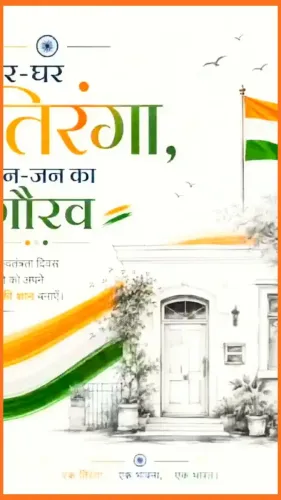
Singh's post, tagged #HarGharTiranga, places him squarely in a chorus of public figures who use the pre-Independence Day window to amplify the campaign. The call to action — 'आइए, इस तिरंगा उत्सव को जन-जन का उत्सव बनाएं' ('Let us make this Tiranga festival a celebration of every person') — is the campaign's recurring refrain, designed to push participation beyond the political class and into every neighbourhood.
As 15 August approaches, the Tricolour is once again the country's most visible shared symbol. Whether it flies from a minister's residence or a village rooftop, the message is the same: India, undivided, marking another year of freedom.
Point of View
A Lok Sabha MP from Bihar, the post also serves a local constituency purpose: projecting patriotic credentials ahead of a high-visibility national occasion. The campaign's staying power — now in its fourth year — suggests it has crossed the threshold from scheme to cultural habit.
NationPress
13 Aug 2026
Frequently Asked Questions
What is the Har Ghar Tiranga campaign?
Har Ghar Tiranga is an annual government campaign that encourages Indian citizens to hoist the national flag at their homes during the Independence Day period. It was launched in August 2022 as part of Azadi Ka Amrit Mahotsav, celebrating 75 years of Indian independence.
Why did Giriraj Singh hoist the Tiranga at his residence?
Union Textiles Minister Giriraj Singh hoisted the Tricolour at his residence on 13 August 2026 as part of the Har Ghar Tiranga campaign, urging citizens to participate and calling the flag a symbol of India's self-respect, freedom, and national pride.
When was Har Ghar Tiranga first launched?
The Har Ghar Tiranga campaign was first launched in August 2022 under the Azadi Ka Amrit Mahotsav initiative, which marked 75 years of Indian independence. It has been held annually every August since then.
Can ordinary citizens fly the national flag at home all day and night?
Yes. Amendments to the Flag Code of India in 2022 extended permission for citizens to fly the Tricolour round the clock and also allowed machine-made polyester flags, making it far easier for households to participate in the Har Ghar Tiranga campaign.
Who is Giriraj Singh?
Giriraj Singh is the Union Minister of Textiles in the Government of India, a senior BJP leader, and a Lok Sabha Member of Parliament representing the Begusarai constituency in Bihar.