Akhilesh Yadav pays tribute to Ahilyabai Holkar on her birth anniversary
Synopsis
Samajwadi Party president Akhilesh Yadav marked the birth anniversary of 18th-century Malwa ruler Ahilyabai Holkar on 31 May 2026, calling her a supreme guardian of cultural heritage and a symbol of women's empowerment and impartial governance.
Key Takeaways
Akhilesh Yadav posted a tribute to Ahilyabai Holkar on her birth anniversary on 31 May 2026 .
He described her as the 'supreme guardian of cultural heritage' and a symbol of women's empowerment and just governance.
Ahilyabai Holkar ruled the Malwa kingdom from 1767 to 1795 and is remembered for temple construction, civic works, and equitable administration.
The tribute aligns with the Samajwadi Party's broader messaging on social justice and outreach to women voters in Uttar Pradesh .
Anniversary tributes to pre-colonial rulers are a routine feature of political communication across party lines in India.
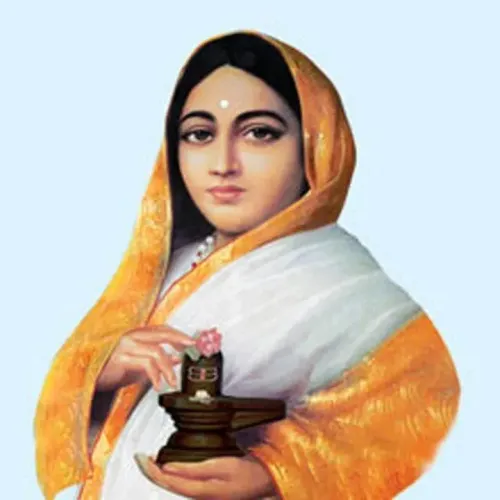
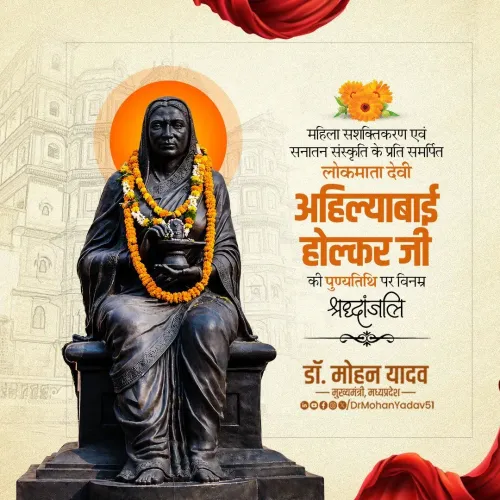
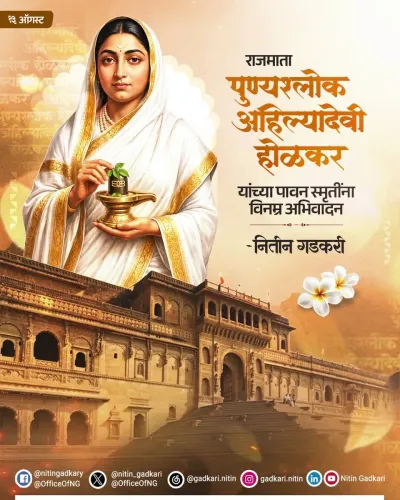
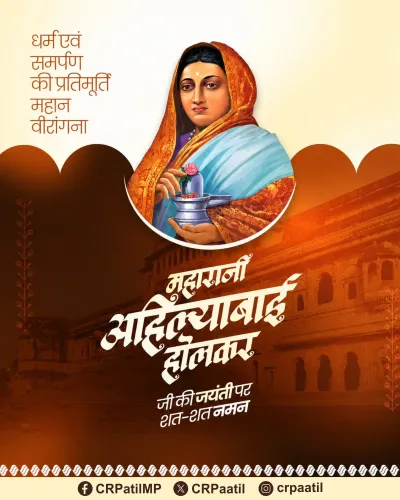
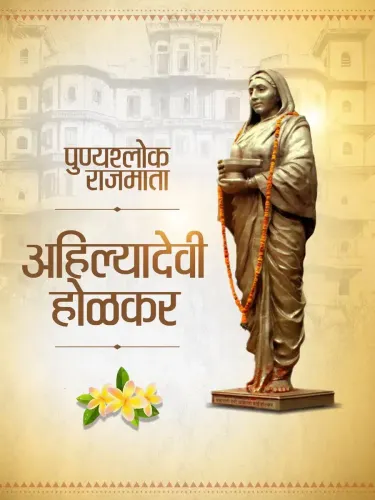
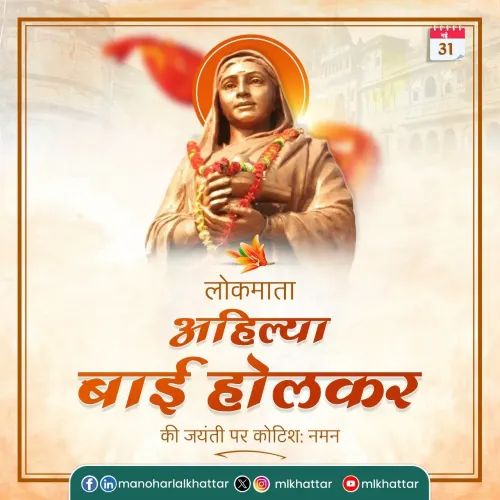
Samajwadi Party president Akhilesh Yadav on Sunday, 31 May 2026 extended greetings on the birth anniversary of Punyashlok Devi Ahilyabai Holkar, hailing the 18th-century Malwa ruler as a supreme guardian of cultural heritage and an enduring symbol of women's empowerment and just governance.
Context
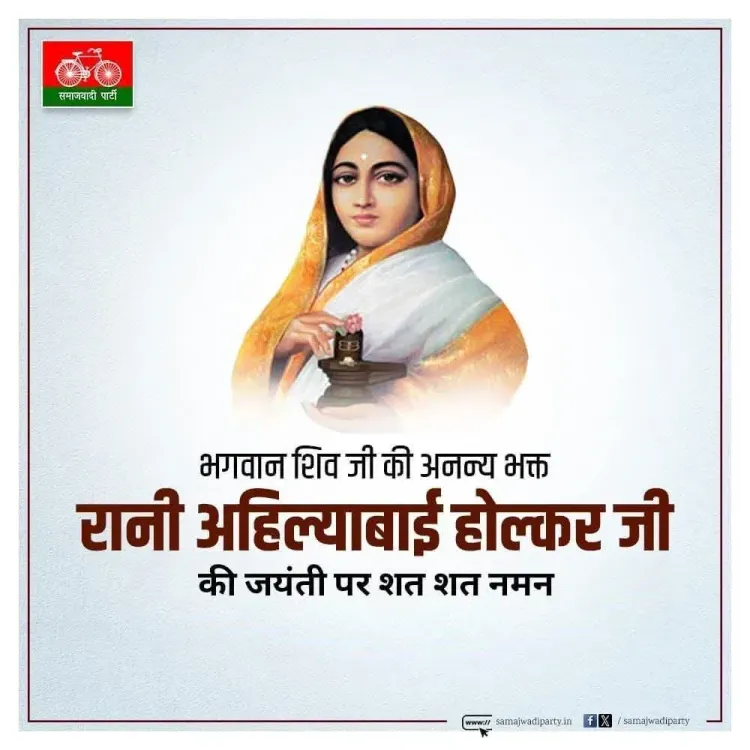
In his post, Yadav described Ahilyabai Holkar as 'सांस्कृतिक धरोहर की परम संरक्षक' ('the supreme guardian of cultural heritage') and praised her as an inspiration for the positive exercise of women's power. He also invoked her legacy of impartial justice, public welfare, and a governance ideal rooted in the well-being of her subjects. The tribute was accompanied by an image and posted to his official X account.
Ahilyabai Holkar ruled the Malwa kingdom from 1767 to 1795 and is widely remembered for commissioning temples, dharamshalas, and water-works across the Indian subcontinent. Her reign is cited in historical accounts as a model of benevolent and equitable administration.
Policy Backdrop
Tributes to pre-colonial rulers such as Ahilyabai Holkar have become a consistent feature of political messaging across party lines in India, particularly in states such as Madhya Pradesh and Uttar Pradesh where her legacy carries cultural resonance. Leaders invoke her memory to project values of just governance, female leadership, and cultural continuity.
For the Samajwadi Party, which has historically focused on social justice and outreach to OBC and minority communities, invoking a figure associated with equitable administration and women's strength aligns with its broader political narrative. Such messaging is especially directed at women voters in the Uttar Pradesh electorate.
Stakeholders and Impact
The tribute is addressed symbolically to women voters and citizens who regard Ahilyabai Holkar as a cultural icon. Her image as a just ruler and patron of religious and civic infrastructure resonates across caste and community lines in north and central India.
Political observers note that anniversary tributes of this kind reinforce a party's cultural credentials without requiring a specific policy commitment. They form part of the routine calendar of political communication ahead of state assembly cycles.
What's Next
Similar tributes from leaders of other parties are expected around this date each year. State governments in Madhya Pradesh and Uttar Pradesh have in the past considered or announced cultural commemorations and infrastructure-naming proposals linked to the Holkar legacy. Whether any such initiative follows this anniversary will be a marker of how parties translate symbolic messaging into governance action.
Point of View
Yadav signals to women voters in Uttar Pradesh that his party's social-justice platform has deep historical roots. The choice of a figure celebrated across party lines also allows the SP to claim a share of the cultural heritage discourse without directly contesting the ruling BJP on its own ideological ground. Taken together with similar tributes from other parties, it reflects how pre-colonial female rulers have become a shared symbolic resource in contemporary Indian electoral politics.
NationPress
19 Sept 2026
Frequently Asked Questions
Who was Ahilyabai Holkar and why is she celebrated?
Ahilyabai Holkar was the ruler of the Malwa kingdom from 1767 to 1795 . She is celebrated for commissioning temples and civic infrastructure across India, dispensing impartial justice, and governing with a focus on public welfare — making her a revered figure in Indian history and politics.
Why did Akhilesh Yadav pay tribute to Ahilyabai Holkar?
Akhilesh Yadav posted greetings on Ahilyabai Holkar's birth anniversary on 31 May 2026 , honouring her legacy of cultural guardianship, women's empowerment, and just rule. Such tributes are a routine part of political messaging in India.
What did Akhilesh Yadav say about Ahilyabai Holkar?
He described her as the 'supreme guardian of cultural heritage,' a symbol of the positive exercise of women's power, and an ideal of governance rooted in impartial justice and the well-being of subjects.
What is the significance of Ahilyabai Holkar's birth anniversary in Indian politics?
Leaders across party lines mark Ahilyabai Holkar's birth anniversary to project values of just governance and female leadership. The occasion is particularly resonant in Madhya Pradesh and Uttar Pradesh , where her legacy has cultural and electoral significance.
What is the Samajwadi Party's stance on women's empowerment?
The Samajwadi Party , led by Akhilesh Yadav , has historically emphasised social justice and outreach to marginalised communities, including women. Tributes to icons like Ahilyabai Holkar reinforce the party's messaging on gender equity and equitable governance.