US revokes 175,000+ visas over crime, fraud and security threats
Synopsis
The US State Department has revoked more than 175,000 visas in one of the largest single-disclosure enforcement actions under President Trump, citing crimes ranging from child sexual abuse and human trafficking to a USD 5 million Medicaid fraud and birth tourism. Secretary of State Marco Rubio has also separately flagged Cuban, Iranian, and other foreign nationals for deportation on foreign policy grounds.
Key Takeaways
The US State Department revoked more than 175,000 visas from foreign nationals, announced on 10 August .
Leading grounds: assault, DUI, theft, drug offences, fraud, sexual assault, and child abuse .
A US embassy in North Africa cancelled over 100 visas tied to birth tourism .
One fraud case involved a Medicaid scheme billing more than USD 5 million for services never provided.
Secretary of State Marco Rubio separately flagged Cuban, Iranian, and Laotian nationals for deportation on foreign policy grounds.
The department reiterated: ‘A US visa is a privilege, not a right.’
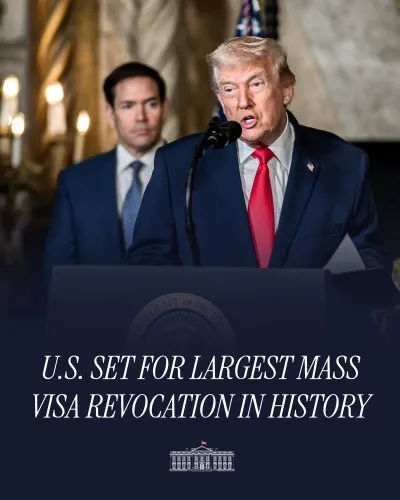
The US State Department announced on Monday, 10 August that it has revoked more than 175,000 visas from foreign nationals on grounds spanning criminal activity, immigration abuse, fraud, threats to national security, and calls for violence against Americans. The sweeping action was carried out under President Donald Trump as part of the department's continuous vetting programme.
Scale and Scope of Revocations
According to a fact sheet released in Washington, the majority of revocations followed encounters with law enforcement. The most common offences cited were assault, driving under the influence (DUI), theft, and drug-related crimes. Additional revocations covered reckless driving, sexual assault, child abuse, fraud, and embezzlement.
The department described the continuous vetting programme as a mechanism to ensure visa holders comply with the terms of their admission and do not pose a risk to American communities. Notably, this is among the largest single-disclosure batches of visa revocations under the Trump administration's immigration enforcement drive.
Serious Criminal Cases Cited
The fact sheet highlighted several cases involving grave allegations. One foreign national was charged with felony rape and sexual battery, including an alleged assault on a mentally disabled victim. Another faced charges of felony kidnapping, human trafficking, and sexual exploitation of a minor. A separate visa holder was charged with sodomy of a child and aggravated sexual battery.
The department also cited a foreign national charged with more than a dozen counts of possessing child sexual abuse material, and a teacher arrested for allegedly sexually assaulting a young student. In another case, a foreign national was arrested after allegedly driving with heroin in their possession while recording a blood alcohol level more than three times the legal limit.
Birth Tourism and Financial Fraud
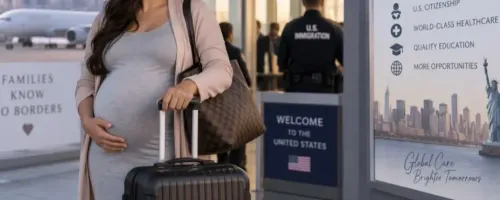
A US embassy in North Africa — not identified by name — revoked more than 100 visas issued to parents accused of participating in birth tourism, having travelled to the United States primarily to give birth and secure citizenship for their children. The fact sheet did not disclose the country involved or the nationalities of those affected.
Financial fraud cases were also prominent. One foreign national was accused of helping orchestrate a Medicaid scheme that billed more than USD 5 million for services never rendered. Another allegedly fabricated company revenue, forged letters, and misled investors to fraudulently secure a visa and obtain millions of dollars from clients.
National Security and Foreign Policy Grounds
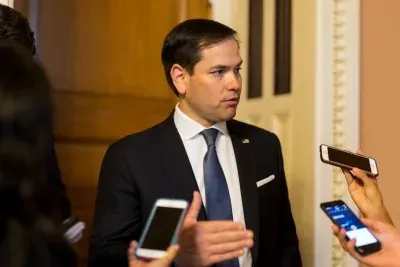
Secretary of State Marco Rubio separately determined that several foreign nationals are deportable on foreign policy grounds. Those cited include a Cuban national allegedly linked to a Cuban government influence operation, Iranian nationals with connections to Tehran, and a Laotian child sex offender reportedly pardoned by Minnesota Governor Tim Walz.
Visas were also revoked from individuals who, according to the department, celebrated the assassination of Charlie Kirk. One person was quoted as saying, ‘when fascists die, democrats don’t complain,’ while another said Kirk ‘died too late.’ A Kuwaiti national who allegedly wished violence against the US President and called Americans his ‘enemy’ was also among those affected.
What the Department Said
“Under President Trump and Secretary Rubio’s leadership, the State Department will continue to identify, investigate, and revoke the visas of foreign nationals who threaten the safety of the American people,” the department stated. It added: “A US visa is a privilege, not a right,” pledging to deploy every available tool to protect American communities from those who abuse the immigration system.
The department clarified that a US visa permits a foreign national to travel to an American port of entry and seek admission — it does not guarantee entry, which remains the prerogative of immigration authorities upon arrival. The programme is expected to continue as a standing enforcement mechanism under the current administration.
Point of View
000-visa revocation figure is striking in scale, but the fact sheet’s selective case citations — gruesome crimes alongside birth tourism and social media posts — suggest a deliberate messaging strategy as much as a law-enforcement disclosure. The omission of nationalities and the unnamed North African embassy limits independent verification, which is a recurring pattern in Trump-era immigration announcements. For Indian visa holders — a large cohort in the US on work and student visas — the expansion of ‘continuous vetting’ raises legitimate questions about due process and the threshold for revocation. The broader signal is clear: the administration is treating visa status as a live, revocable permission rather than a settled entitlement, and that posture is unlikely to soften.
NationPress
25 Sept 2026
Frequently Asked Questions
Why did the US revoke more than 175,000 visas?
The US State Department revoked more than 175,000 visas as part of President Trump’s continuous vetting programme, citing criminal activity, immigration abuse, fraud, national security threats, and calls for violence against Americans. Most revocations followed encounters with law enforcement, with assault, DUI, theft, and drug offences among the most common grounds.
Which types of crimes led to the most visa revocations?
Assault, driving under the influence, theft, and drug offences were the leading reasons. The department also cited sexual assault, child abuse, human trafficking, fraud, embezzlement, and possession of child sexual abuse material among the grounds for cancellation.
What is birth tourism and how did it factor into the revocations?
Birth tourism refers to the practice of travelling to the United States primarily to give birth, so the child acquires US citizenship. A US embassy in North Africa revoked more than 100 visas issued to parents accused of this practice, though the department did not identify the country or nationalities involved.
Who is Secretary of State Marco Rubio and what role did he play?
Marco Rubio is the US Secretary of State under President Trump. He separately determined that several foreign nationals — including a Cuban national linked to an influence operation, Iranian nationals with Tehran connections, and a Laotian child sex offender — are deportable on foreign policy grounds, beyond the criminal revocations covered by the fact sheet.
Does a US visa guarantee entry into the United States?
No. A US visa only permits a foreign national to travel to an American port of entry and request admission. The final decision on entry rests with US immigration authorities at the point of arrival, not with the visa itself.