Jaishankar meets Rubio in New York, reiterates India's stance on SRIA sanctions
Synopsis
India went public. After meeting US Secretary of State Rubio at the UN, EAM Jaishankar posted on X to explicitly flag India's 'interests and concerns' over the SRIA — a new US law targeting countries trading with Russia and Iran. The message was unambiguous: New Delhi will not quietly absorb sanctions pressure, even as Washington dangled an energy partnership as an alternative.
Key Takeaways
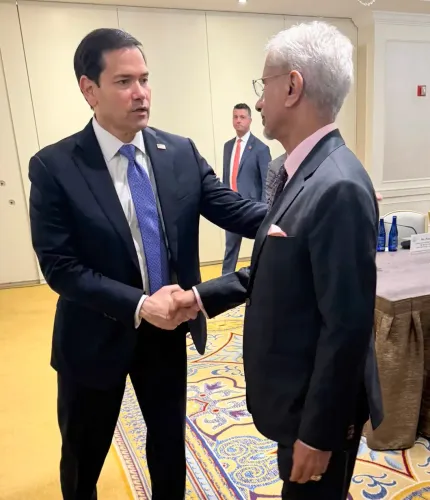
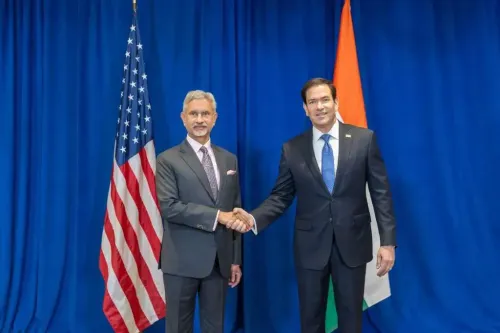
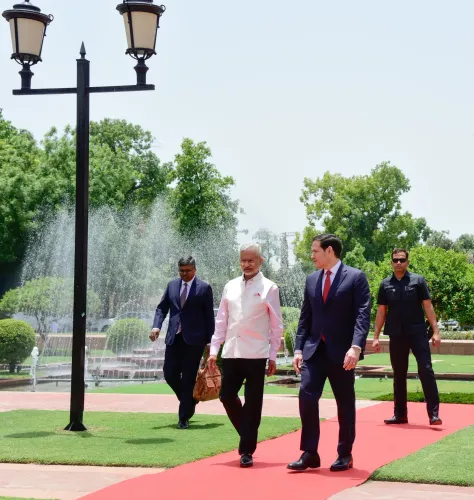
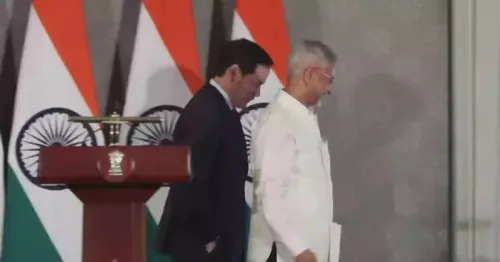
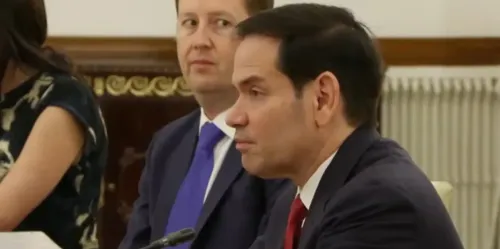
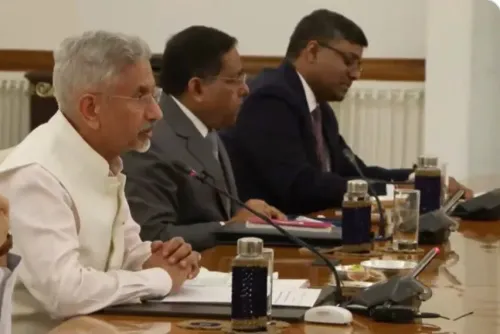
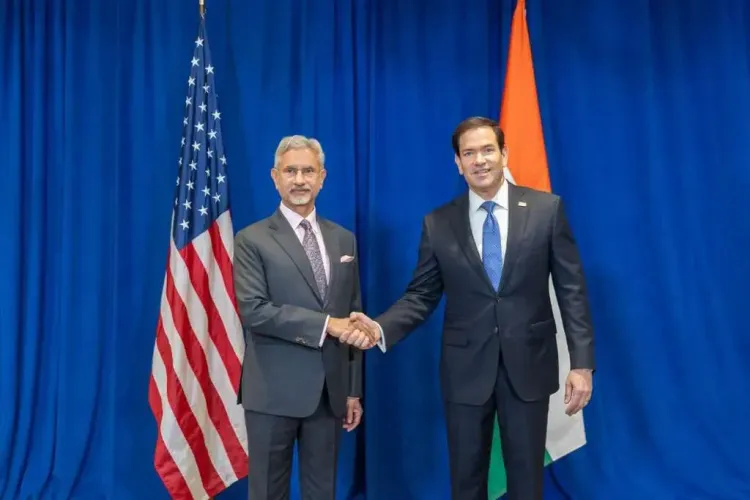
Jaishankar and US Secretary of State Marco Rubio met in New York on 24 September 2026 during the UN General Assembly High Level Week .
Talks covered potential sanctions under the Lindsey O.
Graham Sanctioning Russia and Iran Act (SRIA) of 2026 , which targets countries trading economically with Russia and Iran.
Jaishankar publicly posted on X that he 'reiterated India's interests and concerns with regard to SRIA.' The US State Department confirmed sanctions were discussed but did not detail which countries were at risk or describe India's response.
Rubio offered US energy support for regional partners' energy security, though no specific deal or commitment was announced.
Both sides reaffirmed the US-India Strategic Partnership and its role in ensuring a stable and prosperous Indo-Pacific .
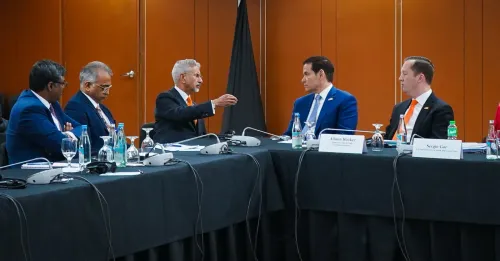
External Affairs Minister S. Jaishankar and US Secretary of State Marco Rubio held talks on the sidelines of the UN General Assembly High Level Week in New York on 24 September 2026, discussing potential sanctions against countries trading with Russia and Iran, energy security, and developments in the Middle East. The meeting put the spotlight on the Lindsey O. Graham Sanctioning Russia and Iran Act (SRIA) of 2026, a newly enacted US law that has emerged as a significant point of economic and strategic friction between New Delhi and Washington.
SRIA and India's Concerns
Following the meeting, Jaishankar took to X to publicly signal India's position. 'Good to meet Secretary Marco Rubio of the US at UN High Level Week. Reiterated India's interests and concerns with regard to SRIA. Also discussed the Gulf and Ukraine situations,' he posted. The EAM's public reference to the SRIA was pointed — signalling that New Delhi is unwilling to stay silent on legislation it views as a direct challenge to its strategic autonomy and energy sourcing decisions.
The State Department's readout confirmed that 'the two also discussed sanctions that could be levelled against states that engage economically with Russia and Iran,' though it did not specify which countries could face action or identify the economic activities under scrutiny. Notably, the readout did not describe Jaishankar's response to the sanctions discussion.
US Energy Offer on the Table
The sanctions discussion was accompanied by what appeared to be an implicit alternative from Washington. 'The Secretary emphasised that the United States remains well-positioned to help regional partners address their energy security challenges,' the State Department said. The offer, however, came without details of any supply commitment, proposed agreement, or concrete energy arrangement — leaving the substance of the US pitch unclear.
This comes amid India's sustained reliance on discounted Russian crude since the 2022 invasion of Ukraine, a trade relationship that has grown substantially and that the SRIA directly targets. India has consistently maintained that its energy procurement is driven by national interest and economic necessity.
Indo-Pacific Partnership Reaffirmed
Beyond the sanctions flashpoint, the two ministers reaffirmed the broader strategic relationship. The State Department noted that 'the two officials reaffirmed the important role the US-India Strategic Partnership continues to play in promoting a safe, secure, and prosperous Indo-Pacific.' The two also exchanged views on Middle East developments, though the department did not identify specific conflicts or diplomatic proposals discussed.
The meeting underlines a recurring dynamic in India-US ties: deep convergence on the Indo-Pacific strategic framework sitting alongside persistent friction over India's independent posture on Russia and Iran.
What the Meeting Signals
The New York encounter is the latest in a series of high-level engagements where Washington has pressed New Delhi on its economic ties with Moscow, while India has consistently sought to separate its bilateral relationship with the US from its third-party dealings. Jaishankar's decision to publicly post about the SRIA — rather than let the State Department's anodyne readout stand — reflects India's preference for stating its position openly rather than absorbing pressure quietly.
With the SRIA now enacted and enforcement mechanisms potentially taking shape, the coming months will test how far Washington is prepared to push allies and partners — and how New Delhi balances strategic partnership with the United States against energy and economic interests that intersect with Russia and Iran.
Point of View
India is signalling that it will not let Washington shape the narrative on sanctions pressure alone. The US offer on energy security, with no concrete commitments, has the feel of a quid pro quo that never quite arrives. The deeper tension is structural: the more the US tightens the SRIA's enforcement architecture, the harder it becomes for India to compartmentalise its Russia energy trade from the overall bilateral relationship — a balancing act that has worked so far, but faces its most serious test yet.
NationPress
24 Sept 2026
Frequently Asked Questions
What is the SRIA and why does it concern India?
The SRIA — Lindsey O. Graham Sanctioning Russia and Iran Act of 2026 — is a newly enacted US law that allows for sanctions against countries engaging economically with Russia and Iran. It concerns India because New Delhi has significantly expanded imports of Russian crude oil since 2022 and maintains trade ties with Iran, both of which could potentially fall within the law's scope.
What did Jaishankar say after the meeting with Rubio?
Jaishankar posted on X that he had 'reiterated India's interests and concerns with regard to SRIA' during the meeting, and that the Gulf and Ukraine situations were also discussed. The post was a public signal of India's pushback against the US sanctions framework.
Did the US announce any sanctions decisions at the meeting?
No sanctions decisions were announced. The State Department's readout confirmed that sanctions against countries trading with Russia and Iran were discussed, but did not name any specific countries, describe economic activities under scrutiny, or detail any enforcement action.
What did Rubio offer India at the meeting?
Rubio indicated that the United States is 'well-positioned to help regional partners address their energy security challenges,' implying an alternative to Russian energy supplies. However, no specific supply agreement, deal, or concrete commitment was announced.
Where does the India-US relationship stand after this meeting?
Both sides reaffirmed the US-India Strategic Partnership and its centrality to a 'safe, secure, and prosperous Indo-Pacific.' However, the SRIA remains an unresolved friction point, with India publicly asserting its independent stance even as Washington raises the prospect of economic pressure on countries trading with Russia and Iran.