Rubio says US can help partners on energy security amid Russia oil tariff law
Synopsis
In a high-stakes New York meeting, EAM Jaishankar put India's Russian oil concerns squarely on Rubio's table — and got a vague offer of US 'energy security help' and a reminder that the President holds a waiver card. With India absorbing 37% of Russia's oil exports and a bilateral trade deal in the balance, how Trump uses that waiver could reshape India's energy calculus.
Key Takeaways
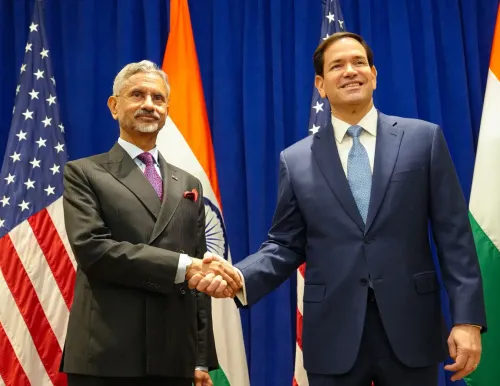
US Secretary of State Marco Rubio told EAM S.
Jaishankar in New York on 24 September 2026 that Washington can help partners with energy security challenges.
EAM Jaishankar formally raised India's concerns about the Graham Sanctioning Russia and Iran Act (SRIA) , which imposes a 100 per cent tariff on countries buying Russian oil.
The State Department confirmed the two sides discussed sanctions on nations engaging economically with Russia and Iran , without elaborating on the US offer's mechanism.
Rubio noted the law grants the US President national security waivers to apply the tariff selectively on a case-by-case basis.
India takes approximately 37 per cent of Russia's oil exports; enforcement of the SRIA would also threaten the ongoing India-US trade agreement negotiations.
India's trade exposure to Iran is far smaller, with exports of roughly $400 million and oil imports of about $700 million in the first half of this year.
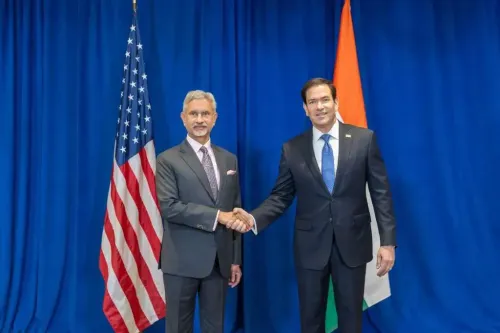
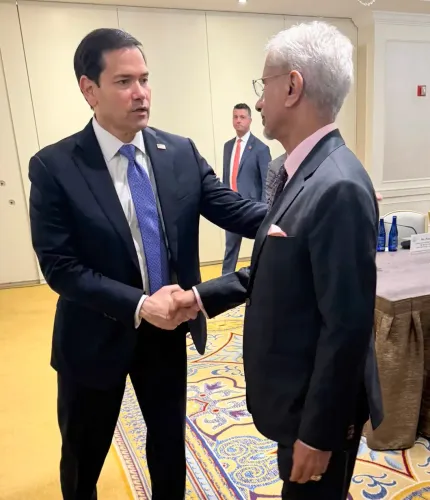
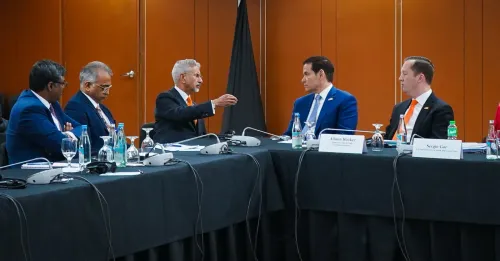
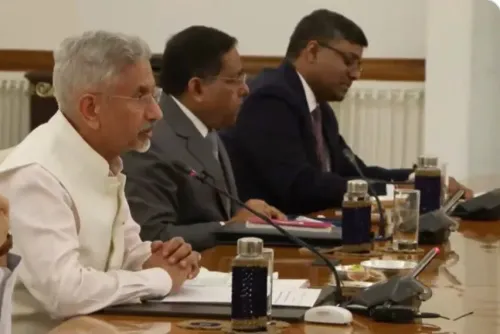
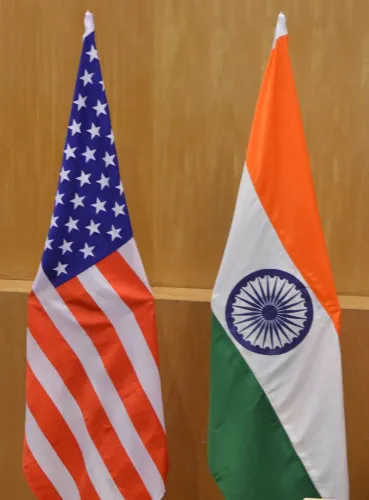
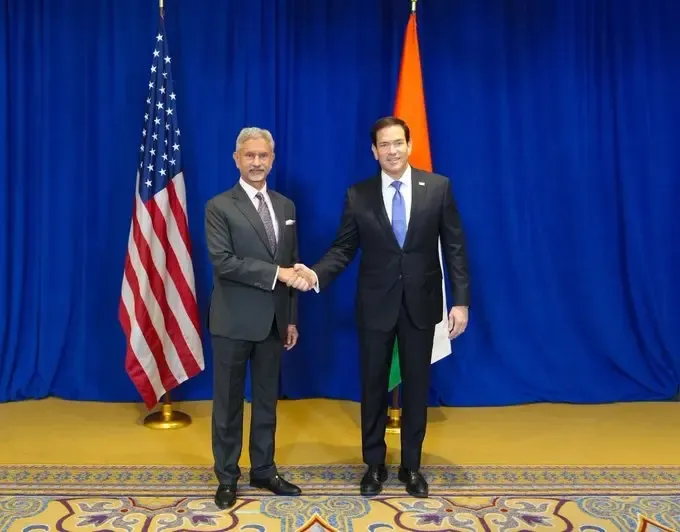
US Secretary of State Marco Rubio has asserted that Washington is well-positioned to help regional partners address their energy security challenges, in the context of the recently passed legislation imposing a 100 per cent tariff on countries purchasing Russian oil. The remarks came after Rubio met with External Affairs Minister (EAM) S. Jaishankar in New York on Wednesday, 24 September 2026, with sanctions on countries engaged economically with Russia and Iran forming a central part of their discussions.
What Jaishankar Raised
EAM Jaishankar confirmed that he brought up India's concerns over the Graham Sanctioning Russia and Iran Act (SRIA) — named after the late hawkish Senator Lindsey Graham — directly with Rubio. In a post on X, Jaishankar wrote that he 'reiterated India's interests and concerns with regard to SRIA'. The State Department's readout noted that both officials 'discussed sanctions that could be levelled against states that engage economically with Russia and Iran.'
What the US State Department Said
The State Department's official readout stated that Rubio 'emphasised that the United States remains well-positioned to help regional partners address their energy security challenges,' without providing specifics on the offer or the mechanism through which such support would be delivered. At a subsequent news conference, Rubio noted that the law includes a presidential national security waiver clause. 'The law also has and gives the President national security waivers, which allow him to apply them as needed in individual cases,' he said. He added, however, that 'how he'll use it is up to him to decide, and up to him to announce.'
Why This Matters for India
If the SRIA tariff is enforced, it would directly impact India's exports to the US and potentially derail the bilateral trade agreement currently being negotiated between the two countries. Russia is a critical energy supplier for India, which accounts for approximately 37 per cent of Moscow's total oil exports. This is not the first time the issue has surfaced: President Donald Trump had selectively imposed a 25 per cent tariff on India in August last year for buying Russian oil — while exempting China, which purchases a larger volume — before cancelling that measure in February.
India's Iran Trade: A Lesser Risk
India's trade relationship with Iran is considerably more limited than its ties with Russia. India curtailed Iranian oil purchases in 2019, and its exports to Iran — largely restricted to rice, foodstuffs, and pharmaceuticals — are exempt from sanctions on humanitarian grounds. In the first half of this year, India's exports to Iran were valued at approximately $400 million, and those flows are reportedly likely to stall given they were routed through the United Arab Emirates, a channel now disrupted by the Gulf conflict. Oil and gas imports from Iran stood at roughly $700 million during the same period under existing exemptions.
India's Official Position
When the SRIA was passed, India's Ministry of External Affairs responded assertively: 'India remains firmly committed to ensuring energy security for its 1.4 billion people. It will continue to do so through diversified sourcing and based on evolving market dynamics.' That statement of intent underlines the diplomatic tightrope New Delhi is navigating as Washington's legislative pressure on Moscow intensifies. How the US President chooses to deploy the new waiver tool will be closely watched in New Delhi in the weeks ahead.
Point of View
And Rubio's emphasis on the presidential waiver mechanism is telling: it shifts accountability to the White House while giving New Delhi just enough ambiguity to avoid a public confrontation. The real leverage point here is the India-US trade deal — and both sides know that forcing New Delhi into an energy corner risks torching a strategically important economic partnership. India's assertive MEA statement about 'diversified sourcing' signals that New Delhi will not publicly capitulate, but the quiet waiver conversation suggests a private bargain may be in the making.
NationPress
24 Sept 2026
Frequently Asked Questions
What is the Graham Sanctioning Russia and Iran Act (SRIA)?
The SRIA is a US law that imposes a 100 per cent tariff on countries that purchase Russian oil, targeting nations that continue economic engagement with Russia and Iran. Named after the late Senator Lindsey Graham, the act also includes a presidential national security waiver provision, allowing the White House to grant exemptions on a case-by-case basis.
Why is the SRIA a concern for India?
India is one of Russia's largest oil customers, absorbing approximately 37 per cent of Moscow's total oil exports. If the SRIA tariff is enforced against India without a presidential waiver, it would raise costs on Indian exports to the US and could disrupt the bilateral trade deal currently being negotiated between the two countries.
What did Rubio offer India in response to its energy security concerns?
Rubio, through the State Department's readout, said the US 'remains well-positioned to help regional partners address their energy security challenges,' though no specific mechanism or alternative supply arrangement was detailed. He also highlighted that the US President holds a national security waiver tool that can be applied selectively.
Has the US previously penalised India for buying Russian oil?
Yes. President Trump imposed a selective 25 per cent tariff on India in August last year for purchasing Russian oil, notably without applying a similar measure to China, which buys larger volumes. That tariff was cancelled in February of this year.
What is India's official position on the SRIA?
India's Ministry of External Affairs has stated that the country 'remains firmly committed to ensuring energy security for its 1.4 billion people' and will pursue 'diversified sourcing based on evolving market dynamics.' EAM Jaishankar separately confirmed he raised India's concerns with Rubio directly at their New York meeting.