Could the US Bill on Russian Oil Imports Strain India-US Relations?
Synopsis
An influential Indian-American Republican warns the proposed US bill on Russian oil imports could jeopardize India-US relations and ongoing trade negotiations. He emphasizes the need for restraint and negotiation to foster mutual benefits.
Key Takeaways
Proposed legislation could strain India-US relations.
Significant tariffs may impact Indian-American community.
Negotiation is essential for mutual benefits.
Indian Americans contribute substantially to the US economy.
Senator Graham supports punitive measures against Russian oil purchases.
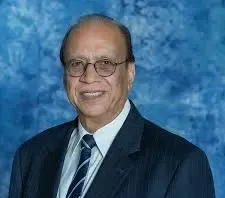
Washington, Jan 11 (NationPress) An influential Indian-American Republican expressed concerns on Sunday that the proposed US legislation targeting nations importing Russian oil might negatively impact India-US relations. He warned that the timing and magnitude of the bill could jeopardize ongoing trade discussions between New Delhi and Washington.
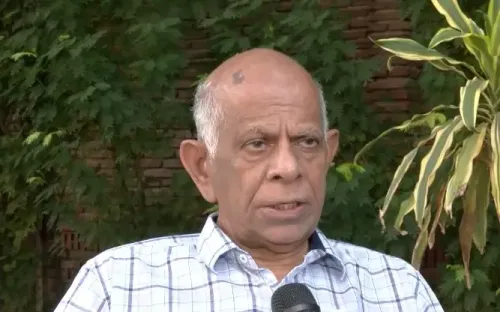
In an interview with IANS, Ashok Mago, the founding chairman of the Greater Dallas Indo American Chamber, now referred to as the US-India Chamber of Commerce, remarked that the legislation was “not very helpful” during current negotiations regarding tariffs between Delhi and Washington. He urged lawmakers to allow discussions to reach a resolution before applying additional pressure.
“The 500 percent tariff is not a very good idea,” Mago stated, referencing provisions of the Russia Sanctions Bill presented by Republican Senator Lindsey Graham, which would authorize the US president to significantly increase duties.
Earlier this week, Graham claimed to have the backing of President Donald Trump. “He greenlit the bipartisan Russia sanctions bill...This will be well-timed, as Ukraine is making concessions for peace and Putin is all talk, continuing to kill the innocent,” he stated.
According to the Senator from South Carolina, “This bill will allow President Trump to punish those countries that purchase cheap Russian oil, fueling Putin’s war machine.”
Graham further explained, “This bill would give President Trump tremendous leverage against countries like China, India, and Brazil to encourage them to cease buying cheap Russian oil that finances Putin’s bloodbath against Ukraine.”
Responding to inquiries regarding the legislation, Mago warned of the direct repercussions such a significant tariff would have on the Indian-American community. “All the Indian Americans living in the USA will be paying much higher prices for the goods they use every day in their kitchen, the groceries, which are imported from India,” he elaborated.
Mago, who played a pivotal role in the India-US civil nuclear deal and was honored with the esteemed Padma Shree in 2014 for his contributions to the India-US relationship, advocated for a negotiated approach, stating, “Let Washington and Delhi have a discussion and work on a mutually beneficial tariff program, which is good for both countries because one is the largest democracy in the world, and one is the oldest, and they need to collaborate.”
He added, “They shouldn’t be at this stage where we are today.”
Highlighting the contributions of the diaspora, he mentioned that Indian Americans are deeply invested in the US economy. “Indian Americans love this country, and they are contributing a great deal to the US economy, whether it’s technology, academia, medicine, or other professions,” Mago remarked, noting that “many of our members are experiencing hardships in their businesses.”
Mago called for caution, suggesting that Congress retain the option for future action if negotiations fail. “My request to the senator is not to introduce this bill at this stage,” he urged. “If things do not work out in the next few weeks, he will always have another opportunity to do that. But first, let’s explore all possible avenues so that everyone feels they are receiving a fair deal.”
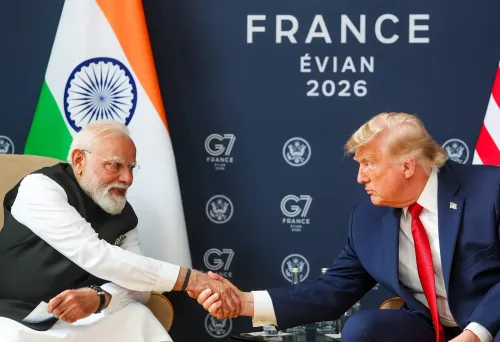
Regarding the broader relationship, Mago characterized ties as “a little bit strained,” reminiscing about the Howdy Mody event in Houston attended by Prime Minister Narendra Modi and President Donald Trump, where “it seemed like there were two friends on the stage who wanted to work together for the betterment of all countries.” He remains hopeful that “both leaders will find ways to restore the relationship to its former state.”
“I cannot envision these two countries not collaborating for peace in this world,” Mago stated, referencing India’s population and the US’s global economic and military influence. He expressed hope that issues would be resolved “through negotiation, allowing both economies to continue growing.”
The remarks come as Senator Lindsey Graham has been advocating for the “Sanctioning Russia Act of 2025,” a bipartisan bill that would enforce sweeping sanctions if Moscow refuses to negotiate peace with Ukraine or violates any agreements.
The legislation empowers the president to impose a duty of “not less than the equivalent of 500 percent ad valorem” on goods and services imported into the United States from countries that knowingly purchase Russian-origin oil, uranium, natural gas, petroleum products, or petrochemical products.
Point of View
I believe that the ongoing discourse surrounding the US bill on Russian oil imports should be approached with caution. While the implications for India-US relations are significant, the focus should remain on fostering dialogue and ensuring that both nations can continue to thrive economically and politically.
NationPress
26 Sept 2026
Frequently Asked Questions
What is the proposed US legislation regarding Russian oil imports?
The proposed legislation aims to impose significant tariffs on countries importing Russian oil, potentially affecting trade relations with nations like India.
What are the potential consequences of the bill?
The implementation of this bill could lead to strained India-US relations and negatively impact the Indian-American community, resulting in higher prices for goods imported from India.
What is the stance of Senator Lindsey Graham on the bill?
Senator Lindsey Graham supports the bill, claiming it would empower the US president to impose significant tariffs on countries buying Russian oil.
How does Ashok Mago suggest addressing the issue?
Mago advocates for a negotiated approach between the US and India to create a mutually beneficial tariff program, emphasizing the importance of dialogue.