CM Majhi Champions Pilgrim Welfare for Odisha's Senior Citizens
Synopsis
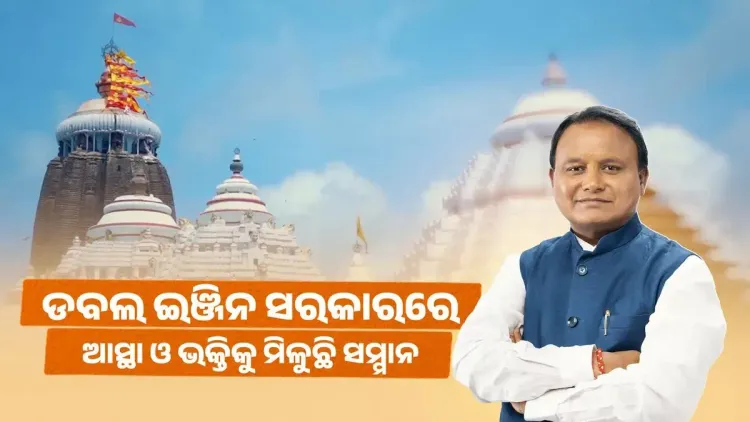
Odisha CM Mohan Charan Majhi invoked the Shravan Kumar ideal on 24 September 2026 to reaffirm two state schemes — Baristha Nagarika Tirtha Yatra Yojana and Shri Jagannath Darshan Yojana — making pilgrimage safer and more accessible for the state's senior citizens and devotees.
Key Takeaways
Mohan Charan Majhi , Chief Minister of Odisha, reaffirmed on 24 September 2026 his government's commitment to senior-citizen pilgrim welfare.
Two schemes are central: the Baristha Nagarika Tirtha Yatra Yojana (senior citizen pilgrimage travel) and the Shri Jagannath Darshan Yojana (Puri temple visits).
The post invokes the mythological figure Shravan Kumar as the moral inspiration for treating elder pilgrimage access as a governance duty.
The BJP government framed elder welfare and religious access as inseparable, reflecting a broader pattern seen in BJP-ruled states.
Key implementation details — enrolment numbers, routes, and budget allocations — remain to be disclosed in upcoming legislative sessions.
Honouring faith and fulfilling a promise to the elderly — Odisha Chief Minister Mohan Charan Majhi reaffirmed on Thursday, 24 September 2026 that his government's highest commitment is making pilgrimage safe, comfortable, and joyful for the state's senior citizens and devotees.
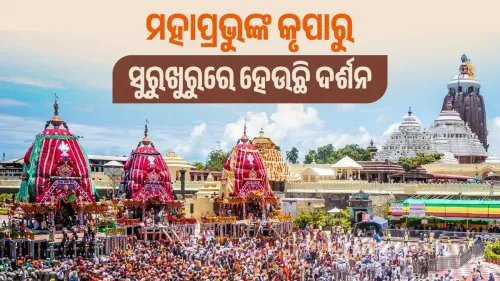
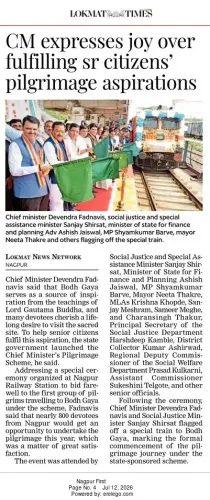
Posting in Odia, the Chief Minister invoked the mythological figure of Shravan Kumar — the embodiment of selfless filial devotion in Hindu tradition — as the moral cornerstone of two state welfare initiatives: the 'Baristha Nagarika Tirtha Yatra Yojana' (Senior Citizen Pilgrimage Scheme) and the 'Shri Jagannath Darshan Yojana'. 'Honouring faith and devotion, and realising the dreams of our elders, is the supreme resolve of our government's service,' he wrote.
Two Schemes, One Mission: Easing the Sacred Journey
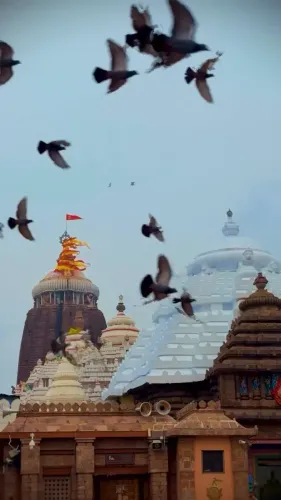
The Baristha Nagarika Tirtha Yatra Yojana is designed to organise pilgrimage travel for senior Odisha residents — making it logistically accessible for those who might otherwise be unable to undertake such journeys alone. The Shri Jagannath Darshan Yojana complements it by facilitating structured visits to the famed Jagannath temple at Puri, one of the most sacred sites in Hinduism and the spiritual heartbeat of Odisha's cultural identity.
Together, the two schemes position elder welfare and religious access as inseparable arms of governance — not a social add-on, but a stated centrepiece.
The Shravan Kumar Frame: Filial Piety as Governance Philosophy
The invocation of Shravan Kumar — the young man from the Ramayana who carried his blind parents on a shoulder-pole to complete their pilgrimage — is deliberate and resonant. It reframes government-funded pilgrim welfare not as charity, but as collective filial duty: the state playing the role of the devoted son for those whose own children may not be able to. It is a messaging device with deep cultural traction in Odisha and across BJP-governed states that have run similar elder-pilgrimage programmes.
CM Majhi closed with a line that doubled as both acknowledgement and political signalling: 'The blessings of our elders are what give us the strength to move forward in public service.'
Fitting into a Larger Welfare Pattern
The post sits squarely within the BJP's post-2024 Odisha government strategy of combining welfare delivery with cultural and religious touchstones. Since Majhi took office following the party's landmark 2024 Odisha assembly victory — ending the long BJD era — his administration has consistently sought to signal that it governs for the state's spiritual and social mainstream. Elder-pilgrim schemes mirror analogous programmes in other BJP-ruled states, where religious tourism and filial-piety messaging have been woven into senior-citizen welfare policy.
Enrolment figures, designated pilgrimage routes, and budgetary allocations for both schemes remain details to watch as the state legislature heads into its next session.
Point of View
His government elevates elder-pilgrim facilitation from a routine benefit to a moral obligation of the state. It reinforces the BJP's post-2024 Odisha brand — socially conservative, culturally rooted, and welfare-oriented — while distinguishing itself from the previous administration. The Jagannath temple's centrality to Odia identity makes pilgrim-access schemes a particularly high-return political investment in this state. Whether the schemes deliver at scale is now the credibility test that will define this messaging.
NationPress
24 Sept 2026
Frequently Asked Questions
What is the Baristha Nagarika Tirtha Yatra Yojana in Odisha?
The Baristha Nagarika Tirtha Yatra Yojana is an Odisha government scheme that organises safe and convenient pilgrimage travel for senior citizens of the state, making long-distance sacred journeys more accessible for the elderly.
What is the Shri Jagannath Darshan Yojana?
The Shri Jagannath Darshan Yojana facilitates structured visits to the Jagannath temple in Puri for senior citizens and devotees, helping them have a smooth and spiritually fulfilling darshan experience.
Why did Odisha CM Majhi mention Shravan Kumar in his post?
CM Majhi invoked Shravan Kumar — the mythological symbol of selfless devotion to one's parents — to frame the government's elder-pilgrimage schemes as a collective filial duty, positioning the state as fulfilling the role of a devoted caretaker for its senior citizens.
When did Mohan Charan Majhi become Odisha Chief Minister?
Mohan Charan Majhi became Chief Minister of Odisha in 2024 after the BJP won the state assembly elections, ending the long era of the Biju Janata Dal in power.
How does Odisha's senior pilgrim scheme compare to other BJP states?
Several BJP-governed states have run elder-pilgrimage programmes that link senior-citizen welfare to religious tourism and filial-piety messaging. Odisha's schemes follow a similar template, reflecting a broader BJP governance pattern of combining welfare delivery with cultural and religious priorities.