Puri hails India as fastest-growing major economy at 7.7% GDP
Synopsis
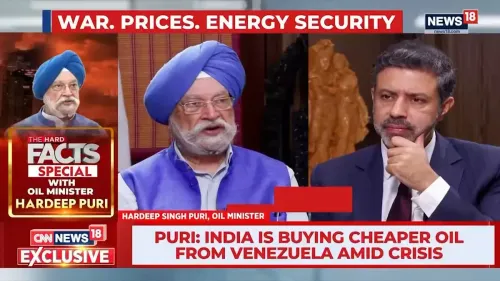
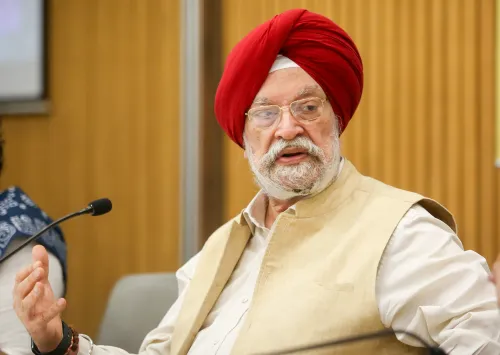
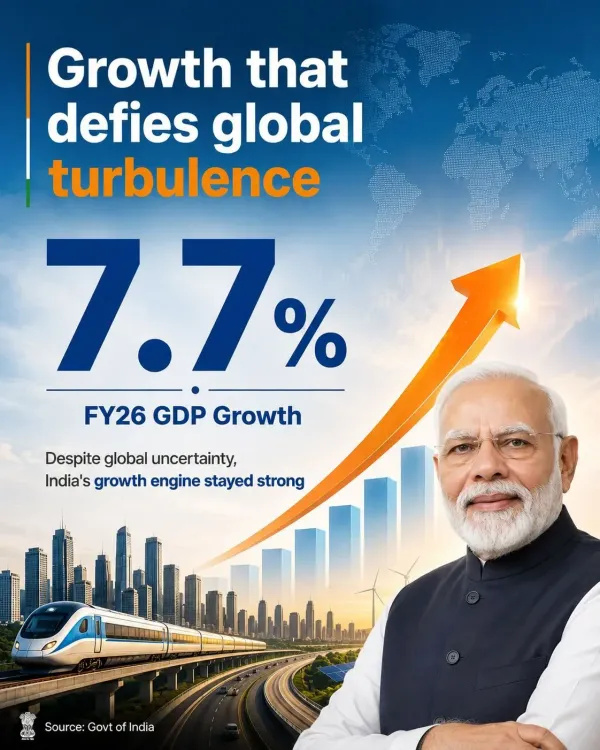
Union Petroleum Minister Hardeep Singh Puri on 6 June 2026 lauded PM Modi's economic policies, citing India's projected 7.7% GDP growth for FY 2025-26 as proof that structural reforms have made India the world's fastest-growing major economy despite global crises.
Key Takeaways
Hardeep Singh Puri posted on 6 June 2026 crediting PM Modi's policies for India's economic resilience.
India is projected to grow at 7.7% GDP in FY 2025-26 , according to the post.
Puri described the trajectory as a 'रिफॉर्म एक्सप्रेस' ('Reform Express'), saying India has outpaced all major economies.
Key reforms cited in the policy backdrop include GST (2017) , IBC (2016) , Atmanirbhar Bharat (2020) , and Make in India (2014) .
The post was tagged to @PMOIndia and @FinMinIndia , indicating coordinated government messaging.
Official growth figures will be subject to verification when the next Economic Survey and IMF outlook are published.
Union Petroleum Minister Hardeep Singh Puri on Saturday, 6 June 2026, credited Prime Minister Narendra Modi's economic policies for positioning India as the world's fastest-growing major economy, citing a projected 7.7% GDP growth rate for financial year 2025-26. Puri attributed the performance to structural reforms that he said shielded the economy from successive global crises, including the COVID-19 pandemic and ongoing geopolitical conflicts.
Context
Posting in Hindi on X (formerly Twitter), Puri described India's economic trajectory as a 'रिफॉर्म एक्सप्रेस' ('Reform Express') leading the world. He wrote that 'whether it was the dark period of a pandemic like Corona or wars in the world, PM Modi's far-sighted policies kept the country's economy safe and strong in every global crisis.' The post tagged both @PMOIndia and @FinMinIndia, signalling a coordinated government messaging effort.
The 7.7% GDP growth figure cited for FY 2025-26 forms the centrepiece of Puri's claim that India has 'left all major economies behind amid global challenges.' India is currently ranked the fifth-largest economy globally and has consistently been among the top performers in major international growth assessments during the post-pandemic period.
Policy Backdrop
The Modi government's economic reform programme spans more than a decade. The Goods and Services Tax (GST), implemented in 2017, unified indirect taxation across states and broadened the tax base. The Insolvency and Bankruptcy Code (IBC), enacted in 2016, improved credit discipline and strengthened the ease of doing business.
When the pandemic struck in 2020, the government launched the Atmanirbhar Bharat package — a multi-tranche fiscal and supply-side support programme — to cushion the economic shock. The earlier Make in India initiative, launched in 2014, aimed to attract foreign investment and build domestic manufacturing capacity. Together, these measures form the policy lineage Puri invoked in his post.
Stakeholders and Impact
A 7.7% growth rate — if sustained — would keep India comfortably ahead of other large economies, reinforcing its appeal to global investors and the private sector seeking stable, high-return markets. Formalisation of the economy through GST and IBC has also expanded the government's fiscal capacity, enabling continued infrastructure investment even during external shocks.
For ordinary citizens, sustained high growth translates into job creation and rising incomes, though the distribution of those gains remains a subject of ongoing policy debate. The petroleum sector, which Puri directly oversees, is itself a significant input cost across the economy, meaning energy price stability is closely linked to the broader growth narrative he is advancing.
What's Next
The government's growth claims will face scrutiny when the next Economic Survey and Union Budget are released, which will carry revised official estimates for FY 2025-26. Forthcoming updates from the IMF and World Bank on relative growth rankings will either reinforce or complicate the 'fastest-growing major economy' positioning. Puri's post, amplified through official government handles, suggests the BJP intends to make economic resilience a central plank of its political messaging in the period ahead.
Point of View
The messaging frames India's growth not as a cyclical recovery but as a testament to governance quality. The tagging of @PMOIndia and @FinMinIndia signals this is coordinated amplification, not a lone minister's opinion. The 7.7% figure will, however, face rigorous scrutiny from independent economists and opposition voices who will probe methodology and base-effect calculations once official data is published.
NationPress
25 Sept 2026
Frequently Asked Questions
What is India's GDP growth rate for FY 2025-26?
Union Petroleum Minister Hardeep Singh Puri cited a 7.7% GDP growth rate for FY 2025-26 in a post on 6 June 2026, describing it as proof that India is the world's fastest-growing major economy. This figure is yet to be independently verified by official statistical releases.
Why is India called the fastest-growing major economy?
India has consistently ranked at the top of growth league tables among large economies in post-pandemic IMF and World Bank assessments. The government attributes this to structural reforms such as GST , the Insolvency and Bankruptcy Code , and the Atmanirbhar Bharat package, which it says built resilience against global shocks.
What did Hardeep Singh Puri say about PM Modi's economic policies?
Puri said PM Modi's 'far-sighted policies' kept India's economy 'safe and strong' through every global crisis, including the COVID-19 pandemic and ongoing wars, and that Modi's commitment to the nation is reflected in steering the country safely through every challenge.
What is the Atmanirbhar Bharat package?
The Atmanirbhar Bharat (Self-Reliant India) package was a multi-tranche economic stimulus announced in May 2020 to support businesses, workers, and supply chains disrupted by the COVID-19 pandemic. It combined direct fiscal support with structural reforms across sectors.
What is India's current rank among world economies?
India is currently the fifth-largest economy in the world by nominal GDP and has been recognised as the fastest-growing major economy in multiple international assessments during the post-pandemic period.