Trump and Melania Host China's Xi and Peng Liyuan at State Dinner
Synopsis
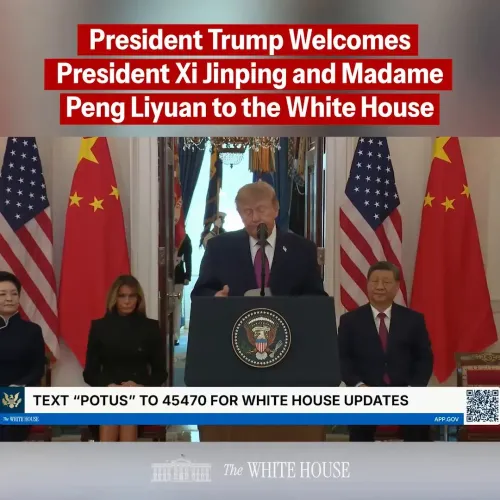
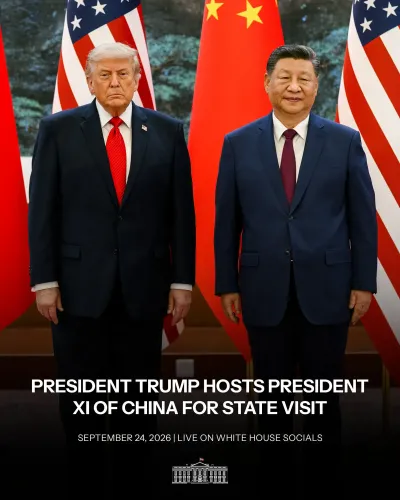
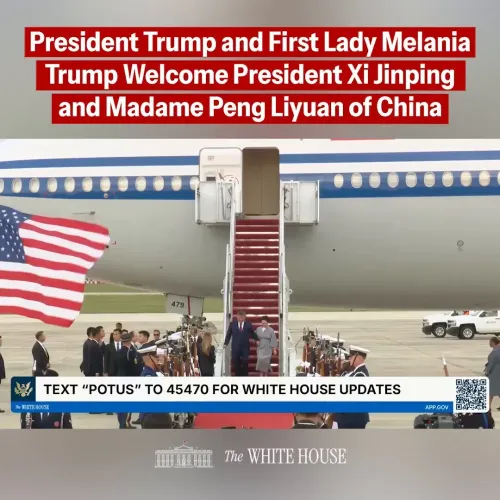
President Donald Trump and First Lady Melania Trump formally greeted Chinese President Xi Jinping and Madame Peng Liyuan at a White House State Dinner on September 24, 2026, marking a high-protocol moment in US-China diplomacy with potential ripple effects for Indo-Pacific dynamics.
Key Takeaways
President Donald Trump and First Lady Melania Trump hosted a State Dinner at the White House on September 24, 2026 .
Guests of honour were President Xi Jinping of China and his wife, Madame Peng Liyuan .
A State Dinner represents the highest ceremonial honour the US extends to a visiting head of state.
The last comparable Trump-Xi formal engagement was the 2017 Mar-a-Lago meeting during Trump's first term.
US-China state dinners are closely watched by India and other Indo-Pacific powers for signals about bilateral reset or deepening ties.
Follow-up communiqués or joint statements post-dinner will indicate whether substantive agreements were reached.
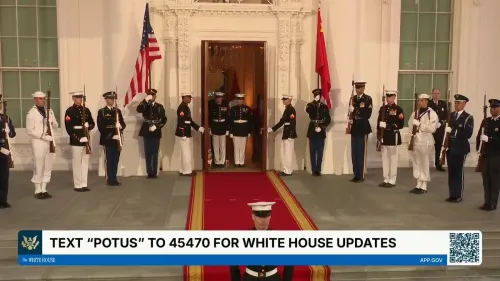
At the White House on Thursday, September 24, 2026, President Donald Trump and First Lady Melania Trump welcomed President Xi Jinping of the People's Republic of China and Madame Peng Liyuan for a formal State Dinner — the highest diplomatic honour the United States extends to a visiting head of state.
Ceremony, symbolism, and the weight of the table
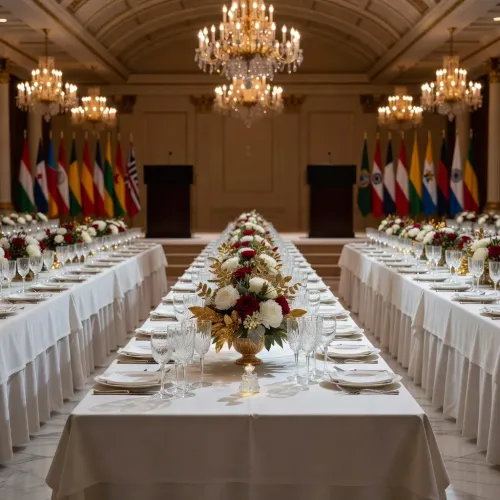
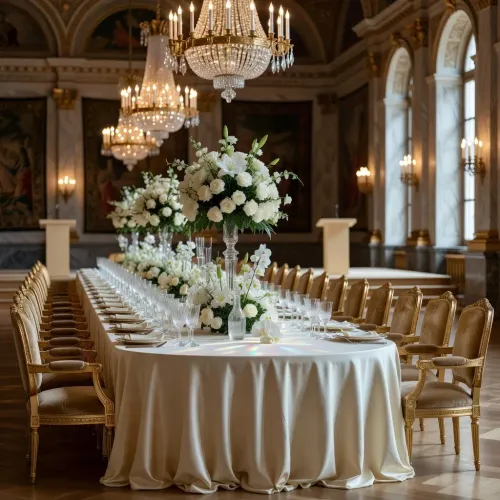
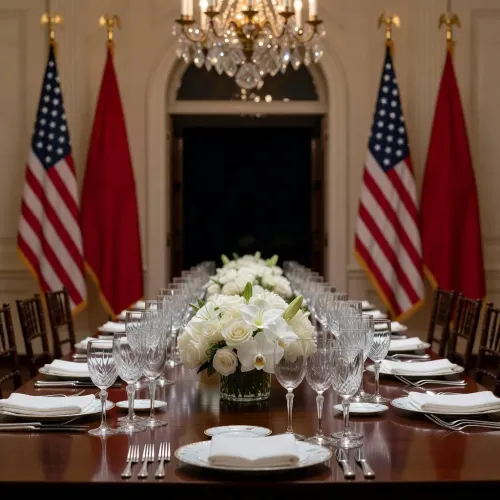
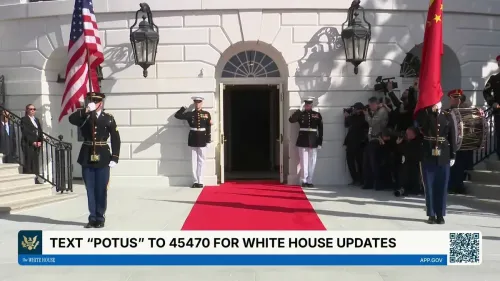
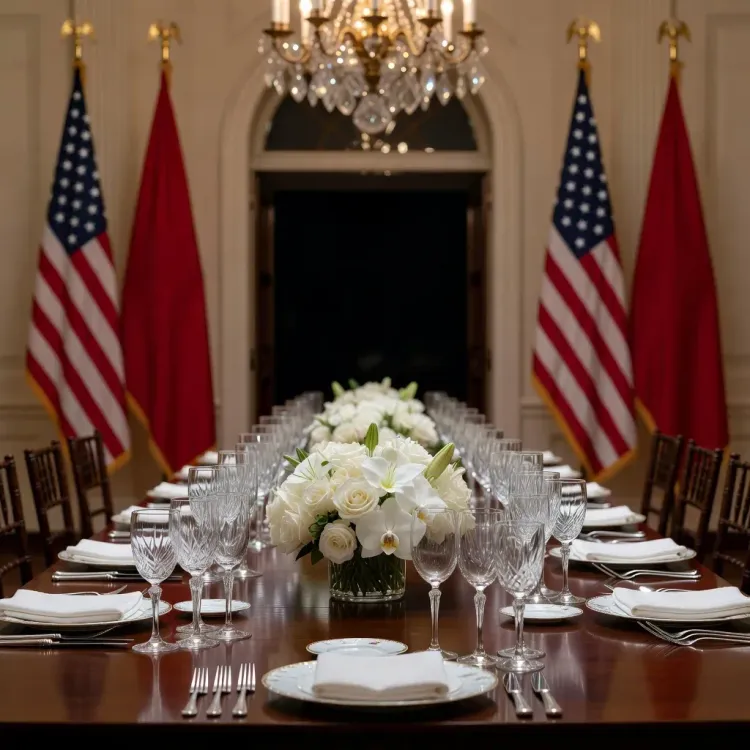
A State Dinner is never just a meal. In the architecture of American diplomacy, it signals that a bilateral relationship merits the full ceremonial machinery of the White House — candlelit tables, a formal receiving line, toasts exchanged before an audience of cabinet officials, senators, and senior envoys. The greeting of President Xi and Madame Peng by the Trumps on the South Lawn or in the Grand Foyer follows a protocol refined across decades of US-China summitry.
The tradition has deep roots. In 2017, during Trump's first term, he hosted Xi Jinping at Mar-a-Lago in Florida — a somewhat unconventional setting that nonetheless carried the full weight of a state-level engagement. This 2026 dinner brings the relationship back to the formal heart of American power: 1600 Pennsylvania Avenue.
US-China diplomacy: the stakes behind the silverware
State dinners between Washington and Beijing do not happen in a vacuum. They are carefully choreographed moments in a bilateral relationship that spans trade architecture, technology competition, security flashpoints in the Indo-Pacific, and the broader question of how the world's two largest economies coexist. The choice to convene at this level signals, at minimum, that both sides judge the relationship important enough to invest in its optics.
For India, a US-China state dinner of this weight is a moment to watch closely. New Delhi's triangular calculus — its partnerships with Washington, its managed rivalry with Beijing, and its own claim to strategic autonomy — shifts with every reset in Sino-American relations. A warmer Washington-Beijing table can reshape the assumptions Indian diplomats carry into their own negotiations on both fronts.
Formal communiqués or joint statements issued in the hours and days after the dinner will be the real signal of what, if anything, moved at the table beyond the pleasantries.
Point of View
Which itself narrows the space for open confrontation in the near term. For Trump, hosting Xi in this setting in his second term revisits a playbook he used at Mar-a-Lago in 2017, suggesting personal summitry remains his preferred lever on Beijing. For India, the immediate question is whether a warmer Washington-Beijing temperature translates into joint pressure on New Delhi over trade or the border, or whether it simply recalibrates the broader Indo-Pacific balance of leverage. The dinner's true significance will be written in what is announced — or pointedly left unannounced — afterwards.
NationPress
25 Sept 2026
Frequently Asked Questions
What is a White House State Dinner and why does it matter?
A White House State Dinner is the most formal diplomatic honour the US extends to a visiting head of state, involving a ceremonial greeting, banquet, and toasts. It signals that Washington regards the bilateral relationship as strategically important.
Why did Trump host Xi Jinping for a State Dinner in 2026?
The White House announced the dinner as part of a state visit by President Xi Jinping and Madame Peng Liyuan, continuing the established US protocol for receiving Chinese leaders at the highest diplomatic level.
Has Trump hosted Xi Jinping before?
Yes. During his first term in April 2017, President Trump hosted President Xi Jinping at his Mar-a-Lago estate in Florida for a summit that covered trade and regional security issues.
What should India watch for after the Trump-Xi State Dinner?
Indian foreign policy watchers should monitor any joint statements or communiqués released after the dinner, which could signal shifts in US-China positions on trade, technology, or Indo-Pacific security — all areas that directly affect India's strategic calculations.