Netanyahu slams NYC Mayor Mamdani at UN: 'Shame on you' over genocide claim
Synopsis
Israeli PM Netanyahu took the extraordinary step of attacking New York’s own mayor by name from the UN General Assembly podium, accusing Mamdani of antisemitism and genocide inversion. The move — aimed at a city official rather than a head of state — backfired in one key respect: it handed Mamdani a global stage he never had before.
Key Takeaways
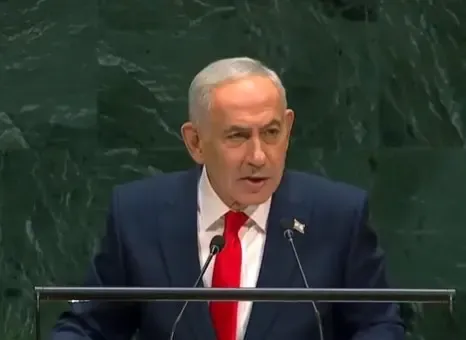
Benjamin Netanyahu attacked New York Mayor Zohair Mamdani by name at the UN General Assembly on 25 September 2026 , calling his genocide allegations ‘spitting in the face of truth.’ Netanyahu told Mamdani: “Shame on you for inverting victim and aggressor,” and claimed Jews ‘no longer feel safe in New York’ since his election.
NYPD data cited by Netanyahu shows antisemitic hate crimes rose 8 per cent this year, making up 54 per cent of 425 total bias incidents.
Mamdani responded by citing the ICC arrest warrant against Netanyahu for alleged war crimes and crimes against humanity.
Police arrested more than 100 people at pro-Palestine protests near the UN; several of Mamdani’s political allies were among those detained.
US President Trump called on nations to reject the ICC in his own General Assembly address on Tuesday .
Israeli Prime Minister Benjamin Netanyahu launched a sharp public attack on New York City Mayor Zohair Mamdani from the United Nations General Assembly podium on Thursday, 25 September 2026, accusing him of antisemitism and declaring he was ‘spitting in the face of truth.’ The extraordinary outburst — targeting a city mayor rather than a head of state — drew global attention and, critics noted, inadvertently amplified Mamdani’s international profile.
What Netanyahu Said
Netanyahu’s remarks were a direct response to Mamdani’s earlier accusation that Israel was committing ‘genocide’ and a since-withdrawn threat to arrest the Israeli leader. Speaking from the General Assembly floor, Netanyahu declared: “Shame on you for inverting victim and aggressor.”
“Here’s a simple truth,” Netanyahu said. “Israel didn’t commit genocide. Israel prevented genocide, and that’s exactly what Mr Mamdani’s Hamas buddies would have done to us had we not stopped them.” He further claimed: “Since you were elected mayor of this city, many Jews no longer feel safe in New York.”
Netanyahu also criticised Mamdani’s wife, Rama Duwaji, stating: “Your wife liked a post praising the October 7 massacre [of over 1,000 Israelis by Hamas]. She liked another post saying Tel Aviv shouldn’t exist.”
The Antisemitism Statistics Cited
Pointing to data from the New York Police Department, Netanyahu noted that antisemitic hate crimes had risen by 8 per cent since Mamdani took office, accounting for nearly 54 per cent of the total 425 bias incidents recorded so far this year. These figures are drawn from NYPD statistics, though their direct attribution to Mamdani’s tenure is contested.
Mamdani’s Response
Mamdani issued a statement rejecting Netanyahu’s accusations and pointed to the International Criminal Court (ICC) arrest warrant outstanding against the Israeli prime minister. “As he has done time and again, Prime Minister Netanyahu used his speech to repeat baseless lies meant to sanitise his genocide of Palestinians,” Mamdani said. He added: “Yet no lie can change the fact that he remains the subject of an International Criminal Court arrest warrant alleging war crimes and crimes against humanity.” The warrant was issued in a case brought against Netanyahu by South Africa.
Context: Protests, Arrests, and Diplomatic Backdrop
Mamdani did not participate in pro-Palestine demonstrations held near the UN during the General Assembly week, but several of his political allies did. Police arrested more than 100 people at one protest that blocked the road leading to UN headquarters. Among those detained were prominent members of the Democratic Socialists of America, from the same leftist wing of the Democratic Party as Mamdani — some of whom had received his endorsement in prior elections.
On Wednesday, Mamdani symbolically planted an olive tree at his official residence alongside Palestinian families from Gaza — a gesture that drew further criticism from Israeli officials, given longstanding allegations that Israeli settlers have destroyed Palestinian olive groves.
Notably, US President Donald Trump, in his own General Assembly address on Tuesday, attacked the ICC and called on all countries to reject it — a stance that stands in direct contrast to Mamdani’s invocation of the court’s authority. India is not a party to the Rome Statute, the agreement that established and gives the ICC its legal standing.
Why This Moment Matters
The Netanyahu-Mamdani clash is the latest flashpoint in a broader and intensifying debate within American domestic politics over US policy toward Israel and Gaza. Mamdani’s emergence as a nationally recognised critic of Israeli military operations — and Netanyahu’s decision to call him out by name on the world’s most prominent multilateral stage — signals that the debate has moved well beyond Washington’s foreign-policy corridors. As the General Assembly session continues, both figures are expected to remain in the spotlight.
Point of View
He handed a municipal politician a global platform that no protest or domestic speech could have delivered. The ICC warrant subtext is equally revealing: with Trump publicly telling countries to shun the court and Netanyahu using the assembly to delegitimise critics, the episode lays bare how thoroughly the Gaza conflict has fractured not just international law but the Democratic coalition in the United States. Mamdani’s leftist allies being arrested outside while he speaks from within is a contradiction that neither side has fully reckoned with.
NationPress
25 Sept 2026
Frequently Asked Questions
Why did Netanyahu attack New York Mayor Mamdani at the UN?
Netanyahu was responding to Mamdani’s accusation that Israel was committing genocide and a since-withdrawn threat to arrest him. Speaking at the UN General Assembly on 25 September, Netanyahu accused Mamdani of antisemitism and declared he was ‘spitting in the face of truth.’
What did Netanyahu say about antisemitism in New York?
Netanyahu cited NYPD statistics showing antisemitic hate crimes rose 8 per cent since Mamdani took office, comprising nearly 54 per cent of the 425 total bias incidents recorded so far this year. He claimed many Jews no longer feel safe in New York under Mamdani’s mayoralty.
What is the ICC arrest warrant against Netanyahu?
The International Criminal Court issued an arrest warrant against Netanyahu in a case brought by South Africa, alleging war crimes and crimes against humanity. Mamdani cited the warrant in his response to Netanyahu’s UN speech.
Did Mamdani participate in the pro-Palestine protests near the UN?
No, Mamdani did not join the demonstrations, though several of his political allies did. Police arrested more than 100 people at one protest that blocked a road near the UN, including prominent Democratic Socialists who had received Mamdani’s electoral endorsement.
What is India’s position on the ICC?
India is not a party to the Rome Statute, the international agreement that established the International Criminal Court and gives it legal authority. This means India is not bound by the court’s rulings or warrants.