South Korea ranks 28th of 29 OECD nations in income redistribution
Synopsis
Despite having the most equal pre-tax income distribution among 29 OECD countries, South Korea's taxes and welfare transfers barely move the needle — lifting the Gini coefficient by just 17.6%, against an OECD average of 34.4%. The paradox: a semiconductor-powered boom that is not reaching those who need it most, and a redistribution system ranked second-last in the developed world.
Key Takeaways
South Korea ranked 28th out of 29 OECD countries in income redistribution effectiveness in 2023 .
Its Gini coefficient improvement rate was 17.6% — roughly half the OECD average of 34.4% .
Only Costa Rica ranked lower, at 12.1% .
South Korea's market-income Gini was 0.392 (most equal pre-tax), but disposable-income Gini rose to 0.323 , dropping it to 22nd place after transfers.
Researcher Kim Kwang-seok called for stronger government support for low-income households.
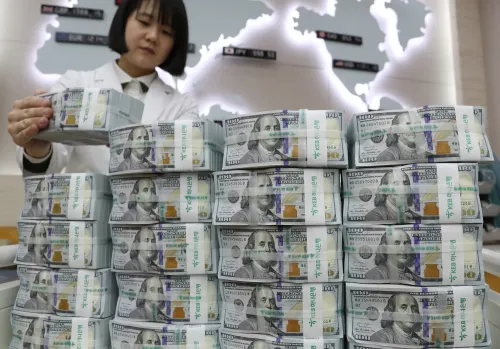
The South Korean won stood at 1,383.3 per dollar on Sunday amid BOJ rate hike pressure.
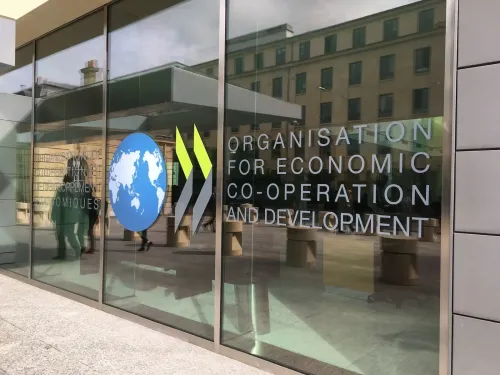
South Korea ranked near the bottom of Organisation for Economic Cooperation and Development (OECD) member countries in income redistribution through taxes and welfare systems, according to data released on Sunday, 20 September 2026. The country's Gini coefficient improvement rate stood at just 17.6% in 2023 — roughly half the OECD average — placing it 28th out of 29 comparable member nations.
What the Data Shows
The improvement rate in the Gini coefficient measures how much a country's tax and welfare systems reduce income inequality, by comparing the Gini score for market income before taxes with that for disposable income after taxes and transfers. South Korea's 17.6% improvement was approximately half the OECD average of 34.4%, according to an analysis of the latest available OECD figures. Only Costa Rica ranked lower, posting an improvement rate of 12.1%.
The Gini coefficient itself ranges from zero — representing perfect equality — to one, representing perfect inequality. South Korea's market-income Gini coefficient in 2023 was 0.392, the lowest among the 29 countries compared, suggesting that pre-tax income distribution in South Korea is actually the most equal in the group. However, its disposable-income Gini coefficient — measured after taxes, pensions, and welfare transfers — rose to 0.323, dropping the country to 22nd place. That gap highlights how little the state's redistribution mechanisms are doing relative to peers.
Expert Warning on Polarisation
Kim Kwang-seok, a researcher at the Institute for Korean Economy and Industry, said the findings point to a structural weakness. 'The results show that South Korea's income redistribution through taxes and other measures is relatively weak compared with other OECD countries,' he said, calling for stronger government support for low-income households.
The findings arrive at a particularly sensitive moment. The South Korean economy has entered an expansionary phase on the back of strong semiconductor exports, yet analysts warn that the gains are not flowing evenly across income groups. Critics argue that without a more robust redistribution framework, economic polarisation risks becoming entrenched even as headline growth improves.
Currency Pressure Adds to Economic Concerns
Separately, the South Korean won weakened slightly against the US dollar, quoted at 1,383.3 won per dollar as of 3:30 pm local time, down 1.1 won from the previous session's close, after the Bank of Japan (BOJ) delivered an expected rate hike. The currency had already been under pressure the previous week amid a US Federal Reserve rate hike and rising oil prices linked to renewed military tensions between the United States and Iran in the Middle East.
What Happens Next
Researchers and civil society groups are expected to use the OECD data to press the government in Seoul for expanded welfare spending and tax reforms targeting the upper income brackets. With general elections and budget deliberations on the horizon, the redistribution gap could become a defining domestic policy debate. Whether South Korea's semiconductor-fuelled growth translates into broader shared prosperity will depend largely on the fiscal choices made in the coming budget cycles.
Point of View
Yet exits near the bottom after the state has had its say. That is not a poverty problem — it is a policy design problem. A semiconductor export boom flatters the headline GDP figures while masking the fact that fiscal policy is doing almost nothing to share the gains. Seoul's political class will find it increasingly difficult to ignore this data as income anxiety feeds into electoral politics. The real question is not whether South Korea can grow, but whether it chooses to redistribute growth — and right now, the answer from the data is a resounding no.
NationPress
20 Sept 2026
Frequently Asked Questions
What does South Korea's OECD income redistribution ranking mean?
South Korea ranked 28th out of 29 OECD countries in how effectively its tax and welfare systems reduce income inequality, with a Gini improvement rate of just 17.6% in 2023. Only Costa Rica ranked lower. The ranking means the government's fiscal tools are redistributing far less than most developed-nation peers.
What is the Gini coefficient and why does it matter here?
The Gini coefficient measures income inequality on a scale from zero (perfect equality) to one (perfect inequality). South Korea's market-income Gini of 0.392 was the lowest among the 29 countries compared, but after taxes and transfers its disposable-income Gini rose to 0.323 — showing that state intervention added relatively little equality.
How does South Korea compare with the OECD average on redistribution?
The OECD average Gini improvement rate is 34.4%, nearly double South Korea's 17.6%. This means the typical OECD government nearly halves the income inequality gap through taxes and welfare, while South Korea reduces it by less than a fifth.
Why is this data particularly significant now for South Korea?
South Korea's economy is in an expansionary phase driven by strong semiconductor exports, but researchers warn that economic polarisation could become entrenched if redistribution remains weak. The combination of booming growth and inadequate welfare transfers risks widening the gap between high- and low-income households.
What are experts recommending in response to these findings?
Kim Kwang-seok of the Institute for Korean Economy and Industry has called for stronger government support for low-income households. Broader analyst consensus points to the need for tax reforms and expanded welfare spending to bring South Korea's redistribution closer to the OECD norm.