SEMICON India 2026: 56 MoUs, ₹1.27 lakh crore Semicon 2.0 push, 5 units now live
Synopsis
SEMICON India 2026 wrapped with 56 MoUs and a landmark policy shift: Modi's ₹1,27,500 crore Semicon 2.0 is now on the table, and five commercial semiconductor units are live — a tangible proof-of-concept for a country that was barely on the chip map three years ago.
Key Takeaways
SEMICON India 2026 drew more than 600 exhibitors , 300 international companies , and participants from 52 countries .
56 MoUs , announcements and strategic initiatives were signed across semiconductor design, fabrication, AI, HPC, skilling, and more.
PM Narendra Modi virtually inaugurated production lines at CDIL Semiconductor (Mohali) and Suchi Semicon (Surat), taking operational units under Semicon 1.0 to five out of 12 approved projects.
Semicon 2.0 announced with an outlay of ₹1,27,500 crore , structured around six pillars: design, machines and materials, new fabs, advanced packaging, research, and talent development.
The event logged 51,656 registrations and footfall of around 40,000 .
SEMICON India 2026, held in New Delhi, concluded its three-day run with 56 MoUs, announcements and strategic initiatives, drawing more than 600 exhibitors, around 300 international companies, and participation from 52 countries — underscoring India's accelerating push to become a credible player in the global semiconductor value chain.
Modi Inaugurates Event, Announces Semicon 2.0
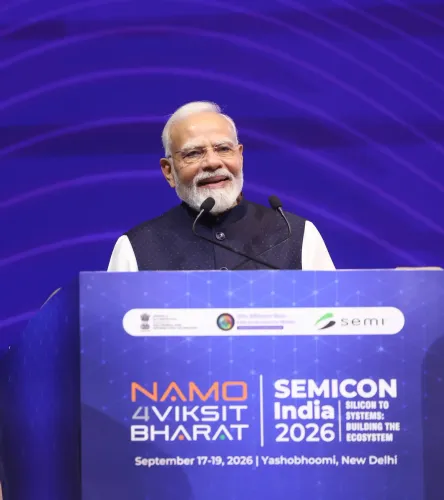
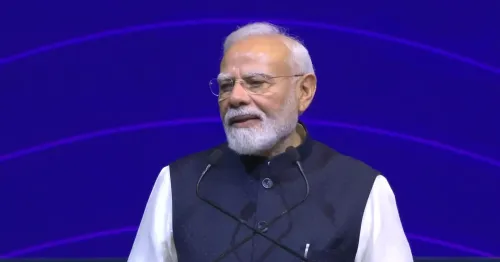
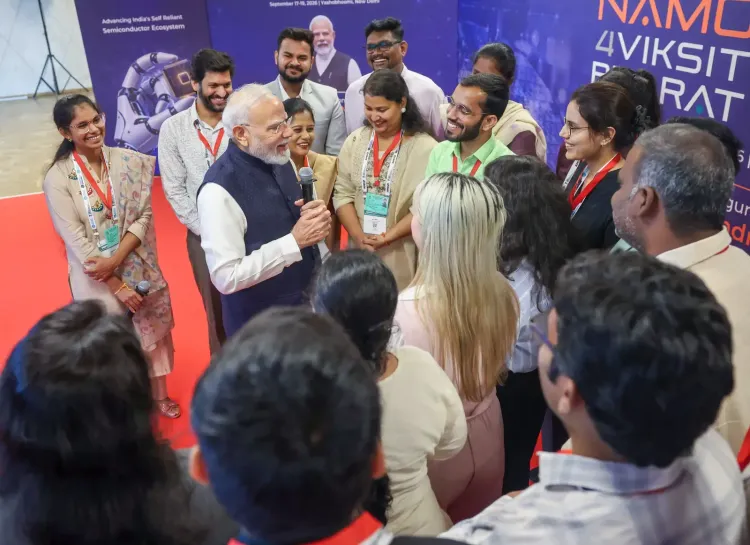
Prime Minister Narendra Modi inaugurated the event and highlighted India's shift from policy discussions and project planning to actual commercial semiconductor production. He interacted with young chip designers and students, and virtually inaugurated commercial production lines at CDIL Semiconductor in Mohali and Suchi Semicon in Surat. This takes the number of operational commercial semiconductor units — among the 12 projects approved under Semicon 1.0 — to five.
Modi also outlined the transition to Semicon 2.0, a six-pillar programme structured around design, machines and materials, new fabs, advanced packaging, research, and talent development. The scheme carries an outlay of ₹1,27,500 crore and is intended to develop capabilities across the full semiconductor value chain.
Scale and Reach of SEMICON India 2026
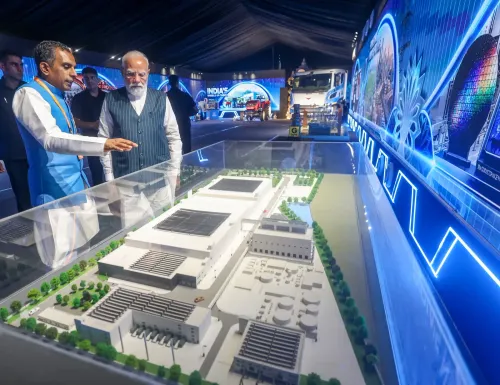
The fifth edition of India's flagship semiconductor conference recorded 51,656 total registrations and a cumulative footfall of approximately 40,000, according to an official statement. The event featured six Country Pavilions — representing Japan, South Korea, Malaysia, the Netherlands, Singapore, and Sweden — alongside 12 State Pavilions, a Startup Pavilion, Workforce Development Zone, Innovation Showcase, and Student Hackathon.
What the 56 MoUs Cover
The 56 MoUs, announcements and strategic initiatives signed across the three days span semiconductor design, fabrication, advanced packaging, equipment and materials, power electronics, Artificial Intelligence (AI), High-Performance Computing (HPC), Research and Development (R&D), logistics, technology commercialisation, skilling, and workforce development. Major collaborations involved semiconductor manufacturers, equipment and materials companies, design firms, academic institutions, and skilling organisations.
Context: Why This Matters for India
This comes amid intensifying global competition to secure semiconductor supply chains, with the United States, the European Union, Japan, and South Korea all committing record subsidies to domestic chip production. India has moved relatively late but has been accelerating: Semicon 1.0 approved 12 projects, and now five are operational — a concrete, if incremental, milestone. The ₹1,27,500 crore Semicon 2.0 outlay signals a significant step-up in ambition. The industry–academia linkages, startup support, and skilling zones at the event reflect an acknowledgement that hardware capacity alone is insufficient without a parallel talent pipeline.
With guidelines and investment timelines expected to firm up in the months ahead, India's semiconductor trajectory will be closely watched by global chip companies weighing supply chain diversification.
Point of View
But it also reveals the execution gap India must close if Semicon 2.0's ₹1,27,500 crore ambition is to land differently from predecessor schemes. The six-pillar framework is well-designed on paper — design, fabs, packaging, materials, research, talent — but India's semiconductor credibility will ultimately be judged by wafer output and chip exports, not MoU counts. The global race is moving fast: TSMC, Samsung and Intel are all receiving nine-figure subsidies from rival governments. India's window to attract anchor investors remains open, but it is narrowing. The real test of SEMICON India 2026 is whether this year's 56 MoUs translate into ground-broken fabs within 24 months.
NationPress
20 Sept 2026
Frequently Asked Questions
What is SEMICON India 2026?
SEMICON India 2026 is the fifth edition of India's flagship semiconductor industry conference, held in New Delhi, bringing together over 600 exhibitors, 300 international companies, and participants from 52 countries to drive investment, partnerships, and collaboration across the semiconductor value chain.
What is Semicon 2.0 and how much is its outlay?
Semicon 2.0 is India's next-phase semiconductor development programme announced by PM Modi at SEMICON India 2026, with an outlay of ₹1,27,500 crore. It is built around six pillars — design, machines and materials, new fabs, advanced packaging, research, and talent development — aimed at building end-to-end domestic semiconductor capabilities.
How many semiconductor units are now commercially operational in India?
Five commercial semiconductor units are now operational among the 12 projects approved under Semicon 1.0. PM Modi virtually inaugurated production lines at CDIL Semiconductor in Mohali and Suchi Semicon in Surat during the event, adding two more to the operational tally.
What did the 56 MoUs at SEMICON India 2026 cover?
The 56 MoUs, announcements and strategic initiatives span semiconductor design, fabrication, advanced packaging, equipment and materials, power electronics, AI, High-Performance Computing, R&D, logistics, technology commercialisation, skilling, and workforce development, according to an official statement.
Which countries and states participated in SEMICON India 2026?
Six Country Pavilions represented Japan, South Korea, Malaysia, the Netherlands, Singapore, and Sweden. Twelve State Pavilions also participated, along with a Startup Pavilion, Workforce Development Zone, Innovation Showcase, and Student Hackathon.