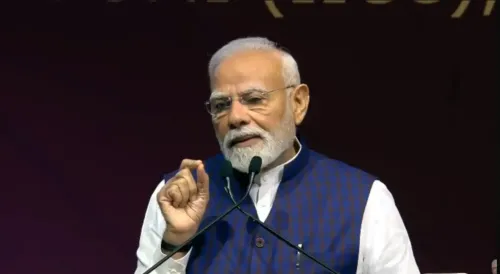
PM Modi launches SEMICON India 2026, flags $13.5 bn semiconductor mission phase 2
Synopsis
India crossed a symbolic threshold at SEMICON India 2026: Modi-era semiconductor policy has moved from blueprint to commercial output, with chip plants in Mohali and Surat now shipping to global customers. A $13.5 billion second phase and 70,000-plus trained engineers signal that India is betting its demographic dividend not just on IT services, but on becoming a serious node in the global chip supply chain.
Key Takeaways
PM Narendra Modi inaugurated SEMICON India 2026 in New Delhi on 17 September 2026 .
The government announced the $13.5 billion second phase of India's Semiconductor Mission .
Commercial chip production has commenced at new plants in Mohali and Surat , with output reaching global customers.
The skilling target stands at one lakh engineering students in chip design; 70,000 have already been trained .
Twelve projects have been approved under the mission, with new regulatory reforms to ease international collaboration.
Modi stressed development of fabless companies , intellectual property , and silicon photonics for AI infrastructure.
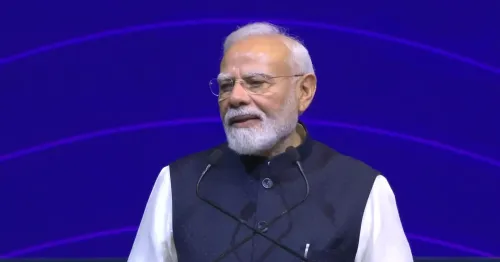
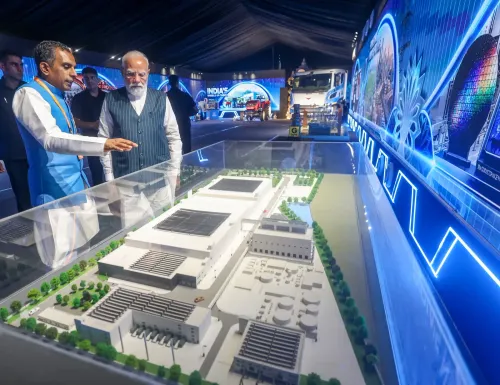
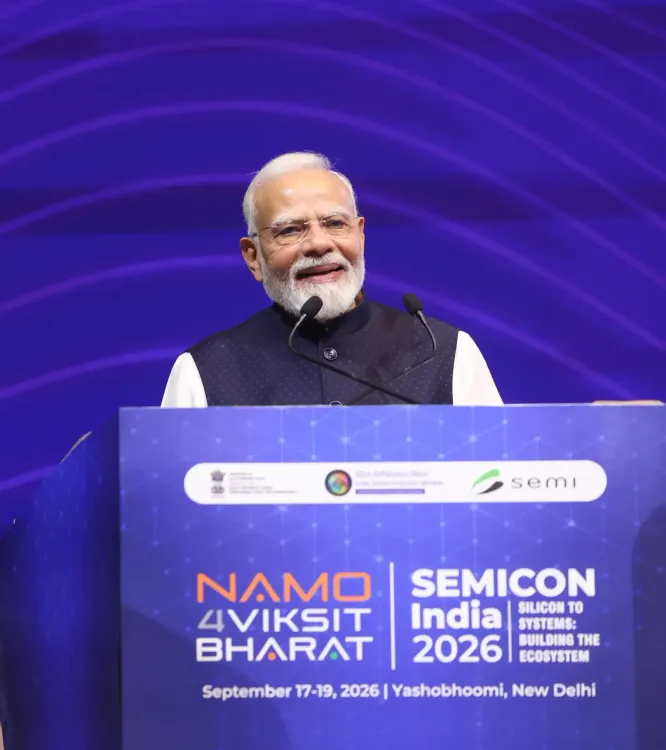
Prime Minister Narendra Modi on Thursday, 17 September 2026 inaugurated SEMICON India 2026 in New Delhi, announcing the $13.5 billion second phase of India's Semiconductor Mission and celebrating the commercial launch of chip plants in Mohali and Surat. India-made chips, he said, are now reaching customers both domestically and globally — a milestone that marks the transition from policy promise to industrial reality.
Talent as a Strategic Asset
Modi highlighted India's demographic dividend as a competitive edge in the global chip race, pointing to the government's target of training one lakh engineering students in chip design, of whom 70,000 have already been trained. He noted that students had gifted him custom-designed chips, underscoring the depth of grassroots capability being built. 'Such a large talent pool is, in a way, nothing less than a gold mine for all of you,' Modi told the industry gathering.
The Prime Minister called on researchers working in both domestic and international settings to anchor their advanced technology work within India, framing it as a dual opportunity — for national growth and personal professional advancement.
Industry Urged to Lead R&D
Modi challenged industry leaders to spearhead local research and development rather than rely on imported innovation. 'There is benefit for the industry in this, and the youth power of India will also get strength from this,' he asserted. He credited present industry participants as foundational partners in India's semiconductor journey, saying: 'You are the pillars of this success of India, you are partners.'
The Prime Minister traced the arc of India's chip ambitions — from early policy discussions through project planning and pilot production lines — to the current moment of commercial output. Two new plants in Mohali and Surat have now commenced commercial-scale manufacturing, with chips from Indian facilities beginning to reach global customers.
Mission Phase 2 and Regulatory Reforms
The $13.5 billion second phase of the Semiconductor Mission signals a significant scaling of ambition. Modi also highlighted new regulatory reforms designed to ease collaboration between international companies, startups, and chip design firms — a deliberate effort to attract foreign expertise and capital into the domestic ecosystem. 'The Government of India is taking every step needed for the success of your projects,' he said.
The Prime Minister pointed to twelve approved projects as the foundation of an expanding demand pipeline, urging suppliers of equipment, chemicals, gases, and materials to capitalise on these openings. He stressed the importance of nurturing fabless companies, building intellectual property, and integrating silicon photonics as enabling infrastructure for artificial intelligence applications. 'We want the entire ecosystem to grow together,' he affirmed.
Why This Matters
India's semiconductor push comes amid a global race to diversify chip supply chains away from East Asia, accelerated by geopolitical tensions and the lessons of the post-pandemic shortage that crippled automotive and electronics industries worldwide. This is the second major government intervention in the sector following the first phase of the Semiconductor Mission, and the commercial launch of domestic chip production marks a qualitative shift — from India as a chip consumer to a nascent chip maker. The announcement at SEMICON India 2026 also signals that the Centre intends to leverage the talent pipeline not just for services exports but for deep manufacturing integration.
With phase two funding now formally flagged and regulatory barriers being eased for international partnerships, the next 12–18 months will be critical in determining whether India's chip ecosystem can graduate from pilot scale to globally competitive volumes.
Point of View
However modest the initial volumes. The $13.5 billion phase two commitment, however, will need transparent disbursement milestones: the first phase drew criticism for slow project approvals and opaque progress metrics. The talent pipeline of 70,000 trained engineers is notable, but skilling for chip design and actually retaining that talent in domestic fabs — rather than losing it to TSMC, Samsung, or global design houses — are very different challenges. The real test of this ecosystem push is whether fabless startups and materials suppliers scale alongside the anchor fabs, or whether India replicates the familiar pattern of flagship plants surrounded by a thin domestic supply chain.
NationPress
17 Sept 2026
Frequently Asked Questions
What is SEMICON India 2026?
SEMICON India 2026 is an industry summit inaugurated by Prime Minister Narendra Modi on 17 September 2026 in New Delhi, focused on India's semiconductor manufacturing and design ecosystem. It served as the platform to announce the $13.5 billion second phase of India's Semiconductor Mission and mark the commercial launch of chip plants in Mohali and Surat.
What is the $13.5 billion Semiconductor Mission phase 2?
It is the second major funding phase of India's national semiconductor programme, announced by PM Modi at SEMICON India 2026. The mission aims to scale domestic chip manufacturing capacity, support fabless design firms, and attract international partnerships through new regulatory reforms.
Which chip plants have started commercial production in India?
Two new plants — located in Mohali and Surat — have commenced commercial-scale chip production, according to PM Modi's address at SEMICON India 2026. Chips from these facilities are now reportedly reaching customers in India and abroad.
How many students has India trained in chip design?
The government has set a target of training one lakh (100,000) engineering students in chip design as part of its semiconductor skilling initiative. As of the SEMICON India 2026 inauguration, 70,000 students have already been trained.
Why is India investing so heavily in semiconductors?
India is seeking to diversify global chip supply chains — a priority that intensified after the post-pandemic semiconductor shortage disrupted automotive and electronics industries worldwide. The government also aims to leverage India's large engineering talent pool to build a domestic chip ecosystem spanning design, manufacturing, and materials.