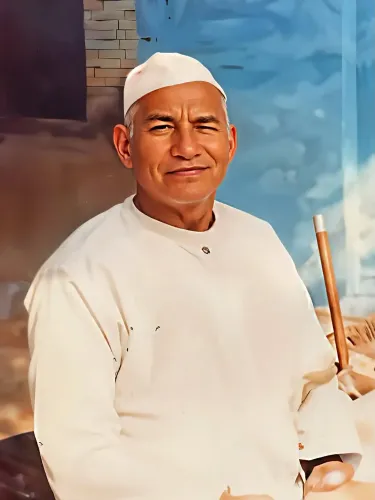
Kailash Kher on creative freedom: Sensitivity and culture define a true artist

Synopsis
Kailash Kher's take on creative freedom cuts through the noise: an artist without sensitivity isn't an artist at all, he argues — just a slanderer with a microphone. In a debate that has consumed Indian public life, one of Sufi-folk music's most recognisable voices insists that purity, empathy, and cultural grounding are not constraints on creativity — they are its foundation.
Key Takeaways
Kailash Kher stated that sensitivity, decency, and culture are essential traits of a genuine artist.
He argued that an artist lacking sensitivity is not an artist but a 'slanderer,' and that 'the stage exists to win people's hearts.' Kher acknowledged satire and slander as forms of art but said his own creative philosophy is directed towards 'purity.' He first rose to fame with 'Allah Ke Bande' from the 2003 film 'Waisa Bhi Hota Hai Part II' .
His comments came amid a broader national debate on the limits of creative freedom in India.
Acclaimed singer Kailash Kher has weighed in on the ongoing debate surrounding creative freedom, asserting that sensitivity, decency, and cultural grounding are non-negotiable traits of a genuine artist. Speaking in an exclusive interaction in Mumbai on 20 September 2026, Kher drew a sharp distinction between authentic artistic expression and what he called mere 'slander' — work devoid of empathy or purpose.
What Kher Said About Artists and Sensitivity
Responding to a question about whether understanding context is as important as protecting creative freedom when addressing sensitive subjects, Kher was unequivocal. 'An artist is someone who is sensitive. And if someone is not sensitive and still calls themselves an artist, then they are not an artist; they are a slanderer. The stage exists to win people's hearts,' he said.
He acknowledged that even satire or slander can occupy a space within art, but clarified that his own creative philosophy is firmly rooted in what he described as 'purity.' 'Talking nonsense, making meaningless statements or simply trying to entertain people without sensitivity can be a sign of being a slanderer. But even satire or slander can be considered a form of art. Everyone has their own thoughts. But our thoughts are directed towards purity,' Kher added.
The Role of Empathy in Art
Kher elaborated on what he believes constitutes genuine artistic feeling — one that is meaningless, he argued, unless grounded in the capacity to share in another's pain. He said that a true artist's happiness is one that can make others laugh, and that the ability to feel someone else's sorrow is central to creating work that resonates.
'There should be a sense of purity. There should be cleanliness, civility, and culture. These are very necessary virtues for any artist,' he concluded, framing his remarks as a broader call to the artistic community.
Kailash Kher's Journey and Musical Legacy
Kher first broke into mainstream consciousness with the soulful track 'Allah Ke Bande' from the 2003 film 'Waisa Bhi Hota Hai Part II'. The song's spiritual undertone became a hallmark of his style, and he went on to deliver widely loved numbers including 'Teri Deewani', 'Saiyyan', and 'Bam Lahiri'.
Over the years, Kher has lent his distinctive voice to several acclaimed productions, including 'Mangal Pandey: The Rising', 'Corporate', 'Salaam-e-Ishq: A Tribute to Love', and the landmark 'Baahubali' series. His career spans over two decades and straddles Sufi, folk, and devotional traditions, giving him a unique vantage point on the responsibilities of artistic expression.
Why This Conversation Matters Now
The debate over creative freedom and its limits has grown sharper in India in recent years, with controversies around films, music, and stand-up comedy regularly triggering public discourse. Kher's remarks arrive at a moment when artists across disciplines are navigating questions about the boundaries between provocation and responsibility. His perspective — rooted in decades of lived creative experience — adds a notable voice to that conversation, one that neither dismisses freedom nor ignores its ethical weight.
Point of View
The line between provocateur and purveyor of purity is often contested rather than self-evident. What his remarks do usefully surface is the vacuum of self-regulation in Indian entertainment — a space where neither industry norms nor audience expectations have settled into a coherent standard. Kher's Sufi-folk roots give him cultural credibility, but his prescription of 'purity' will mean different things to different communities, which is precisely the challenge the debate has yet to resolve.
NationPress
20 Sept 2026
Frequently Asked Questions
What did Kailash Kher say about creative freedom?
Kailash Kher said that sensitivity, decency, and cultural grounding are essential to genuine artistic expression. He argued that an artist who lacks sensitivity is not truly an artist but a 'slanderer,' and that the stage should be used to win people's hearts, not merely to entertain without purpose.
How does Kailash Kher define a true artist?
According to Kher, a true artist is someone who is deeply sensitive — capable of feeling others' pain and bringing happiness to others through their work. He believes genuine creative feeling is only meaningful when it is rooted in empathy and a sense of purity.
Does Kailash Kher reject satire as a form of art?
No. Kher acknowledged that even satire or slander can be considered a form of art, noting that everyone has their own thoughts. However, he clarified that his own creative philosophy is 'directed towards purity,' distancing himself from work that he views as meaningless or insensitive.
What are Kailash Kher's most famous songs?
Kher is best known for 'Allah Ke Bande' from the 2003 film 'Waisa Bhi Hota Hai Part II,' which launched his career. He has since delivered popular tracks such as 'Teri Deewani,' 'Saiyyan,' and 'Bam Lahiri,' and has sung for films including the 'Baahubali' series.
Why is Kailash Kher's view on artistic sensitivity relevant today?
The debate over creative freedom and its limits has intensified in India, with controversies around films, music, and comedy regularly generating public controversy. Kher's remarks, grounded in over two decades of experience across Sufi, folk, and devotional traditions, offer a practitioner's perspective on where responsibility and expression intersect.