CM Himanta hails inter-state rescue of tigress BT1
Synopsis
Assam CM Himanta Biswa Sarma lauded the safe capture of West Bengal tigress BT1 on 4 November 2026, calling the joint operation by Assam and West Bengal forest teams, police, administration, and local communities a model of inter-state wildlife coordination.
Key Takeaways
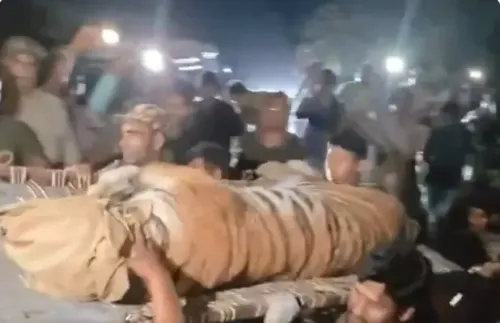
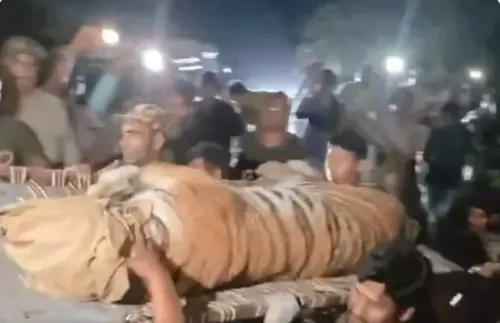
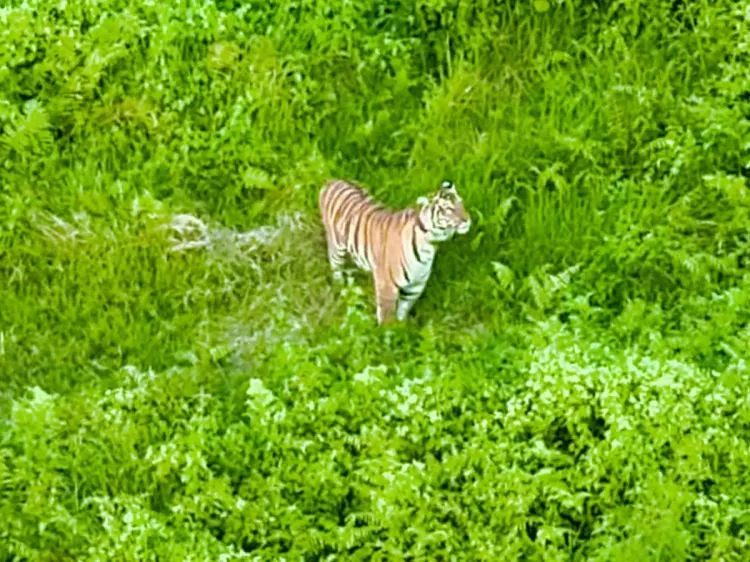
Tigress BT1 from West Bengal was safely captured in a joint operation involving forest teams from Assam and West Bengal .
CM Himanta Biswa Sarma publicly praised the district administration, police, and local communities alongside forest departments for the success.
Tigers routinely cross state boundaries in India, making inter-state coordination critical under the Wildlife Protection Act .
Project Tiger , launched in 1973 , underpins the institutional framework that enabled both states to act together.
The operation is being cited as a model for how other state pairs sharing tiger corridors should respond to straying big cats.
Next steps include health monitoring and possible formalisation of joint protocols between the two states' forest departments.
A tigress crossed a state boundary, triggered a cross-government operation, and came out safe — and Assam Chief Minister Himanta Biswa Sarma wants the country to notice how it was done. On Wednesday, 4 November 2026, the Chief Minister took to X to applaud the successful, safe capture of BT1, a tigress from West Bengal, calling the operation a 'commendable example of what inter-state coordination can achieve.'
Two states, one tigress, zero casualties
The operation brought together forest teams from both Assam and West Bengal, district administration, police, and local communities — a coalition that rarely assembles so cleanly across state lines. CM Sarma singled out each group by name, underscoring that the success was collective, not departmental. His closing note was precise: 'BT1 is safe and that is what matters most.'
Tigers routinely move across state boundaries in India, following prey corridors that pay no attention to administrative borders. When they do, they enter a jurisdictional grey zone — one state's forest department cannot act unilaterally on another's turf. That friction has historically slowed rescue or capture responses, sometimes with fatal outcomes for the animal.
Project Tiger's long bet on inter-state cooperation
The legal and institutional framework for exactly this kind of coordination has existed since 1973, when the central government launched Project Tiger — one of India's most consequential conservation initiatives. Both Assam and West Bengal host major tiger reserves under the programme, and the Wildlife Protection Act explicitly envisions coordinated inter-state action. The BT1 operation is a live proof-of-concept that the framework can actually work on the ground, not just on paper.
What makes the Chief Minister's statement notable is its emphasis on the community role. Local populations living at the forest edge are often the first to spot a straying tiger and the last to be credited. Sarma's acknowledgement of 'local communities' alongside uniformed agencies signals an understanding that conservation on the ground is as much about human trust as it is about tranquilliser guns and tracking equipment.
What comes next for BT1
The immediate question now is what happens to the tigress — health monitoring, possible radio-collaring, and whether she will be relocated or returned to her range. Any joint protocol formalised between the Assam and West Bengal forest departments following this operation could serve as a template for other state pairs sharing tiger corridors. India's wild tiger population has recovered significantly under Project Tiger's watch; keeping that momentum means making inter-state rescues routine, not exceptional.
One safe tigress. Two state governments working in sync. The bar has been set — now other states sharing tiger habitat will be measured against it.
Point of View
Administration, police, and local communities together, he frames inter-state wildlife rescue as a whole-of-government achievement rather than a technical forestry matter. For a Chief Minister who also convenes the North-East Democratic Alliance, amplifying cooperative federalism across state lines carries political as well as ecological weight. The BT1 operation, if followed by a formalised joint protocol, could elevate Assam's standing as a conservation leader in the region. It also adds soft pressure on other state governments sharing tiger corridors to match the standard.
NationPress
4 Nov 2026
Frequently Asked Questions
Who is tigress BT1 and where is she from?
BT1 is a tigress from West Bengal who strayed across state boundaries, prompting a joint capture and rescue operation involving forest teams from both West Bengal and Assam .
Why did the tigress BT1 require inter-state coordination?
Tigers frequently move across state administrative boundaries in India, and no single state's forest department can operate unilaterally on another's territory, making joint coordination under the Wildlife Protection Act essential for a safe rescue.
What is Project Tiger and how does it relate to this operation?
Project Tiger is a central government conservation initiative launched in 1973 to protect tigers and their habitats. Both Assam and West Bengal host reserves under the programme, and its framework explicitly supports inter-state coordination in tiger management.
What did CM Himanta Biswa Sarma say about the BT1 rescue?
CM Sarma called the capture 'a commendable example of what inter-state coordination can achieve' and specifically appreciated the forest teams of both states, district administration, police, and local communities, adding that 'BT1 is safe and that is what matters most.'
What happens to tigress BT1 after the capture?
Following a safe capture, standard protocol involves health monitoring and possible radio-collaring before a decision on relocation or return to her range. Officials may also use this case to formalise joint protocols between Assam and West Bengal forest departments.