Buxa Tiger Reserve tigress BT1 captured in Assam after 100 km trek
Synopsis
A tigress released in Buxa Tiger Reserve walked over 100 km across state lines into Assam before being safely captured near human settlements — a rare inter-state wildlife rescue that doubles as a case study in cross-border conservation cooperation, and a warning about how under-formalised India's transboundary corridor management still is.
Key Takeaways
Tigress BT1 , released at Buxa Tiger Reserve on 2 October , was safely captured in Assam's Kokrajhar district on 3 November .
BT1 travelled more than 100 km across state boundaries, passing through Raimona National Park in the Bodoland Territorial Region .
The capture involved forest departments of Assam and West Bengal , district administration, police, and local communities.
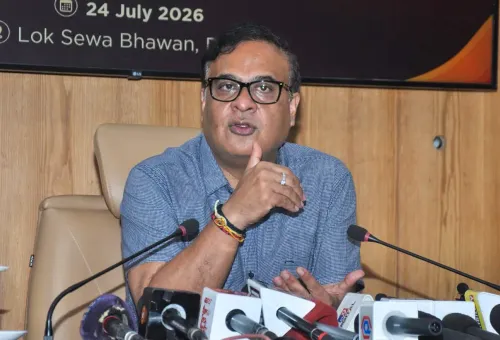
Assam Minister Jayanta Mallabaruah called the operation a 'commendable example of inter-state coordination.' The episode highlights the need for formalised transboundary wildlife corridor management in Northeast India .
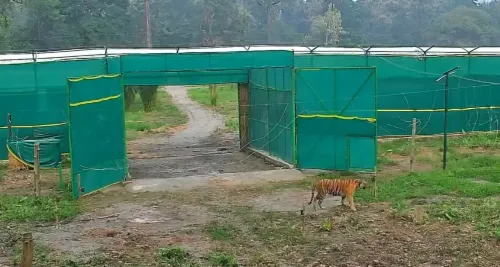
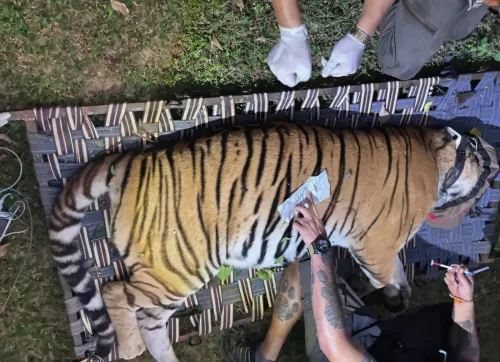
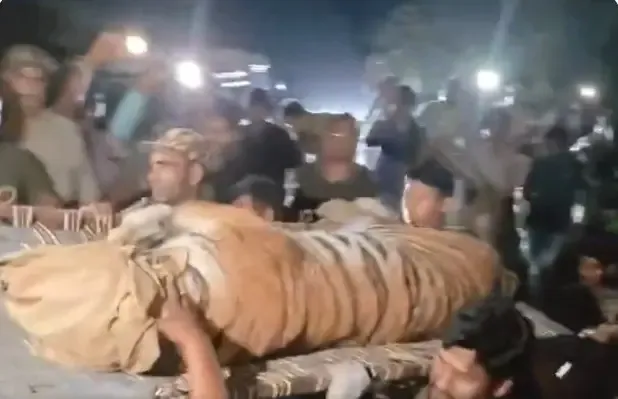
A tigress from West Bengal's Buxa Tiger Reserve, designated BT1, was safely captured in Assam's Kokrajhar district on 3 November 2026 after travelling more than 100 km across state boundaries and approaching human settlements, Assam Minister Jayanta Mallabaruah confirmed. The successful operation involved coordinated efforts by forest departments from both states, district administration, police, and local communities.
The Journey of BT1
BT1 was released into the wild at Buxa Tiger Reserve on 2 October. Within weeks, she had crossed into Assam and entered Raimona National Park in the Bodoland Territorial Region (BTR). From 23 October onwards, the tigress continued moving through forested landscapes before edging closer to inhabited areas in Kokrajhar district, raising concerns over the safety of both the animal and nearby residents.
The Coordinated Rescue Operation
Recognising the potential risks, forest officials from West Bengal and Assam launched a joint tracking and monitoring operation. The intervention drew in district administration, law enforcement, and local communities, ultimately resulting in BT1's safe capture before a dangerous encounter could occur. Minister Mallabaruah, sharing details in a post on social media platform X, called the mission a commendable example of inter-state coordination.
'BT1 is safe, and that is what matters most,' Mallabaruah said, describing the operation as a benchmark for cross-border wildlife protection.
Why Transboundary Corridors Matter
The incident throws a spotlight on the wildlife movement corridors of Northeast India, where large mammals regularly cross protected area boundaries and state lines. Mallabaruah emphasised that wildlife does not recognise administrative limits, and that inter-state cooperation is particularly critical in landscapes where animal movement routinely extends beyond designated forests. Notably, the BT1 episode is part of a broader pattern — Bengal and Assam have seen multiple large-mammal dispersals in recent years, driven by habitat connectivity between Buxa, Raimona, and adjoining reserve forests.
Conservation Significance
Raimona National Park, declared a national park in 2021, is considered a key stronghold for tigers in Assam. BT1's movement through the corridor underscores both the ecological connectivity of the region and the urgent need for permanent transboundary monitoring protocols. Wildlife experts have long argued that single-state management plans are inadequate for large carnivores whose home ranges span multiple jurisdictions. The safe outcome in this case offers a model — however, critics argue that without formalised inter-state wildlife response frameworks, each such incident will require fresh ad-hoc coordination.
What Happens Next
It remains to be confirmed where BT1 will be relocated or re-released following her capture. Forest departments from both states are expected to assess her health before determining the next steps. The episode is likely to reinforce calls for a permanent transboundary wildlife corridor management protocol between Assam and West Bengal, an issue conservationists have flagged repeatedly in the context of Northeast India's fragmented forest landscapes.
Point of View
But the real headline is structural: a tigress travelling 100 km across two states and into human settlements before being captured exposes just how ad-hoc India's transboundary wildlife response still is. Raimona and Buxa are ecologically connected, yet they sit under separate state forest departments with no standing joint protocol. Each such incident becomes a crisis managed in real time rather than a corridor event handled by pre-positioned teams. The safe outcome here owes as much to good fortune as to coordination — and that should make wildlife managers uncomfortable, not congratulatory.
NationPress
4 Nov 2026
Frequently Asked Questions
Which tigress was captured in Assam, and where did she come from?
The tigress, designated BT1, was originally released into the wild at West Bengal's Buxa Tiger Reserve on 2 October. She subsequently travelled more than 100 km into Assam, passing through Raimona National Park before approaching human settlements in Kokrajhar district.
Why was BT1 captured and not simply monitored?
Forest officials decided to intervene after BT1 moved out of forested landscapes and began approaching inhabited areas in Kokrajhar district, creating safety risks for both the animal and local residents. The coordinated capture was intended to prevent a potentially dangerous encounter.
Who was involved in the rescue operation?
The operation brought together forest departments from Assam and West Bengal, the Kokrajhar district administration, police personnel, and local communities. Assam Minister Jayanta Mallabaruah praised it as a model of inter-state coordination.
What is Raimona National Park and why is it significant?
Raimona National Park, declared a national park in 2021, is located in Assam's Bodoland Territorial Region and is regarded as a key tiger habitat in Northeast India. Its ecological connectivity with Buxa Tiger Reserve makes it a natural corridor for large mammal movement across the two states.
What happens to BT1 after the capture?
Forest departments from Assam and West Bengal are expected to assess BT1's health before deciding on relocation or re-release. No official announcement on the next steps had been made at the time of reporting.