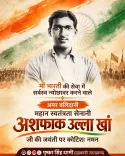
Amit Shah pays tribute to revolutionary Ashfaqulla Khan on birth anniversary

Synopsis
Union Home Minister Amit Shah paid tribute to revolutionary Ashfaqulla Khan on his birth anniversary, honouring his role in the 1925 Kakori Train Action alongside Ram Prasad Bismil and Chandra Shekhar Azad, and his defiant acceptance of the British death sentence.
Key Takeaways
Amit Shah paid tribute to Ashfaqulla Khan on his birth anniversary on 22 October 2026 .
Ashfaqulla Khan was a member of the Hindustan Republican Association who took part in the Kakori Train Action of 9 August 1925 .
He was sentenced to death in the Kakori conspiracy trial (1925–1927) and executed by British authorities in 1927 .
Shah recalled Khan's comradeship with Ram Prasad Bismil and Chandra Shekhar Azad as emblematic of revolutionary solidarity.
The tribute is part of a consistent BJP practice of commemorating early 20th-century armed revolutionaries on social media.
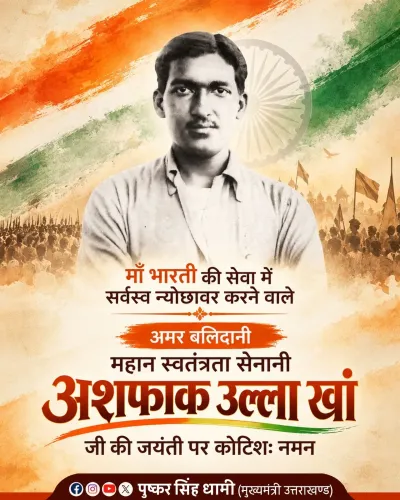
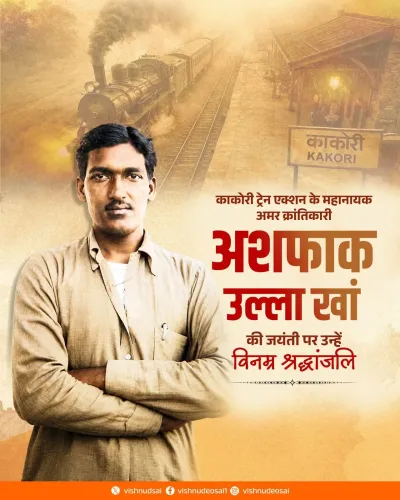
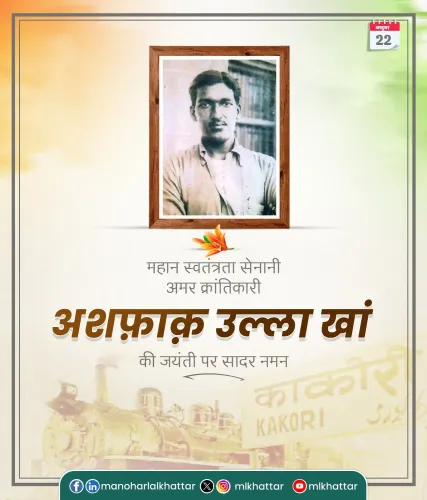
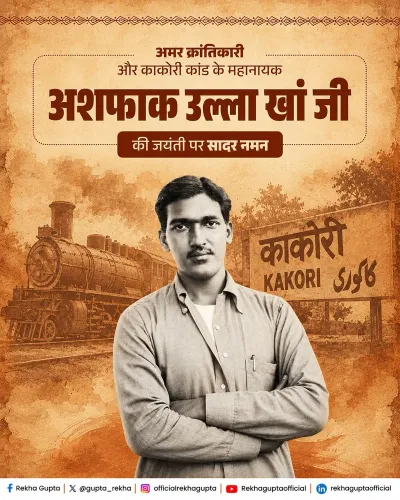
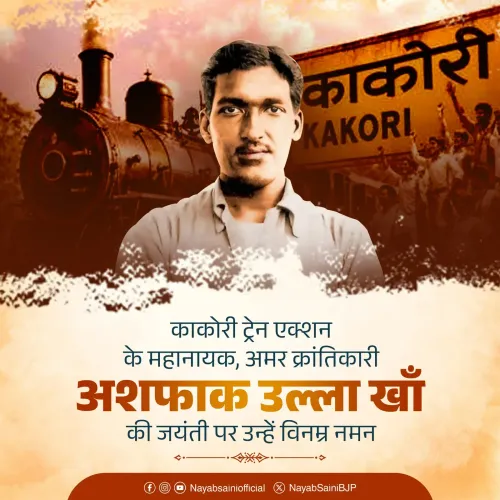
He kissed the noose, smiling — and nearly a century later, that image of defiance still carries weight. Union Home Minister Amit Shah on Thursday, 22 October 2026 paid tribute to freedom fighter Ashfaqulla Khan on his birth anniversary, honouring the revolutionary's role in one of colonial India's most audacious acts of armed resistance.
Shah's post, written in Hindi, offered a bow of countless salutations — 'koti-koti naman' [salutations in millions] — to Ashfaqulla Khan, and recalled how he, alongside Chandra Shekhar Azad and Ram Prasad Bismil, threw an open challenge to British power through the Kakori Train Action. 'Not even British torture could shake him from his principles and his resolve for the freedom of the motherland,' Shah wrote, 'and ultimately he kissed the hangman's noose, smiling.'
The Kakori Train Action and what it cost
On 9 August 1925, a small group of revolutionaries belonging to the Hindustan Republican Association stopped a British government train near Kakori, Uttar Pradesh, and seized its treasury chest. The act was not just a raid — it was a declaration. The colonial administration responded with mass arrests, and the subsequent conspiracy trial stretched from 1925 to 1927.
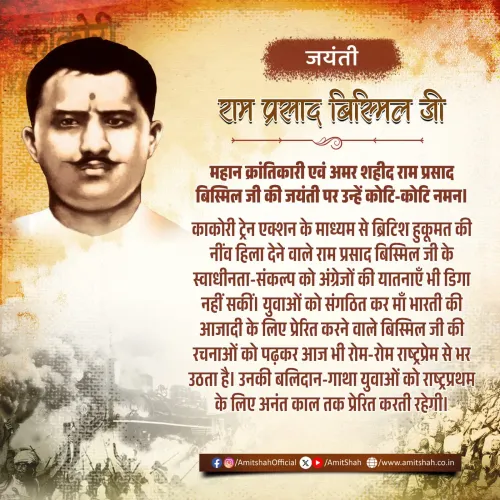
Ashfaqulla Khan, Ram Prasad Bismil, and two other revolutionaries were sentenced to death and hanged. Bismil was also a celebrated poet whose verses became anthems of the independence movement. Azad, who evaded capture that day, continued his revolutionary activities until he died in a confrontation with British police in Allahabad in 1931 — true to his vow never to be taken alive.
A Hindu-Muslim friendship that became a symbol
The bond between Ashfaqulla Khan, a Muslim, and Ram Prasad Bismil, a Hindu, is among the most cited examples of revolutionary solidarity across religious lines in India's freedom struggle. Their comradeship and shared sacrifice on the gallows have been invoked repeatedly across decades as an emblem of composite nationalism. Shah's tribute explicitly links them together, underscoring that shared legacy.
BJP's consistent pattern of revolutionary commemoration
Senior BJP leaders have made it a consistent practice to mark the birth and death anniversaries of Hindustan Republican Association figures and other early 20th-century armed revolutionaries on social media. These tributes emphasise themes of unyielding sacrifice and national devotion — framing the pre-Independence armed resistance tradition as a shared inheritance for all Indians. Shah's post closes on precisely that note: 'His indomitable courage and supreme sacrifice will always inspire coming generations toward dedication to the nation.'
For a generation growing up a full century after Kakori, a Home Minister's public salute to a young revolutionary who faced the gallows without flinching is a reminder that the cost of sovereignty was counted in individual lives, one by one.
Point of View
Highlighting the Hindu-Muslim solidarity of Bismil and Ashfaqulla Khan. This fits within a broader BJP communications strategy of claiming the full spectrum of India's anti-colonial resistance, including figures not historically associated with the Sangh tradition. The emphasis on individual sacrifice and unwavering resolve echoes themes the ruling party regularly deploys around questions of national security and sovereignty. Such commemorations also serve a quiet pedagogical function: reminding younger audiences of a pre-Independence chapter that remains underrepresented in mainstream historical discourse.
NationPress
22 Oct 2026
Frequently Asked Questions
Who was Ashfaqulla Khan?
Ashfaqulla Khan was an Indian revolutionary and member of the Hindustan Republican Association who participated in the 1925 Kakori Train Action. He was arrested, tried in the Kakori conspiracy case, and hanged by British authorities in 1927.
What was the Kakori Train Action?
The Kakori Train Action took place on 9 August 1925, when a group of revolutionaries led by Ram Prasad Bismil and including Ashfaqulla Khan intercepted a British government train near Kakori, Uttar Pradesh, and seized its treasury to fund their independence movement.
Why is Ashfaqulla Khan's friendship with Ram Prasad Bismil significant?
Ashfaqulla Khan, a Muslim, and Ram Prasad Bismil, a Hindu, shared a close revolutionary bond that has come to symbolise Hindu-Muslim unity in the freedom struggle. Both were executed following the Kakori conspiracy trial, and their comradeship is widely cited as an example of composite nationalism.
What happened to the revolutionaries after the Kakori incident?
British authorities arrested most of the Kakori conspirators. The subsequent trial from 1925 to 1927 resulted in death sentences for Ashfaqulla Khan, Ram Prasad Bismil, and two others. Chandra Shekhar Azad evaded capture and continued revolutionary activities until his death in Allahabad in 1931.
Why did Amit Shah post this tribute?
22 October is observed as the birth anniversary of Ashfaqulla Khan. Union Home Minister Amit Shah posted the tribute as part of a consistent BJP practice of marking the birth and death anniversaries of early 20th-century Indian revolutionaries on social media.