Shivraj Singh Chouhan Pays Tribute to Rani Chennamma on Jayanti
Synopsis
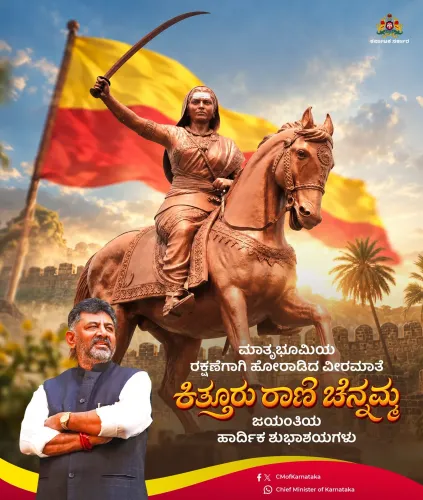
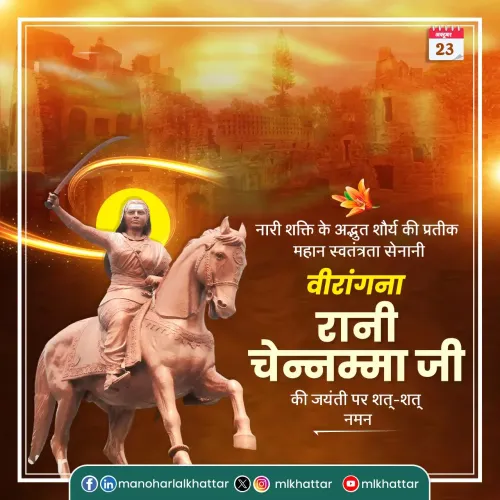
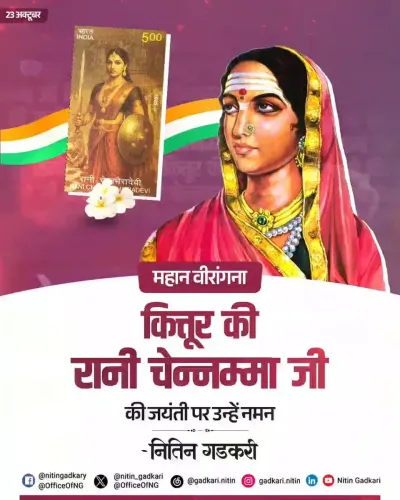
Union Agriculture Minister Shivraj Singh Chouhan marked the birth anniversary of Rani Chennamma of Kittur on 23 October 2026, calling her the 'Lakshmibai of Karnataka' and honouring her 1824 armed resistance against British East India Company forces.
Key Takeaways
Shivraj Singh Chouhan posted a tribute on 23 October 2026 marking Rani Chennamma of Kittur's birth anniversary.
He described her as the 'Lakshmibai of Karnataka' for her courage, valour, and intellect in resisting British rule.
Rani Chennamma (1778–1829) led an armed revolt against the British East India Company in 1824 — over 30 years before the 1857 uprising.
Kittur is located in present-day Belagavi district, Karnataka ; Chennamma was imprisoned at Bailhongal Fort after the revolt was suppressed.
The tribute is part of a broader BJP practice of honouring pre-1857 regional freedom fighters on their birth and death anniversaries.
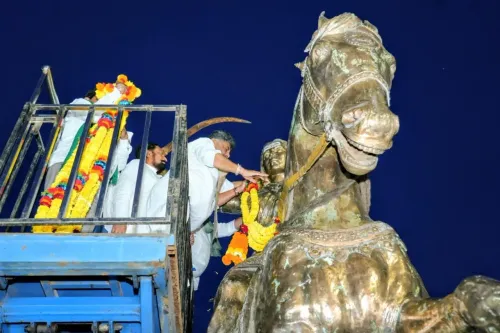
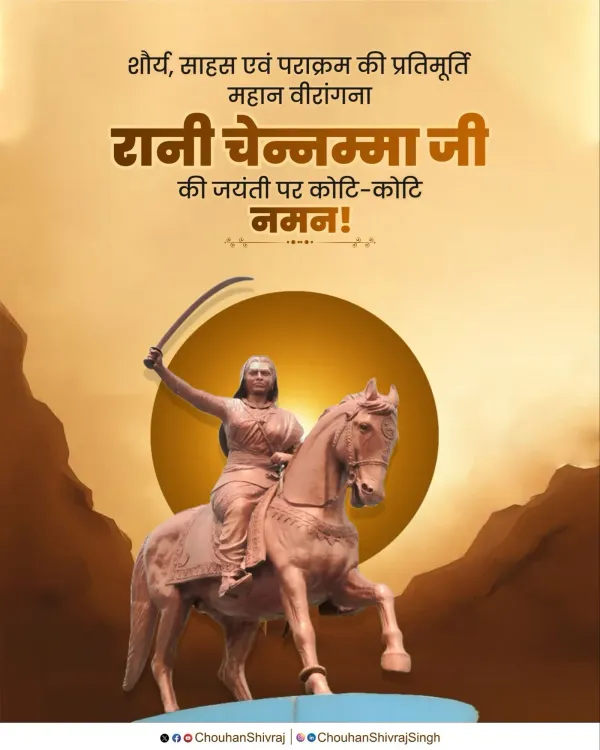
Before the 1857 uprising rewrote the idea of Indian resistance, a queen in Karnataka's Kittur was already forcing British East India Company soldiers to retreat — and on Friday, 23 October 2026, Union Agriculture Minister Shivraj Singh Chouhan paused to honour that defiance, marking the birth anniversary of Rani Chennamma of Kittur with a heartfelt tribute on X.
Posting in Hindi, the Minister wrote: 'कोटि-कोटि नमन' — 'a salute a billion times over' — to the warrior queen he called the 'Lakshmibai of Karnataka.' He invoked her 'valour, courage, and intellect' that once forced British forces to retreat, and expressed hope that her legacy would continue inspiring Indian youth toward serving the motherland and rebuilding the nation.The Queen Who Fought the Company Decades Before 1857
Rani Chennamma (1778–1829) ruled the princely state of Kittur, located in present-day Belagavi district, Karnataka. When the British East India Company moved to annex Kittur under the 'Doctrine of Lapse' — refusing to recognise her adopted heir — Chennamma did not negotiate her sovereignty away. She picked up arms. In 1824, her forces dealt a stunning early defeat to Company troops, killing a senior British political officer. The revolt ultimately failed to hold, and Chennamma was captured and imprisoned at Bailhongal Fort, where she died in 1829 — but the image of a queen who made British soldiers 'chew chickpeas' (as Chouhan colourfully put it) endured. Her resistance predates the better-known uprising of 1857 by over three decades, earning her the comparison to Rani Lakshmibai of Jhansi — a parallel Chouhan explicitly invoked in today's post.BJP's Wider Push to Spotlight Pre-1857 Freedom Fighters
Chouhan's tribute fits a consistent pattern among BJP ministers of marking birth and death anniversaries of regional figures who resisted colonial rule — particularly those whose stories were not foregrounded in mainstream nationalist historiography. Tributes to pre-1857 rebels, tribal leaders, and regional queens have become a regular feature of the party's social-media calendar, framing these figures as co-authors of India's long freedom struggle rather than footnotes to it. Kittur and the wider Belagavi belt hold particular resonance — the region is politically significant in Karnataka, and Rani Chennamma remains a proud symbol of local identity across communities there.Thirty-three years in British custody did not erase Chennamma's name — two centuries later, a Union Minister is still invoking it to a national audience. That, perhaps, is legacy enough.
Point of View
Foregrounding pre-1857 regional resisters as co-founders of the freedom movement. By invoking the 'Lakshmibai of Karnataka' framing, the post draws an explicit emotional line from a 19th-century Karnataka queen to a northern Indian icon familiar to every school student — democratising heroism across regional lines. In a state where the BJP is in opposition, signalling reverence for a fiercely local symbol also carries quiet political weight. The consistent social-media rhythm of such tributes suggests these are not spontaneous gestures but a structured attempt to shape historical memory among young, digitally active voters.
NationPress
23 Oct 2026
Frequently Asked Questions
Who was Rani Chennamma of Kittur?
Rani Chennamma (1778–1829) was the queen of Kittur, a princely state in present-day Belagavi district, Karnataka. She led an armed revolt against the British East India Company in 1824 when the Company tried to annex her kingdom, making her one of India's earliest recorded armed resisters to colonial rule.
Why is Rani Chennamma called the Lakshmibai of Karnataka?
Rani Chennamma is called the 'Lakshmibai of Karnataka' because, like Rani Lakshmibai of Jhansi, she took up arms against British forces to defend her kingdom's sovereignty. Her revolt in 1824 actually predates Lakshmibai's more famous resistance by over three decades.
When did Shivraj Singh Chouhan pay tribute to Rani Chennamma?
Union Agriculture Minister Shivraj Singh Chouhan posted his tribute on Friday, 23 October 2026 , on X (formerly Twitter), marking Rani Chennamma's birth anniversary.
What was the Kittur revolt of 1824?
The Kittur revolt of 1824 was an armed uprising led by Rani Chennamma against the British East India Company, which had refused to recognise her adopted heir and sought to annex the kingdom. Her forces initially defeated Company troops, but the revolt was ultimately suppressed and Chennamma was imprisoned at Bailhongal Fort, where she died in 1829.
Where is Kittur located?
Kittur is a town in the Belagavi district of Karnataka , in southwestern India. It was the seat of the princely state ruled by Rani Chennamma and remains closely associated with her legacy.