CM Shivakumar meets Poland PM Tusk to boost Karnataka ties
Synopsis
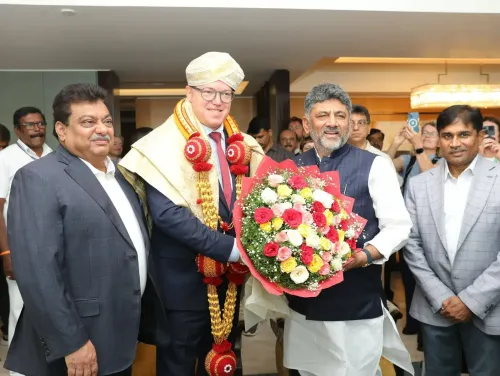
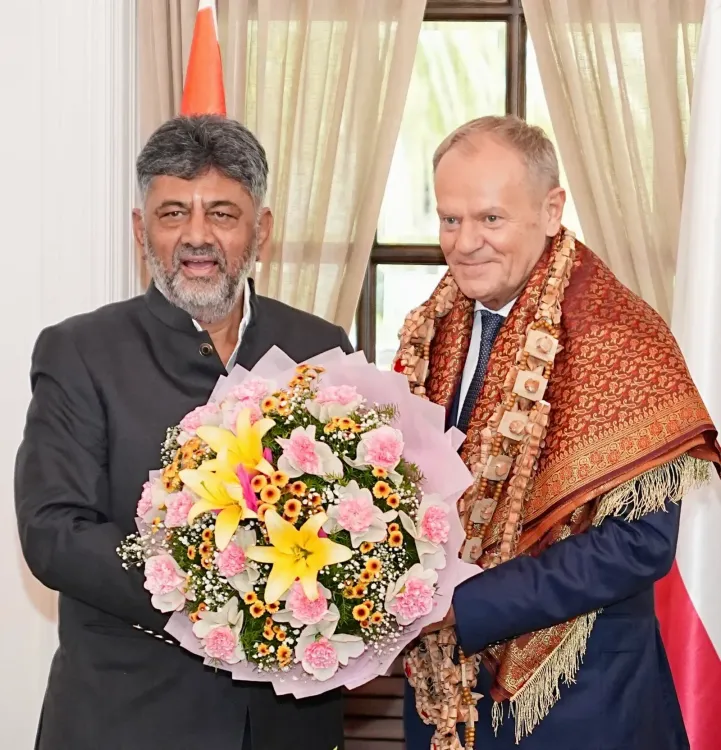
Karnataka CM DK Shivakumar held a bilateral meeting with Polish PM Donald Tusk on October 23, 2026, accompanied by ministers M. B. Patil and Priyank Kharge, focusing on investment, technology and economic growth between Karnataka and Poland.
Key Takeaways
CM DK Shivakumar met Polish PM Donald Tusk on October 23, 2026 for a formal bilateral discussion.
Karnataka ministers M.
Patil (industries/infrastructure) and Priyank Kharge (IT/BT) were part of the Karnataka delegation.
The meeting focused on investment, technology and economic growth between Karnataka and Poland.
Poland is an EU member with strengths in automotive, IT services and advanced manufacturing — sectors of direct interest to Karnataka.
Karnataka's sub-national diplomacy has been anchored by its Global Investors Meet editions in 2022 and 2023, targeting European FDI.
Possible follow-up outcomes include trade delegations or MoU signings at a future Karnataka Global Investors Meet.
Sub-national diplomacy got a significant push on Friday, October 23, 2026, when Karnataka Chief Minister DK Shivakumar sat down for a bilateral meeting with Polish Prime Minister Donald Tusk — a signal that India's most dynamic tech state is actively courting Central European partnerships, one head-of-government meeting at a time.
What was on the table between Bengaluru and Warsaw
The Chief Minister's Office of Karnataka confirmed that CM Shivakumar met PM Tusk alongside his delegation, with Karnataka ministers M. B. Patil and Priyank Kharge flanking the state's side of the table. The agenda centred on strengthening Karnataka–Poland ties across three pillars: investment, technology, and economic growth.
The composition of the Karnataka delegation is itself telling. M. B. Patil carries the industries and infrastructure portfolio — the man who signs off on factory floors and industrial corridors. Priyank Kharge anchors the state's IT and biotechnology brief. Put them in a room with Warsaw, and the conversation is about semiconductor supply chains, digital services, and high-value manufacturing — not ceremonial pleasantries.
Why Poland, and why now
Poland has quietly emerged as one of the European Union's most consequential tech and automotive manufacturing hubs, with a skilled engineering workforce and deep integration into Central and Eastern European supply chains. For Karnataka — already home to Bengaluru's sprawling IT ecosystem and a growing electronics manufacturing corridor — the Polish market represents both an export pathway and a source of inbound investment in advanced manufacturing.
The meeting fits a pattern Karnataka has pursued deliberately. The state's Global Investors Meet editions in 2022 and 2023 positioned it as Europe's preferred Indian investment destination, drawing pledges across semiconductors, green technology and logistics. A direct bilateral with PM Tusk, who took office in December 2023, extends that outreach to the political level — where frameworks get unlocked and delegations turn into deals.
The bigger sub-national diplomacy play
India's federal states have increasingly stepped onto the international stage, conducting investment roadshows and bilateral engagements that complement — and sometimes accelerate — central government diplomacy. Karnataka's approach is among the most structured: sector-specific ministers, a recurring flagship investment event, and now a head-of-government bilateral with a sitting EU prime minister.
For Poland, the partnership calculus runs both ways. Indian IT services firms have been expanding into Warsaw and Kraków, while Polish automotive and industrial companies are eyeing India's manufacturing incentives. A formal state-level dialogue creates institutional scaffolding for those private-sector connections to move faster.
The next test will be whether this meeting produces a follow-up trade delegation or a formal framework — likely visible at the next edition of the Karnataka Global Investors Meet. When the handshake has two cabinet ministers and a prime minister in the room, the clock on a follow-through starts immediately.
Point of View
Karnataka signals it is ready to negotiate industry-level partnerships, not just issue declarations. For Poland, deepening ties with India's tech capital offers a hedge against over-reliance on intra-EU investment flows and access to a fast-growing digital services market. The real measure of success will come at the negotiating table — whether this bilateral warmth converts into binding frameworks before the next Global Investors Meet.
NationPress
23 Oct 2026
Frequently Asked Questions
Why did CM DK Shivakumar meet Poland PM Donald Tusk?
The meeting focused on strengthening Karnataka–Poland ties and exploring collaboration in investment, technology and economic growth, as confirmed by the Chief Minister's Office of Karnataka on October 23, 2026.
Who accompanied CM Shivakumar in the bilateral meeting with Poland's PM?
Karnataka ministers M. B. Patil and Priyank Kharge were part of the Karnataka delegation alongside CM DK Shivakumar.
What is the Karnataka Global Investors Meet?
The Karnataka Global Investors Meet is a flagship state-level investment summit held to attract foreign and domestic investment; previous editions in 2022 and 2023 targeted European companies, including from Central and Eastern Europe.
What role does Poland play in India's trade and technology landscape?
Poland is an EU member state with strengths in automotive, IT services and emerging technology sectors, and has emerged as a gateway for Indian IT firms expanding into Central and Eastern Europe.
What could follow from the Karnataka–Poland bilateral meeting?
Possible outcomes include follow-up trade delegations or MoU signings, potentially announced at a future edition of the Karnataka Global Investors Meet, though no specific agreements have been confirmed yet.