Shivraj Singh Chouhan pays tribute to Rani Lakshmibai on Balidan Diwas
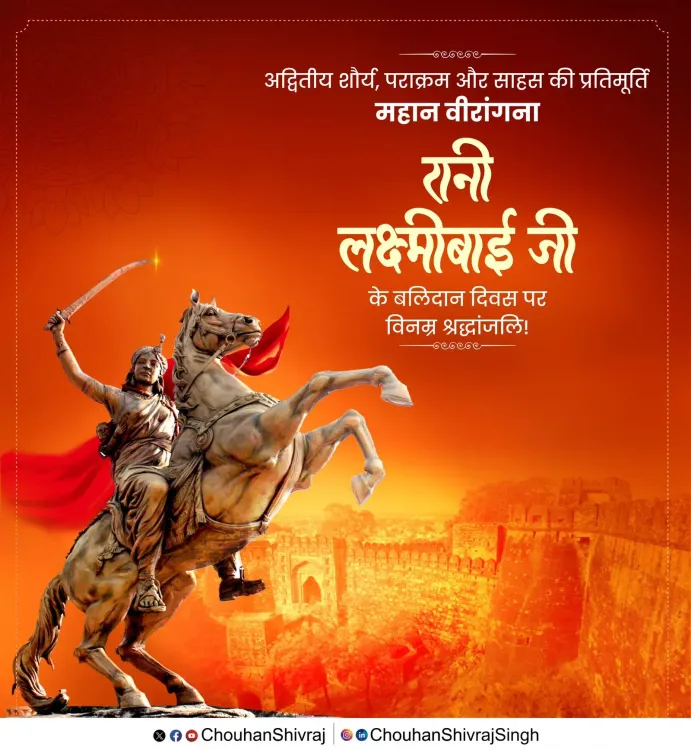
Synopsis
Union Agriculture Minister Shivraj Singh Chouhan marked Rani Lakshmibai's Balidan Diwas on 18 June 2026 with a tribute on X, quoting the iconic Subhadra Kumari Chauhan verse and saluting the warrior queen's sacrifice for the honour of the motherland.
Key Takeaways
Union Agriculture Minister Shivraj Singh Chouhan posted a tribute to Rani Lakshmibai on 18 June 2026 , her Balidan Diwas (martyrdom anniversary).
He quoted the celebrated Hindi verse from Subhadra Kumari Chauhan's poem 'Jhansi ki Rani' , among the most widely recited poems in Indian public life.
Rani Lakshmibai fell in battle at Gwalior in June 1858 during the 1857 Indian Rebellion against the East India Company.
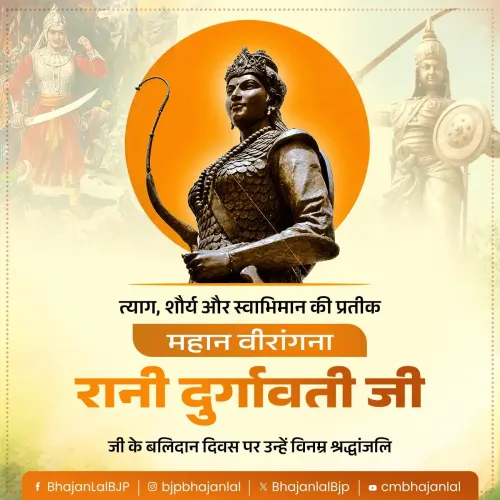
Chouhan described her as a 'great warrior woman' ( mahan virangana ) who sacrificed her life for the pride and self-respect of the motherland.
The tribute fits a broader BJP pattern of foregrounding anti-colonial figures from the 1857 revolt in official and political communication.
State-level commemorations are expected in Jhansi and Gwalior on 18 June 2026 .
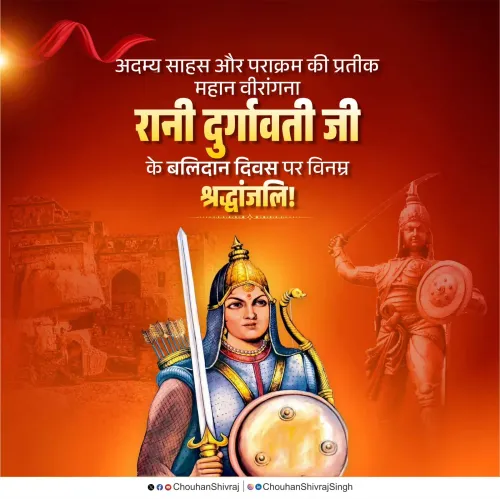
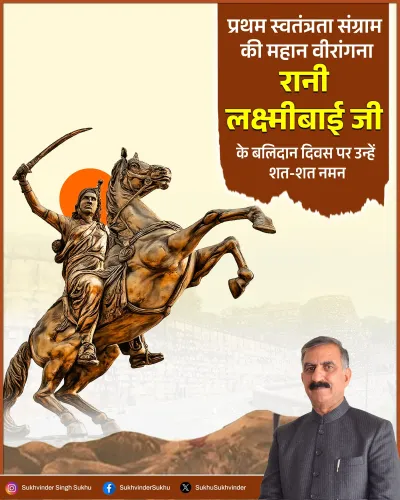
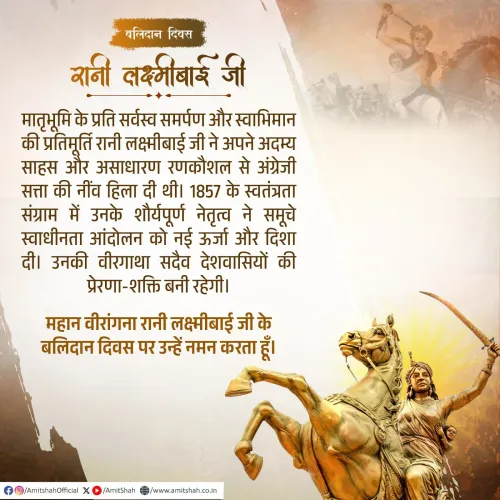
Union Agriculture Minister Shivraj Singh Chouhan on Thursday, 18 June 2026, paid homage to Rani Lakshmibai of Jhansi on her martyrdom anniversary, sharing a tribute on X that quoted the celebrated verse by poet Subhadra Kumari Chauhan and saluted the warrior queen's sacrifice for the honour and self-respect of the motherland.
Chouhan opened his post with the iconic lines: 'Bundele harbolon ke munh hamne suni kahani thi, khoob ladi mardani woh toh Jhansi wali Rani thi' — ('We heard the tale from the bards of Bundelkhand: she fought like a man, that queen of Jhansi'). He then offered his 'humble tribute' (vinamra shraddhanjali) to the 'great warrior woman' (mahan virangana) who 'sacrificed her life to protect the pride and self-respect of the motherland.'
Context
Rani Lakshmibai, born Manikarnika Tambe in 1828, became the ruler of the princely state of Jhansi in present-day Uttar Pradesh. She emerged as one of the most prominent commanders of the 1857 Indian Rebellion against the East India Company, refusing to cede Jhansi under the Doctrine of Lapse. She fell in battle at Gwalior in June 1858, a date commemorated annually as her Balidan Diwas (martyrdom day). The verses Chouhan quoted are from the famous poem 'Jhansi ki Rani' by Subhadra Kumari Chauhan, one of the most recited Hindi poems in Indian schools and public life.
Policy Backdrop
The Government of India has long institutionalised remembrance of the 1857 revolt, including nationwide commemorations during the 150th anniversary in 2007–08 that foregrounded figures such as Rani Lakshmibai. BJP leaders and ministers have consistently marked the death anniversaries of 1857 figures through public statements that emphasise martial valour and anti-colonial resistance, framing such tributes within a broader effort to centre indigenous rulers and warriors in official national narratives. Chouhan, as a four-term former Chief Minister of Madhya Pradesh — a state that borders the historical Bundelkhand region — has a long personal association with commemorations linked to the queen.
Stakeholders and Impact
The tribute carries symbolic weight for residents of the Bundelkhand region, which spans parts of Madhya Pradesh and Uttar Pradesh and retains a strong cultural memory of Rani Lakshmibai's resistance. State-level commemorations on 18 June are typically held in Jhansi and Gwalior, the two cities most directly associated with her life and death. The post, drawing on a verse known to virtually every Hindi-educated Indian, is aimed at a broad national audience and reinforces the government's messaging on patriotism and historical pride.
What's Next
State governments in Madhya Pradesh and Uttar Pradesh are expected to hold formal commemorative events on 18 June 2026, with officials and cultural organisations marking the anniversary at sites in Jhansi and Gwalior. As the BJP continues to foreground anti-colonial figures in its political communication, tributes such as this one are likely to feature in the party's broader narrative around national heritage ahead of future electoral cycles. Chouhan's post adds to a pattern of senior Union ministers using social media to anchor the government's identity in India's pre-Independence history of resistance.
Point of View
Embedded in the childhood memory of nearly every Hindi-speaking Indian, maximises emotional reach without partisan risk. As a former Chief Minister of Madhya Pradesh with deep roots in the Bundelkhand-adjacent political landscape, Chouhan's association with Rani Lakshmibai's legacy is also personally credible, not merely performative. The post reinforces the government's sustained effort to reframe India's freedom struggle around martial, indigenous heroism rather than solely the Nehruvian Congress-led narrative.
NationPress
19 Sept 2026
Frequently Asked Questions
When is Rani Lakshmibai's Balidan Diwas observed?
Rani Lakshmibai's Balidan Diwas is observed on 18 June each year, marking the date she fell in battle at Gwalior in 1858 during the 1857 Indian Rebellion.
Who was Rani Lakshmibai and why is she famous?
Rani Lakshmibai was the ruler of the princely state of Jhansi who led armed resistance against the British East India Company during the 1857 rebellion . She is celebrated as one of India's foremost symbols of anti-colonial courage and martial valour.
What poem did Shivraj Singh Chouhan quote in his tribute?
Chouhan quoted from 'Jhansi ki Rani' , the iconic Hindi poem by Subhadra Kumari Chauhan , specifically the lines: 'Bundele harbolon ke munh hamne suni kahani thi, khoob ladi mardani woh toh Jhansi wali Rani thi.'
What is Shivraj Singh Chouhan's connection to Rani Lakshmibai's region?
As a four-term former Chief Minister of Madhya Pradesh , Chouhan governed a state that borders the Bundelkhand region — the heartland of Rani Lakshmibai's legacy — giving him a long-standing political and cultural association with her memory.
Where did Rani Lakshmibai die?
Rani Lakshmibai died in battle at Gwalior , in present-day Madhya Pradesh , in June 1858 , while fighting British forces during the 1857 Indian Rebellion.